


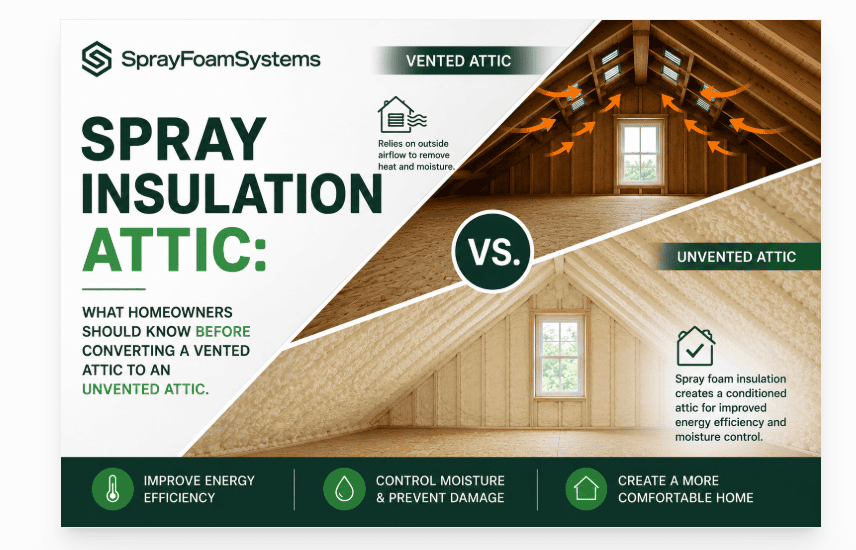
Many homeowners convert a vented attic into an unvented attic to improve energy efficiency, indoor comfort, and HVAC performance. The project involves much more than adding insulation. Understanding how the attic functions as part of the home’s building envelope is essential before making the change.
A properly designed spray insulation attic helps reduce air leakage, improve temperature control, and create a more comfortable, energy-efficient home.
Why Convert to an Unvented Attic?
Traditional vented attics use soffit and ridge vents to move outside air through the attic. While this design has been common for years, many homeowners now choose conditioned, unvented attics to improve energy performance.
In a spray insulation attic, contractors apply insulation to the underside of the roof deck instead of the attic floor. This brings the attic inside the home’s thermal envelope and offers several benefits:
- Improved energy efficiency
- More consistent indoor temperatures
- Better protection for attic HVAC equipment
- Reduced dust, pollen, and outdoor moisture entering the attic
How an Unvented Attic Works
Instead of insulating the attic floor, contractors apply spray foam directly to the underside of the roof decking and gable walls where needed. This creates a continuous air barrier that brings the attic inside the home’s conditioned building envelope.
The building envelope is the barrier that separates the conditioned living space from the outside environment. In a traditional vented attic, the attic sits outside that envelope and is exposed to outdoor temperatures through the soffit, ridge, and gable vents.
When homeowners convert to a spray insulation attic, contractors seal the attic vents and move the insulation to the roof deck. This allows the attic to become part of the home’s conditioned space instead of an unconditioned area above it.
As a result, attic temperatures stay much closer to the rest of the house throughout the year. HVAC equipment and ductwork located in the attic also operate in a more stable environment, which can improve efficiency and reduce energy loss.
Proper installation is essential because the spray foam creates both the insulation layer and the air barrier that make the conditioned attic possible.
Ventilation Changes Are Required
One of the most common mistakes is leaving attic vents open after installing spray foam.
Seal Existing Attic Vents
When converting to an unvented attic, contractors typically:
- Seal ridge vents
- Block soffit vents
- Close gable vents, if present
- Eliminate outside air pathways into the attic
Leaving vents open reduces the effectiveness of the insulation system.
Verify Moisture Before Installation
Although the attic is no longer vented, moisture management remains important.
Before installing spray foam, contractors should verify that:
- The roof is leak-free.
- Roof decking is dry.
- Wood moisture levels are acceptable.
- Indoor humidity is properly controlled.
Moisture testing before installation helps prevent sealing wet materials beneath the insulation.
Is Every Home a Good Candidate?
Not every home is an ideal candidate for an unvented attic.
Contractors should evaluate several factors, including:
- Roof condition
- Climate zone
- Existing insulation
- HVAC system location
- Local building code requirements
A qualified insulation contractor can determine whether a spray insulation attic is the right solution for your home.
Choosing the Right Spray Foam
Contractors can use either open-cell or closed-cell spray foam, depending on the home’s design and performance goals.
The right product depends on factors such as:
- Desired R-value
- Moisture resistance
- Structural needs
- Climate conditions
- Building code requirements
Choosing the correct material helps maximize long-term insulation performance.
If you’re planning a spray insulation attic project, an experienced contractor can recommend the best spray foam type based on your home’s construction, climate, and local code requirements.
Professional Equipment Matters
A successful attic conversion depends on proper material temperature, balanced pressure, and consistent spray application.
Spray Foam Systems supplies professional spray foam equipment, proportioners, spray guns, heated hoses, moisture meters, replacement parts, and accessories that help contractors complete spray insulation attic projects efficiently.
Whether you’re upgrading equipment or replacing essential components, Spray Foam Systems provides the products, training, and technical support contractors rely on for consistent insulation performance.
FAQs
Why convert a vented attic to an unvented attic?
Many homeowners convert to improve energy efficiency, reduce air leakage, create more consistent indoor temperatures, and better protect HVAC equipment located in the attic.
Do attic vents stay open after spray foam is installed?
No. Ridge, soffit, and gable vents are typically sealed so the attic becomes part of the conditioned building envelope.
Why is moisture testing important before installing spray foam?
Moisture testing confirms that the roof decking is dry before insulation is applied, helping prevent moisture from becoming trapped beneath the spray foam.
About Spray Foam Systems
Spray Foam Systems is the #1 spray foam rig builder and spray foam equipment supplier in the United States. Family-owned and proudly serving the industry since 2007, we operate from a 7-acre campus with over 80,000 square feet of dedicated working space in Greensboro, GA. With over 10,000 customers served over the last 18 years, we specialize in delivering high-quality spray foam rigs, insulation equipment, replacement parts, accessories, expert training, equipment service, and technical support. Whether you’re starting a new insulation business or expanding an existing operation, Spray Foam Systems provides the products and expertise contractors trust to keep projects running efficiently.