


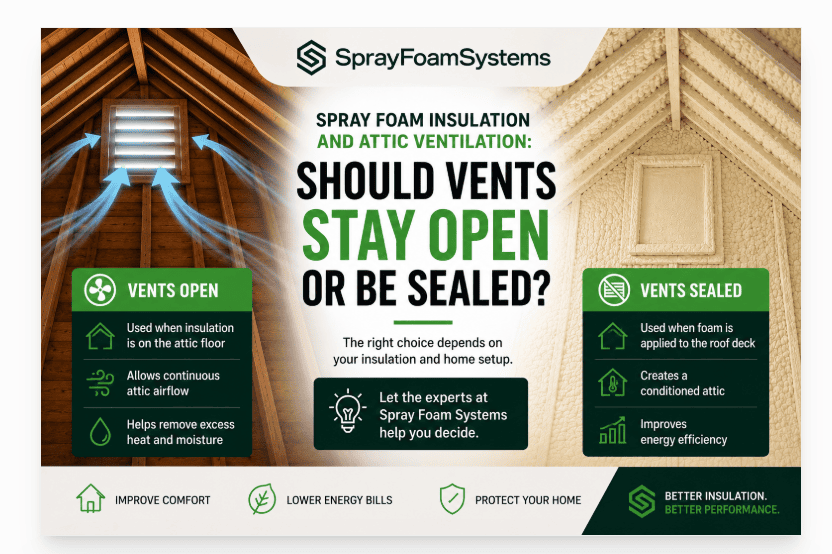
One of the most common questions homeowners and contractors ask is whether attic vents should remain open after installing spray foam insulation. The answer depends on where the foam is installed and how the attic is intended to perform. Understanding the difference between a vented attic and an unvented conditioned attic can help ensure better energy efficiency, moisture management, and long-term building performance.
When installed correctly, spray foam insulation can transform an attic into a conditioned space by sealing air leaks and reducing unwanted heat transfer. However, achieving these benefits requires following the proper installation approach for the specific project.
Understanding Traditional Vented Attics
A conventional attic relies on continuous airflow to help remove heat and moisture. This ventilation is typically provided through a combination of:
- Soffit vents
- Ridge vents
- Gable vents
- Roof vents
With traditional fiberglass or cellulose insulation installed on the attic floor, ventilation helps regulate attic temperatures and minimize moisture buildup above the insulation.
How Spray Foam Insulation Changes Attic Design
Unlike traditional insulation materials, spray foam insulation creates an effective air seal. When applied directly to the underside of the roof deck, it moves the building envelope from the attic floor to the roofline.
This creates a conditioned attic space where outside air is no longer intended to circulate freely. As a result, the existing attic vents are typically sealed as part of the installation process.
When Should Attic Vents Be Sealed?
In most conditioned attic applications, vents should be sealed when:
- Foam is applied to the underside of the roof deck.
- The attic becomes part of the conditioned building envelope.
- Air leakage through vents would reduce energy efficiency.
- HVAC equipment or ductwork is located inside the attic.
Closing vents allows the attic to maintain temperatures much closer to the living space below, reducing HVAC workload and improving overall efficiency.
When Should Attic Vents Remain Open?
There are situations where attic ventilation should remain in place.
For example:
- Insulation is installed only on the attic floor.
- The attic is designed to remain vented.
- Local building codes require specific ventilation methods.
- The project does not involve creating a conditioned attic.
Every building is different, so contractors should always evaluate the construction details before determining the best approach.
Benefits of a Properly Conditioned Attic
When designed correctly, a conditioned attic can provide several advantages.
These include:
- Lower heating and cooling costs
- Improved indoor comfort
- Reduced air infiltration
- Better temperature consistency
- Less stress on HVAC equipment
- Improved protection for ductwork and mechanical systems
These benefits are among the primary reasons many contractors recommend spray foam insulation for residential attic applications.
Why Professional Installation Is Important
Installing spray foam insulation requires careful planning, proper equipment, and trained installers. Material temperatures, substrate conditions, application techniques, and overall building design all contribute to the success of the project.
Professional contractors understand how to evaluate attic construction, determine whether a vented or conditioned attic is appropriate, and install the insulation according to manufacturer recommendations and local building codes.
Choosing the Right Equipment
Whether installing insulation in residential attics, commercial buildings, or other structures, having reliable equipment helps ensure consistent material performance and productivity.
If you’re looking for professional spray foam equipment and expert support, Spray Foam Systems has the products and experience to help contractors succeed.
FAQs
Should attic vents always be sealed when installing spray foam insulation?
Not always. If spray foam insulation is installed at the roof deck to create a conditioned attic, vents are typically sealed. If insulation remains on the attic floor and the attic is designed to stay vented, the vents generally remain open.
Can spray foam insulation improve energy efficiency in an attic?
Yes. By creating an effective air seal, spray foam insulation helps reduce unwanted air leakage, stabilize indoor temperatures, and improve overall HVAC efficiency.
Is spray foam insulation suitable for every attic project?
Not every attic is the same. Building design, climate, roof condition, HVAC layout, and local building codes should all be evaluated before deciding whether a vented or conditioned attic is the best solution.
About Spray Foam Systems
Spray Foam Systems is the #1 spray foam rig builder and spray foam equipment supplier in the United States. Family-owned and proudly serving the industry since 2007, we operate from a 7-acre campus with over 80,000 square feet of dedicated working space in Greensboro, GA. With over 10,000 customers served over the last 18 years, we specialize in delivering high-quality turnkey spray foam systems, distributing top-tier equipment and supplies, and providing nationwide service and training to help contractors grow and succeed in the spray foam insulation and roofing markets.