


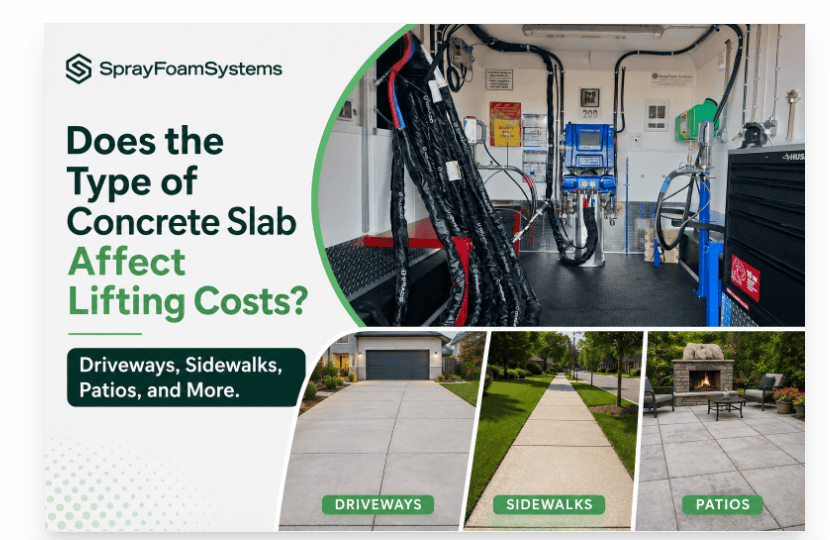
The type of concrete slab can have a major impact on concrete lifting costs. A driveway, sidewalk, patio, or other slab may require a different amount of material, labor, and setup based on its size, thickness, condition, and accessibility.
For contractors, having versatile concrete lifting equipment helps them handle these differences efficiently. The ProPAK XD2 Concrete Lifting Rig gives professional crews a complete mobile setup for polyurethane concrete lifting across a range of residential and commercial applications.
What Determines Concrete Lifting Costs?
Every concrete lifting project is different. While slab type matters, contractors must evaluate the entire job before estimating the work.
Factors that can affect concrete lifting costs include:
- Total square footage of the slab
- Size and depth of voids beneath the concrete
- Amount of polyurethane foam required
- Number of lifting points needed
- Slab thickness and overall condition
- Access to the work area
- Amount of settlement or movement
- Preparation and cleanup requirements
Because these conditions vary from site to site, two slabs of similar size may still require different amounts of material and labor.
Why the ProPAK XD2 Works Across Different Concrete Slabs
The type of slab may change from one project to the next, so contractors need equipment that can handle a range of concrete lifting applications. The ProPAK XD2 Concrete Lifting Rig provides a professional mobile setup for polyurethane concrete lifting and leveling.
Contractors can use the ProPAK XD2 for applications such as:
- Driveways
- Sidewalks and walkways
- Patios
- Pool decks
- Garage floors
- Commercial flatwork
- Other concrete lifting and leveling projects
This versatility allows contractors to use one purpose-built rig across different types of jobs instead of building a concrete lifting setup piece by piece.
Driveway Concrete Lifting
Driveways often consist of larger and heavier concrete sections. Vehicle traffic can also contribute to settlement when the soil beneath the slab becomes unstable or develops voids.
As a result, driveway concrete lifting costs may depend on the number of affected sections and how much correction each area needs. A small settled section near a garage may require less work than several large driveway panels that have shifted.
Polyurethane lifting foam can help contractors raise affected sections without removing and replacing the entire driveway when the existing concrete remains suitable for lifting.
The ProPAK XD2 gives contractors a mobile equipment solution for completing these types of projects efficiently.
Sidewalk and Walkway Concrete Lifting
Sidewalk slabs are usually smaller than driveway sections, but access and the number of affected panels can influence the job.
Common sidewalk problems include:
- Uneven joints between slabs
- Settlement near steps or entrances
- Low areas that collect water
- Trip hazards caused by slab movement
- Voids beneath individual sections
Sidewalk concrete lifting costs can therefore vary depending on how many sections need correction and how much each slab has settled.
For contractors, the ability to move efficiently between multiple lifting points can be especially important on sidewalks, walkways, and similar applications.
Patio and Outdoor Living Area Lifting
Patios can vary greatly in size, thickness, design, and accessibility. Some patios have open access from several sides, while others sit behind homes, fences, landscaping, or other structures.
These conditions can affect equipment placement and job setup. Contractors must also determine where settlement has occurred and how much material is needed to stabilize and lift the slab.
Polyurethane concrete lifting can provide an effective option when the patio itself remains structurally suitable for lifting.
Other Concrete Slabs Contractors May Encounter
Concrete lifting work is not limited to driveways, sidewalks, and patios. Contractors may encounter many other settled concrete surfaces.
Applications can include:
- Garage floors
- Pool decks
- Warehouse floors
- Commercial walkways
- Concrete approaches
- Parking areas
- Interior slabs
- Other residential and commercial flatwork
The size, location, condition, and accessibility of these surfaces can all affect concrete lifting costs.
Why Polyurethane Foam Is Used for Concrete Lifting
Polyurethane concrete lifting works by injecting material through strategically placed holes in the slab. The material expands beneath the concrete to fill voids and help raise the slab toward the desired position.
This process allows contractors to address many settled slabs without complete demolition and replacement.
However, successful lifting depends on more than simply injecting foam. Contractors must evaluate slab condition, understand the underlying problem, select the correct material, and control the lift carefully.
Equipment Efficiency Can Affect Job Costs
The slab itself is only one part of a contractor’s cost structure. Equipment performance, transportation, setup time, material use, and crew productivity can also influence the overall economics of a project.
A dedicated system such as the ProPAK XD2 can help contractors organize the equipment needed for concrete lifting work in one mobile package. That can make it easier to move from one application to another while maintaining a professional jobsite setup.
For contractors who regularly work on different slab types, equipment versatility can become an important part of managing concrete lifting costs and overall job profitability.
Evaluate the Slab Before Estimating the Project
Slab type provides a useful starting point, but contractors should avoid estimating a project based on the words “driveway,” “sidewalk,” or “patio” alone.
A proper evaluation should consider the size and condition of the slab, the amount of settlement, access to the work area, and the likely extent of voids beneath the concrete. Contractors should also determine whether the slab remains a good candidate for lifting rather than replacement.
These factors provide a much clearer picture of the labor, material, and equipment requirements for the job.
Ready to expand or upgrade your concrete lifting capabilities? Spray Foam Systems offers the ProPAK XD2 Concrete Lifting Rig along with equipment, parts, service, training, and technical support for professional polyurethane applications.
FAQs
Does the type of slab affect concrete lifting costs?
Yes. Slab size, thickness, accessibility, settlement, void size, and the amount of polyurethane material required can all affect the cost of a lifting project.
Can the ProPAK XD2 be used for driveways, sidewalks, and patios?
Yes. The ProPAK XD2 is designed for professional polyurethane concrete lifting applications and can support work on driveways, sidewalks, patios, pool decks, garage floors, and other concrete slabs.
Is every settled concrete slab a good candidate for polyurethane lifting?
No. Contractors should inspect the condition of the concrete and determine the cause and extent of settlement before beginning a lift. Severely damaged or structurally compromised concrete may require a different repair approach.
About Spray Foam Systems
Spray Foam Systems is the #1 spray foam rig builder and spray foam equipment supplier in the United States. Family-owned and proudly serving the industry since 2007, we operate from a 7-acre campus with over 80,000 square feet of dedicated working space in Greensboro, GA. With over 10,000 customers served over the last 18 years, we specialize in delivering high-quality turnkey spray foam systems, distributing top-tier equipment and supplies, and providing nationwide service and training to help contractors grow and succeed in the spray foam insulation and roofing markets.