


Concrete settles. Soil shifts. Over time, sidewalks, driveways, and warehouse floors can sink and crack. These changes create trip hazards, drainage issues, and structural concerns. Spray foam concrete lifting offers a fast and controlled way to raise and stabilize slabs without full replacement.
Understanding concrete lifting and leveling costs helps property owners and contractors compare repair options. Instead of tearing out and repouring concrete, many projects can be restored in hours using expanding polyurethane foam.
What Causes Concrete to Sink?
Concrete slabs rely on stable soil support. However, several factors can cause settlement:
- Soil erosion from water intrusion
- Poor compaction during construction
- Expansive clay soils
- Freeze-thaw cycles
- Heavy vehicle or equipment loads
When soil beneath a slab compresses or washes away, voids form. As a result, the concrete loses support and begins to sink. Evaluating concrete lifting and leveling costs early can prevent larger repairs later.
How Spray Foam Concrete Lifting Works
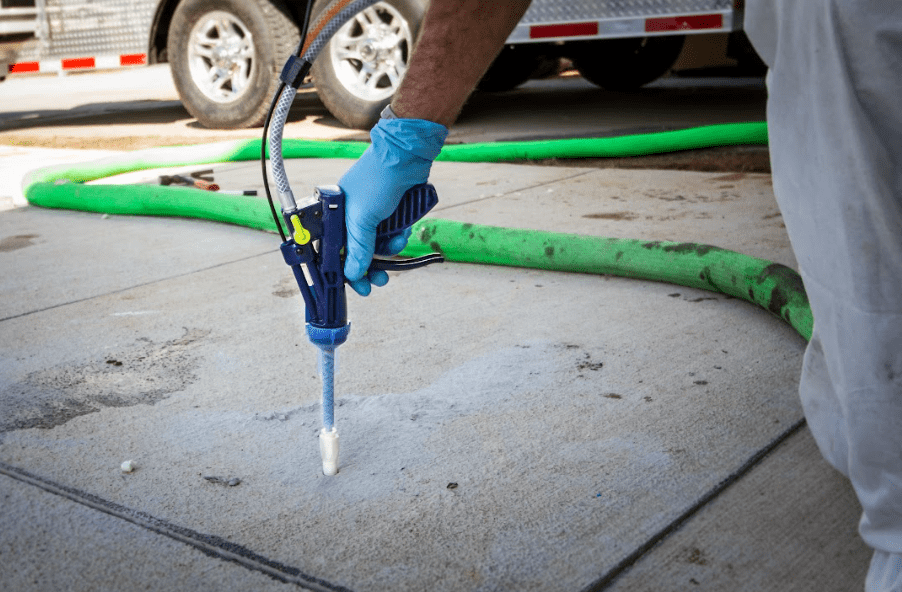
Spray foam concrete lifting uses high-density polyurethane foam injected beneath the slab. Contractors drill small holes in the concrete and pump foam into the voids. As the material expands, it fills empty spaces and gently raises the slab back to grade.
This process allows for:
- Controlled slab elevation
- Soil stabilization
- Minimal surface disruption
- Fast return to service
Because the foam cures quickly, most surfaces can handle traffic the same day. Compared to replacement, concrete lifting and leveling costs are often significantly lower.
Where Is Foam Lifting Used?
Spray foam lifting works across many project types. Contractors regularly use it for:
- Residential sidewalks and driveways
- Garage floors
- Pool decks
- Warehouse and industrial floors
- Loading docks
- Municipal walkways
Large commercial slabs benefit from precision lifting. Meanwhile, homeowners appreciate the clean and efficient repair process. When reviewing concrete lifting and leveling costs, these project types often qualify for foam stabilization instead of demolition.
Benefits Compared to Traditional Methods
Mudjacking and slab replacement have been common for decades. However, polyurethane foam offers clear advantages.
- Lightweight material reduces added soil pressure
- Smaller drill holes create a cleaner finish
- Water-resistant properties prevent washout
- Faster cure times reduce downtime
- Longer-term soil stabilization
Because of these factors, contractors can better control concrete lifting and leveling costs while improving durability.
What Affects Concrete Lifting and Leveling Costs?
Every project differs. Several variables influence pricing:
- Size and thickness of the slab
- Depth of voids beneath the concrete
- Amount of foam required
- Site accessibility
- Structural load requirements
Industrial warehouse floors may require deeper injection and higher-density materials. Residential sidewalks, on the other hand, usually involve smaller volumes. Reviewing concrete lifting and leveling costs with these factors in mind ensures accurate project planning.
Equipment Used for Concrete Lifting
Professional results depend on proper spray equipment. High-pressure proportioners and specialized concrete lifting rigs deliver consistent material flow and controlled expansion. Reliable equipment helps contractors maintain accurate lift levels and uniform foam density.
Modern rigs designed specifically for slab lifting allow contractors to handle residential and commercial jobs efficiently. With the right system, crews can manage material output, pressure, and temperature for consistent results.
Long-Term Performance and Durability
Polyurethane foam does more than lift concrete. It also strengthens the soil structure beneath the slab. Once cured, the foam resists moisture and erosion. As a result, slabs gain improved load-bearing capacity.
Proper installation reduces future settlement risk. Therefore, evaluating concrete lifting and leveling costs should also consider long-term value rather than only upfront pricing.
FAQs
What is foam for concrete slab repair?
Foam for concrete slab repair is a high-density polyurethane material injected beneath a slab to fill voids, stabilize soil, and lift the concrete back to its original position.
How do concrete lifting and leveling costs compare to replacement?
Concrete lifting and leveling costs are typically lower than full slab replacement because the process avoids demolition, disposal, and repouring expenses.
Is foam for concrete slab strong enough for commercial floors?
Yes. High-density polyurethane foam is engineered to support heavy loads, making foam for concrete slab stabilization suitable for warehouse and industrial applications.
About Spray Foam Systems
Spray Foam Systems is the #1 spray foam rig builder and spray foam equipment supplier in the United States. Family-owned and proudly serving the industry since 2007, we operate from a 7-acre campus with over 80,000 square feet of dedicated working space in Greensboro, GA. With over 10,000 customers served over the last 18 years, we specialize in delivering high-quality turnkey spray foam systems, distributing top-tier equipment and supplies, and providing nationwide service and training to help contractors grow and succeed in the spray foam insulation and roofing markets.