


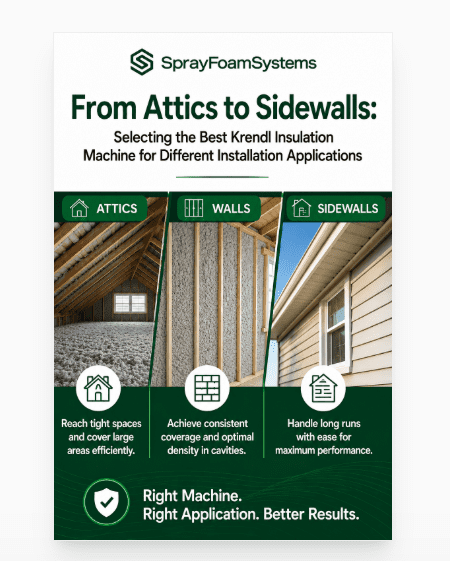
Insulation contractors often work in a variety of environments, from open attic spaces to dense-packed wall cavities. Because every application presents different challenges, selecting the right equipment can improve production, material flow, and installation quality. A dependable cellulose insulation machine helps contractors achieve consistent coverage while adapting to different jobsite conditions.
Krendl offers several equipment options designed for residential, commercial, retrofit, and new construction projects. Understanding how each machine fits specific applications can help contractors choose the right setup for their business.
Why Does Application Type Matter When Choosing Equipment?
Not every insulation project requires the same output level or airflow capacity. Attic installations often prioritize material volume and production speed, while sidewall applications require precise control and dense-pack performance.
As a result, selecting a cellulose insulation machine based on the primary application can improve efficiency and reduce installation challenges.
Which Krendl Machines Work Best for Attic Applications?
Attic projects typically involve installing large amounts of loose-fill insulation across open horizontal surfaces. Contractors often focus on maximizing coverage while maintaining steady material delivery.
For attic applications, contractors frequently consider:
These machines provide the airflow and output needed to efficiently install cellulose and fiberglass materials in large attic spaces.
Because attics often represent high-volume production work, a higher-capacity cellulose insulation machine can help crews complete projects more quickly.
What Equipment Is Best for Dense-Pack Sidewall Applications?
Dense-pack sidewall work requires more pressure and airflow than standard attic installations. Contractors must ensure insulation reaches the proper density while minimizing voids.
For these applications, many contractors choose:
These systems provide the performance necessary for demanding wall cavity installations. A properly configured cellulose insulation machine helps maintain consistent material density throughout the project.
How Does New Construction Differ From Retrofit Work?
New construction projects often provide easier access to wall cavities and attic areas before drywall installation. Consequently, contractors can focus on production and material placement.
Retrofit projects, however, may require:
- Wall drilling
- Dense-pack installations
- Limited access areas
- Increased hose lengths
Because of these factors, many retrofit contractors prefer a versatile cellulose insulation machine that can handle multiple installation methods without sacrificing performance.
What Should Commercial Contractors Consider?
Commercial insulation projects frequently involve larger buildings, longer hose runs, and extended operating hours. Equipment durability becomes increasingly important when projects require continuous production.
Commercial contractors often evaluate:
- Material output capacity
- Airflow performance
- Hopper size
- Ease of maintenance
- Long-term reliability
A larger cellulose insulation machine may provide advantages on schools, warehouses, office buildings, and multifamily construction projects where productivity directly impacts profitability.
Does Hose Length Affect Equipment Selection?
Yes. Longer hose runs require sufficient airflow to move material efficiently from the machine to the installation point.
When evaluating equipment, contractors should consider:
- Average project size
- Typical hose lengths
- Material type
- Required production rates
Matching the machine to expected hose configurations helps ensure consistent performance on both residential and commercial projects.
How Can Contractors Choose the Right Krendl Configuration?
The best equipment choice depends on the contractor’s primary workload. Companies focused on attic insulation may prioritize production volume, while contractors specializing in wall injection or dense-pack applications may require additional airflow and pressure.
When comparing equipment, consider:
- Primary installation type
- Residential versus commercial workload
- Expected production volume
- Crew size
- Future business growth plans
Selecting the right cellulose insulation machine today can help support expansion opportunities tomorrow.
Why Do Contractors Choose Krendl Equipment?
Krendl machines have earned a strong reputation throughout the insulation industry because they offer:
- Proven reliability
- Multiple machine configurations
- Support for cellulose and fiberglass materials
- Consistent material delivery
- Long service life
Whether installing insulation in attics, sidewalls, or large commercial structures, the right cellulose insulation machine can help contractors improve productivity and deliver professional results.
FAQs
What is the best cellulose insulation machine for attic insulation?
Many contractors choose the Krendl 2300, 425, or 475 for attic applications because they provide strong material output and efficient coverage for large open spaces.
Which Krendl machine is best for dense-pack wall installations?
The Krendl 425, and 475, are commonly used for dense-pack sidewall work because they offer the airflow and performance needed for wall cavity applications.
Can a cellulose insulation machine handle both attic and wall projects?
Yes. Many contractors select versatile Krendl systems that can perform both loose-fill attic work and dense-pack wall installations, allowing them to serve a wider range of customers.
About Spray Foam Systems
Spray Foam Systems is the #1 spray foam rig builder and spray foam equipment supplier in the United States. Family-owned and proudly serving the industry since 2007, we operate from a 7-acre campus with over 80,000 square feet of dedicated working space in Greensboro, GA. With over 10,000 customers served over the last 18 years, we specialize in delivering high-quality turnkey spray foam systems, distributing top-tier equipment and supplies, and providing nationwide service and training to help contractors grow and succeed in the spray foam insulation and roofing markets.