


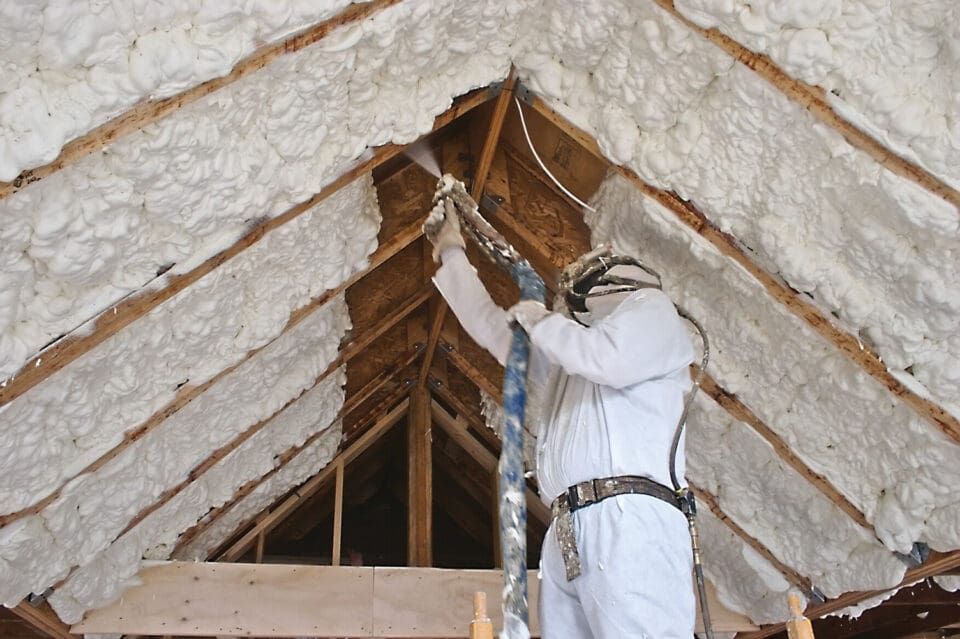
Open cell spray foam is widely used by contractors who want reliable insulation performance in wall cavities and attic assemblies. Its ability to expand, seal air gaps, and absorb sound makes it especially well suited for residential and light commercial construction. Because open cell spray foam is most commonly applied in walls and attics, understanding how it performs in these areas helps contractors choose the right insulation strategy for each project.
What Makes Open Cell Spray Foam Different?
Open cell spray foam has a softer, low-density structure that allows it to expand aggressively once applied. This expansion helps the material fully fill wall cavities, ceiling joists, and attic framing where gaps and irregular spacing are common. Unlike rigid insulation materials, open cell spray foam conforms to wiring, plumbing, and framing obstacles found inside walls and attic spaces. Contractors rely on this flexibility to achieve consistent coverage and dependable air sealing throughout the building envelope.
Typical Applications in Walls and Attics
Open cell spray foam is typically applied in interior and exterior walls as well as attic rooflines and attic floors. In wall cavities, it helps reduce air leakage while also improving sound control between rooms. In attics, open cell spray foam is often used along the roof deck to create a conditioned attic space or applied at the ceiling plane to improve thermal separation. These wall and attic applications make open cell spray foam a practical choice for new construction and retrofit projects alike.
Air Sealing and Thermal Performance
When installed in walls and attics, open cell spray foam forms a continuous air barrier that limits uncontrolled airflow. This air sealing helps stabilize indoor temperatures and supports HVAC efficiency. Because walls and attics are major sources of air loss, contractors frequently select open cell spray foam to improve overall building performance. Its ability to remain adhered to framing ensures the air seal stays intact over time.
Sound Control in Interior Wall Assemblies
In addition to thermal benefits, open cell spray foam offers noticeable sound-dampening advantages in wall systems. Its open cellular structure absorbs airborne noise, which is helpful in bedrooms, offices, and shared living spaces. Contractors often specify open cell spray foam in interior walls where reducing sound transfer is a priority without adding extra materials.
Coverage Rate and Cost Efficiency
Open cell spray foam expands at a high rate, allowing installers to cover large wall and attic areas efficiently. This expansion reduces material usage per square foot, which helps manage project costs. For contractors insulating full homes or large attic spaces, open cell spray foam provides a balance between performance and affordability that is difficult to match with traditional insulation options.
Installation Factors for Wall and Attic Applications
Successful installation depends on proper surface preparation, correct lift thickness, and attention to temperature and humidity conditions. Wall cavities and attic spaces often contain varying substrates, so installers must apply open cell spray foam evenly to ensure full adhesion. Consistent spray technique and calibrated equipment help achieve uniform density, especially when insulating tall walls or sloped attic rooflines.
PPE and Safety During Application
Applying open cell spray foam in walls and attics requires proper PPE to protect installers. Crews should wear protective suits, gloves, respirators, and eye protection throughout the spraying and curing process. Adequate ventilation is especially important in enclosed wall cavities and attic spaces to maintain safe air quality. Following established safety protocols helps protect workers while ensuring the foam cures correctly.
Moisture and Building Science Considerations
Because open cell spray foam is vapor-permeable, contractors must evaluate moisture movement in wall and attic assemblies. Climate zone, roof design, and ventilation strategy all influence how open cell spray foam performs long term. When paired with proper moisture management, the material works effectively in both walls and attics without compromising durability.
Why Contractors Continue to Use Open Cell Spray Foam
Contractors continue to choose open cell spray foam because it performs consistently in its most common applications—walls and attics. Its ability to air seal, control sound, and adapt to complex framing makes it a dependable insulation solution. Whether insulating new homes or upgrading existing structures, open cell spray foam remains a trusted option for efficient, repeatable results.
Contact Spray Foam Systems for guidance on choosing the right open cell spray foam for your next wall or attic insulation project.
FAQs
Is open cell spray foam mainly used in walls and attics?
Yes. Open cell spray foam is most commonly applied in wall cavities and attic assemblies where air sealing and sound control are needed.
Can open cell spray foam be used on attic rooflines?
It is often applied along attic roof decks to create conditioned attic spaces when moisture and ventilation are properly managed.
Does open cell spray foam work well in interior walls?
Yes. Its sound-absorbing properties make it an excellent choice for interior wall insulation.
About Spray Foam Systems
Spray Foam Systems is the #1 spray foam rig builder and spray foam equipment supplier in the United States. Family-owned and proudly serving the industry since 2007, we operate from a 7-acre campus with over 80,000 square feet of dedicated working space in Greensboro, GA. With over 10,000 customers served over the last 18 years, we specialize in delivering high-quality turnkey spray foam systems, distributing top-tier equipment and supplies, and providing nationwide service and training to help contractors grow and succeed in the spray foam insulation and roofing markets.