


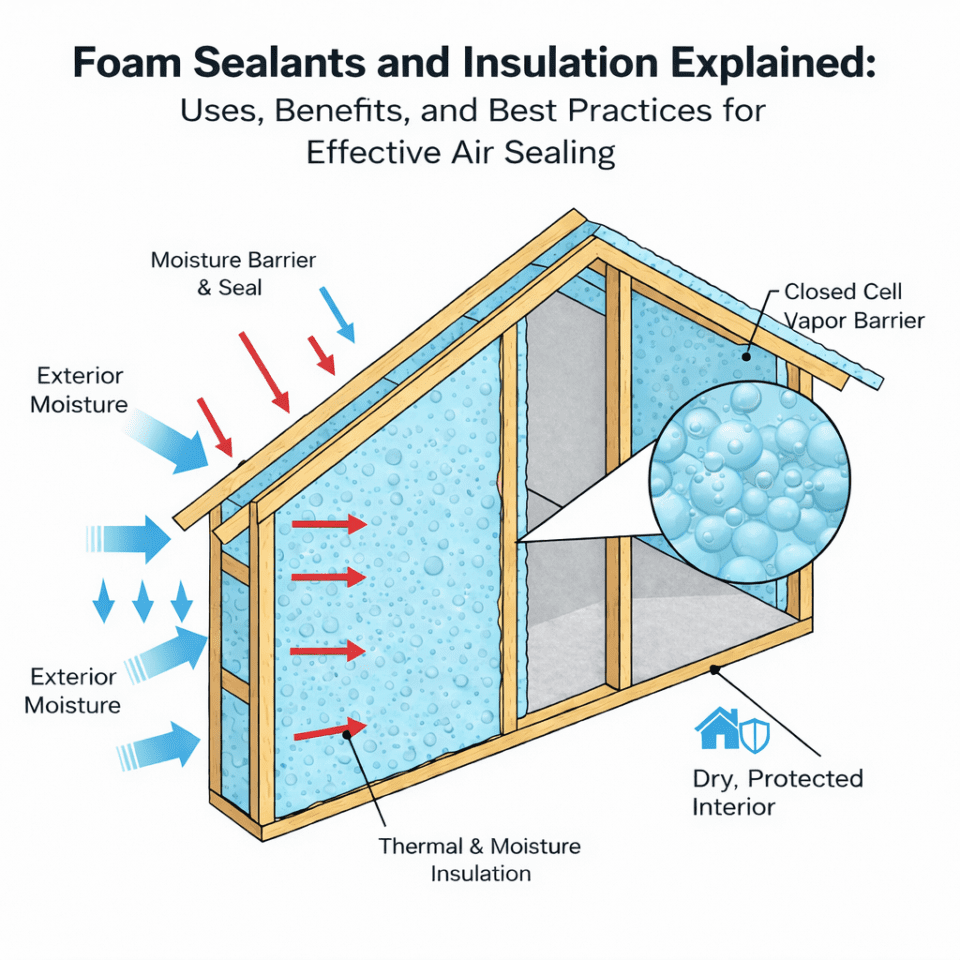
Air sealing is one of the most important — yet often overlooked — components of building performance. Even small gaps in a structure can allow air, moisture, and outdoor pollutants to enter, reducing energy efficiency and placing unnecessary strain on HVAC systems. Foam sealants and insulation play a critical role in closing these gaps, helping contractors and property owners create tighter, more controlled environments.
Understanding how these materials work, where they should be applied, and the best practices for installation can significantly improve comfort, durability, and long-term energy savings.
What Are Foam Sealants and Insulation?
Foam sealants are expanding materials designed to fill cracks, joints, and penetrations where air leakage commonly occurs. Once applied, the foam expands to create a durable barrier that helps prevent unwanted airflow and moisture intrusion.
Spray foam insulation goes a step further by combining air sealing and thermal resistance in a single application. Unlike traditional insulation materials that primarily slow heat transfer, spray foam actively blocks air movement — one of the leading causes of energy loss in residential and commercial structures.
Together, foam sealants and insulation help create a continuous building envelope that supports better indoor temperature control and improved overall efficiency.
Why Air Sealing Matters More Than Ever
Modern building standards increasingly emphasize energy performance, and for good reason. Poor air sealing can lead to:
- Higher heating and cooling costs
- Inconsistent indoor temperatures
- Increased humidity and moisture risks
- Reduced indoor air quality
- Added wear on HVAC equipment
By addressing air leakage early, contractors can deliver structures that perform better from day one while helping property owners avoid costly efficiency issues later.
Common Areas Where Foam Sealants Are Most Effective
Air leaks tend to occur in predictable locations throughout a structure. Identifying these areas allows contractors to take a proactive approach to sealing.
Rim Joists and Foundation Connections
These transition points are notorious for air infiltration. Applying foam creates a strong thermal and air barrier where framing meets the foundation.
Wall Penetrations
Openings for plumbing, electrical wiring, and gas lines often leave small but impactful gaps. Foam sealants expand into these spaces, closing pathways for outside air.
Attics and Rooflines
Warm air naturally rises, making the attic one of the largest sources of energy loss if not properly sealed. Foam insulation helps maintain a consistent boundary between conditioned and unconditioned spaces.
Windows and Door Frames
Even well-installed units can develop micro gaps over time. Foam sealants provide a flexible solution that helps maintain long-term performance.
Crawl Spaces
Sealing crawl spaces can help control moisture levels while improving overall indoor air quality in the structure above.
Key Benefits of Foam Sealants and Insulation
Improved Energy Efficiency
Blocking uncontrolled airflow reduces the workload on heating and cooling systems, often resulting in noticeable energy savings.
Enhanced Indoor Comfort
Proper air sealing helps eliminate drafts and temperature fluctuations, creating a more stable indoor environment.
Moisture Management
Air leaks frequently carry moisture with them. Sealing these pathways helps reduce the risk of condensation, mold, and long-term structural damage.
Added Structural Support
Certain spray foam products can contribute to wall rigidity, providing an additional layer of durability.
Long-Term Performance
Unlike some traditional materials that may shift or compress, properly installed foam maintains its shape and effectiveness for years.
Best Practices for Effective Air Sealing
Achieving optimal results requires more than simply applying material — it calls for a strategic approach.
Start With a Thorough Assessment
Before installation begins, inspect the structure for common leakage points. Blower door testing, when available, can help identify areas needing attention.
Choose the Right Foam for the Application
Not all foam products serve the same purpose. Low-pressure foam sealants are often ideal for small gaps and penetrations, while professional spray foam systems are better suited for larger surfaces requiring insulation and air barriers.
Avoid Overapplication
Using too much foam can lead to trimming, cleanup, and wasted material. Controlled application ensures a cleaner finish and better resource management.
Pay Attention to Surface Preparation
Clean, dry surfaces promote stronger adhesion and more reliable expansion.
Follow Manufacturer Guidance
Always adhere to product specifications regarding temperature ranges, curing times, and safety procedures to support consistent performance.
Prioritize Installer Training
Proper technique plays a major role in the effectiveness of foam applications. Ongoing education helps contractors stay aligned with industry standards and evolving best practices.
Foam Sealants vs. Traditional Insulation: Why the Combination Matters
Traditional insulation materials are designed primarily to slow heat transfer, but they do not always stop air movement. When air is allowed to circulate through or around insulation, overall performance can decline.
Foam sealants help close the gaps first, while spray foam insulation creates a more complete thermal and air barrier. Used together, these solutions support a tighter building envelope that enhances efficiency and comfort.
Effective air sealing is one of the smartest investments that can be made in a building’s long-term performance. By understanding the uses, benefits, and best practices of foam sealants and insulation, contractors can deliver projects that meet modern efficiency demands while providing lasting value to their clients.
As the industry continues to prioritize energy performance and building science, the role of foam-based solutions will only grow — making them a foundational component of smarter, more resilient construction.
FAQs
Are sealants and spray foam waterproof?
No — sealants and spray foam are not considered waterproof. However, most closed cell spray foams have very low vapor permeability and typically meet Class II vapor retarder standards. This means they help slow moisture diffusion and can contribute to moisture control within the building envelope, but they should not be relied upon as a primary waterproofing solution. When true waterproofing is required, additional systems or materials should be incorporated into the assembly.
How long does it take for expanding foam to dry?
Expanding foam typically becomes tack-free within minutes, but full curing can take longer depending on the product, temperature, humidity, and application thickness.
General expectations:
- Initial expansion: Usually occurs within a few minutes
- Tack-free time: Often 5–15 minutes
- Trim time: Commonly within 30–60 minutes
- Full cure: Typically between 8–24 hours
Always follow manufacturer guidelines, as curing times can vary by formulation.
What is the difference between foam sealant and insulation?
Foam sealants are primarily used to fill small gaps, cracks, and penetrations to stop air leakage. Spray foam insulation is designed to cover larger surfaces while providing both thermal resistance and air sealing.
In many assemblies, the two products work best together — sealants address detailed openings, while spray foam creates a more continuous air barrier
About Spray Foam Systems
Spray Foam Systems is the #1 spray foam rig builder and spray foam equipment supplier in the United States. Family-owned and proudly serving the industry since 2007, we operate from a 7-acre campus with over 80,000 square feet of dedicated working space in Greensboro, GA. With over 10,000 customers served over the last 18 years, we specialize in delivering high-quality turnkey spray foam systems, distributing top-tier equipment and supplies, and providing nationwide service and training to help contractors grow and succeed in the spray foam insulation and roofing markets.