


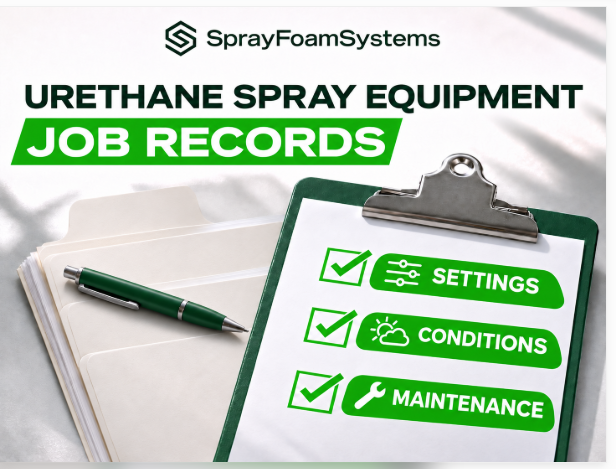
Good urethane spray equipment records help crews see what took place on each job. A clear log ties machine readings to the foam, site, and work area. It also gives your team useful facts when a fault or service need comes up.
Start With the Job, Crew, and Material Details
First, give each job a clear name or number. Then use that same name on field notes, photos, and machine reports. For work that spans several days, keep a dated log for each shift under the main job file.
- Job name, address, date, and work area.
- Crew lead, sprayer, and other crew members.
- Rig ID and machine make, model, and serial number.
- Foam brand, product name, and required mix ratio.
- A-side and B-side lot or batch numbers.
- Drum changes, with the time and new lot numbers.
Also, take clear photos of drum labels before use. If a crew swaps drums mid-shift, note which work area used the new lot. This gives your team a way to trace the material used in each part of the job.
Record Urethane Spray Equipment Settings and Readings
Next, log both the settings you choose and the readings the machine shows while spraying. A heat setpoint is the target; it does not show that the material held that heat through the job. Use the foam supplier’s current guide and the equipment manual to set the approved range.
- A-side, B-side, and hose heat setpoints.
- Displayed temperatures during spray, where available.
- Pressure setpoint and A-side and B-side readings under flow.
- Gun model, mix chamber, and tip or nozzle, as applicable.
- Heated hose and whip length, plus any setup changes.
- Feed pressure and gun air pressure, where applicable.
- Ratio checks, including the method, time, and result.
Then add the time, reason, and result of each change. For example, log the reading before a pressure change and what the crew saw afterward. Also, name the person who made the change. Do not assume that equal pressure readings alone prove the correct mix ratio.
Track Site and Surface Conditions
Site conditions can shift as the day goes on. For that reason, link each check to a time and location. Compare readings with the specific foam product’s limits, and repeat checks when weather, surfaces, or work areas change.
- Air temperature and relative humidity.
- Surface temperature and substrate type.
- Dew point when required by the application guide.
- Substrate moisture readings, test method, and test location.
- Material temperatures before use, where required.
- Surface prep, primer use, and visible moisture or frost.
- Wind and weather changes for outdoor work.
Also, note the tool and units used for each check. A surface temperature reading and an air temperature reading describe different conditions. Clear labels help the next person read the log and compare it with the product guide.
Log Maintenance Events, Faults, and Downtime
A useful urethane spray equipment log includes routine care as well as repairs. First, note the date, machine hours or cycle count where available, and the task performed. Then list the parts used and any service work still due.
- Gun cleaning, screen checks, and seal or chamber changes.
- Filter service and the condition of removed parts.
- Hose wear, leaks, damaged covers, or connection concerns.
- Pump lubrication and fluid checks required by the manual.
- Compressor, air dryer, and generator service.
- Alarm codes, fault times, and symptoms.
- Repair steps, replacement part numbers, and technician name.
- Downtime, checks after repair, and return-to-service status.
For example, “gun issue” gives a service team few clues. Instead, record the exact fault, the settings at the time, and the work area affected. Follow the equipment manual’s shutdown and pressure-relief steps before service. Afterward, document the checks completed before work resumes.
Pair Machine Reports With Field Notes
On compatible Graco systems, Reactor Connect can provide reports with temperature, pressure, material-use, and spray-time data. Available information depends on the machine and its setup. However, crews still need field notes for site readings, material lots, surface prep, and maintenance details that the system does not capture.
Therefore, save each report under the same job name as the crew’s notes. Add photos of the work area and record the quality checks required by the foam supplier and project. Machine data alone cannot confirm adhesion, installed thickness, or all job conditions.
Use Each Log to Plan the Next Shift
Before the crew leaves, review open items and assign each one to a person. Also, list parts to order and service due before the next job. Keep urethane spray equipment records easy to find so the next crew can see what changed and what still needs attention.
When you contact Spray Foam Systems, have the machine model, serial number, fault codes, and recent log ready. Those details give the service team a clearer starting point. In turn, your records can help guide parts planning, equipment support, and follow-up training.
Need help with your urethane spray equipment? Contact Spray Foam Systems for parts, service, and training support.
FAQs
1. What should crews record for urethane spray equipment on each job?
Record job and crew details, material lot numbers, machine settings, readings during spray, site conditions, and maintenance events. Also, include work areas, quality checks, photos, and any open service items.
2. When should crews update job records?
Start the log before spraying. Then update it when conditions, settings, drums, or work areas change. Record faults and repairs when they occur, and review the file at the end of each shift.
3. Can Reactor Connect replace a crew’s daily job log?
Reactor Connect can supply useful machine reports on compatible systems. Crews should still add field notes for surface conditions, material lots, prep, quality checks, and service tasks.
About Spray Foam Systems
Spray Foam Systems is the #1 spray foam rig builder and spray foam equipment supplier in the United States. Family-owned and proudly serving the industry since 2007, we operate from a 7-acre campus with over 80,000 square feet of dedicated working space in Greensboro, GA. With over 10,000 customers served over the last 18 years, we specialize in delivering high-quality turnkey spray foam systems, distributing top-tier equipment and supplies, and providing nationwide service and training to help contractors grow and succeed in the spray foam insulation and roofing markets.