


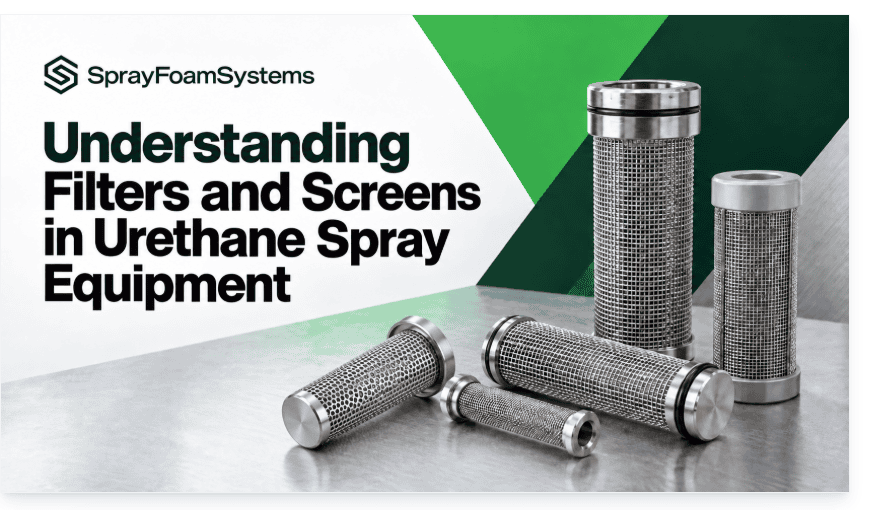
Filters and screens are small components that play a major role in keeping urethane spray equipment operating properly. They help capture debris and hardened material before contaminants reach sensitive pumps, hoses, and spray gun passages. Regular inspection can reduce clogs, pressure problems, and unexpected downtime.
Why Filters and Screens Matter
Spray foam systems move two chemical components through separate fluid paths. Even small particles can restrict material flow or interfere with proper spray gun operation.
The filters and screens inside urethane spray equipment help:
- Capture debris and material buildup
- Protect pumps, hoses, and spray gun components
- Support balanced A-side and B-side pressures
- Reduce spray pattern problems
- Prevent avoidable interruptions during application
However, filters cannot correct improper material storage, moisture contamination, or neglected maintenance. Contractors must manage the entire material-handling process carefully.
Common Filter Locations in Urethane Spray Equipment
Different systems use filters and screens at several points along the material path. Contractors should check their equipment manual to identify every serviceable component.
- Inlet strainers: These strainers help prevent larger contaminants from entering transfer pumps or other system components. When they become restricted, the system may struggle to maintain a steady material supply.
- Proportioner inlet screens: Many proportioners use inlet screens to protect internal fluid components. These screens can collect debris before it travels through the proportioner, heated hose, and spray gun.
- Spray gun screens: These screens provide another level of protection near the end of the fluid path. They help prevent particles from reaching the mixing chamber and other small passages inside the gun.
Because these passages are narrow, even minor buildup can affect how urethane spray equipment performs.
Signs That a Filter or Screen Needs Attention
A restricted filter can create symptoms that resemble other equipment problems. Therefore, contractors should inspect filters and screens before assuming that a pump, heater, or spray gun has failed.
Common warning signs include:
- Uneven A-side and B-side pressures
- Reduced material output
- An inconsistent spray pattern
- Frequent gun clogs
- Pressure fluctuations during spraying
- A system that takes longer to build pressure
These symptoms can have several causes. However, checking the filters is often a practical first step when troubleshooting urethane spray equipment.
Understanding Mesh Size
Mesh size describes how fine a screen is. A higher mesh number generally indicates smaller openings, while a lower number indicates larger openings.
The correct mesh size depends on the equipment, material, and filter location. A screen that is too coarse may allow unwanted particles to pass. Meanwhile, one that is too fine may restrict flow or require more frequent cleaning.
Always use the mesh size recommended by the equipment manufacturer. Substituting a different screen without guidance could affect system pressure and material delivery.
Cleaning and Replacing Filters Safely
Before servicing urethane spray equipment, shut down and fully depressurize the system according to the manufacturer’s instructions. Wear the required personal protective equipment and handle chemical-covered components carefully.
During service:
- Remove each filter or screen according to the equipment manual
- Check for hardened material, debris, or visible damage
- Clean reusable components with an approved cleaning product
- Replace crushed, torn, distorted, or heavily contaminated screens
- Inspect seals and O-rings before reassembly
- Confirm that each component is installed in the correct direction
Avoid forcing material through a damaged screen or reinstalling a component that no longer fits properly.
Build Filter Checks Into Routine Maintenance
The right inspection schedule depends on material condition, system design, operating environment, and daily production. Contractors may need to inspect filters more often when changing materials, restarting stored equipment, or working in dusty conditions.
Keeping replacement screens and seals available can shorten maintenance delays. In addition, documenting each inspection may help crews identify recurring contamination or material-flow problems.
Consistent filter maintenance helps protect urethane spray equipment and supports more reliable spraying from one job to the next.
Explore professional spray foam equipment, replacement parts, supplies, service, and training from Spray Foam Systems.
FAQs
How often should filters and screens be inspected?
Inspection frequency depends on the equipment, material, and operating conditions. Follow the manufacturer’s maintenance schedule and inspect components whenever pressure or spray performance changes.
Can a clogged screen cause pressure imbalance?
Yes. A restricted screen can reduce material flow on one side of the system, contributing to uneven pressures and poor spray performance.
Should damaged screens be cleaned or replaced?
Replace screens that are torn, crushed, distorted, or difficult to clean. Always choose a replacement designed for your specific urethane spray equipment.
About Spray Foam Systems
Spray Foam Systems is the #1 spray foam rig builder and spray foam equipment supplier in the United States. Family-owned and proudly serving the industry since 2007, we operate from a 7-acre campus with over 80,000 square feet of dedicated working space in Greensboro, GA. With over 10,000 customers served over the last 18 years, we specialize in delivering high-quality turnkey spray foam systems, distributing top-tier equipment and supplies, and providing nationwide service and training to help contractors grow and succeed in the spray foam insulation and roofing markets.