


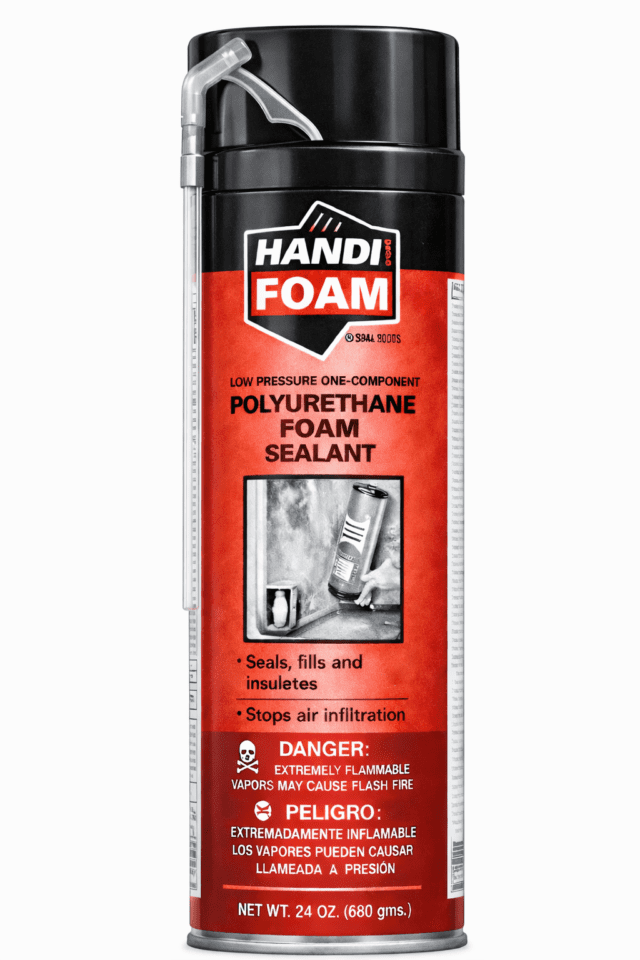
Foam products play a major role in sealing gaps, improving insulation performance, and protecting buildings from air and moisture infiltration. From small sealing jobs to large insulation applications, contractors rely on foam sealants and insulation to improve building efficiency and durability. Understanding the different types available helps ensure you select the right solution for the job.
Because every project has different needs, contractors must evaluate the application area, curing speed, expansion rate, and equipment used when selecting foam sealants and insulation.
Why Foam Sealants and Insulation Matter in Construction
Air leaks, moisture intrusion, and poor insulation can reduce energy efficiency and create long-term structural issues. Properly applied foam sealants and insulation help eliminate these problems while improving comfort and performance.
Common benefits include:
- Air sealing around windows, doors, and penetrations
- Moisture resistance that protects building materials
- Improved thermal performance in walls, attics, and crawlspaces
- Reduced drafts and improved indoor comfort
As a result, contractors frequently rely on foam sealants and insulation for both small repairs and large insulation projects.
Expanding Foam Sealants for Gap Filling
Expanding foam products are designed to fill gaps and cracks where air infiltration commonly occurs. Once applied, the foam expands to fill the cavity and then cures to form a durable seal.
These products are commonly used for:
- Window and door framing
- Pipe and electrical penetrations
- Small cracks in framing or masonry
- Sealing around HVAC openings
Expanding foam sealants and insulation products are popular because they create an airtight barrier quickly while remaining easy to apply with professional can foam guns.
Low-Expansion Foam for Precision Applications
Low-expansion foam provides better control in areas where too much expansion could cause damage. For example, windows and door frames require careful sealing to prevent pressure from distorting the frame.
Contractors often use low-expansion foam sealants and insulation products when working on:
- Window installations
- Door frames
- Finished interior spaces
- Tight cavities requiring precision
Because these products expand less aggressively, they provide reliable sealing without damaging surrounding materials.
High-Expansion Foam for Larger Cavities
High-expansion foam works best when filling large voids or irregular spaces. These products expand significantly after application, making them effective for filling deep cavities where other sealants would fail.
Typical uses include:
- Large wall voids
- Plumbing and mechanical penetrations
- Crawlspace gaps
- Structural joints
In these cases, foam sealants and insulation provide excellent coverage while reducing air movement within the building envelope.
Professional Application with Can Foam Guns
Professional contractors often use can foam guns to apply expanding foam with better accuracy and control. These tools regulate foam flow and help maintain consistent bead size.
Benefits of using professional foam guns include:
- Improved application control
- Reduced material waste
- Cleaner jobsite operation
- Faster sealing of multiple gaps
When working with foam sealants and insulation, using proper application equipment improves both efficiency and final results.
Where Foam Sealants and Insulation Are Commonly Used
Contractors rely on foam sealants and insulation in a wide range of construction and retrofit projects.
Common applications include:
- Attic air sealing
- Wall cavity insulation support
- Crawlspace sealing
- Window and door installation
- Garage and workshop air sealing
These applications help buildings maintain stable indoor temperatures while reducing energy costs.
Choosing the Right Foam for Your Project
Selecting the correct foam sealants and insulation product depends on several factors. Contractors should evaluate the application area, expansion rate, curing speed, and environmental conditions.
Important considerations include:
- Size of the gap or cavity
- Required expansion rate
- Cure time needed for the project
- Indoor or outdoor exposure
Choosing the correct product ensures the foam performs as intended while improving insulation performance and air sealing.
FAQs
What are foam sealants and insulation used for?
Foam sealants and insulation are used to fill gaps, seal cracks, and improve building insulation performance. Contractors commonly apply them around windows, doors, pipes, wall penetrations, and other areas where air leaks occur.
How long does it take for expanding foam to dry?
Most expanding foam products begin to set within minutes and typically become tack-free within 10 to 20 minutes. Full curing may take several hours depending on humidity, temperature, and the thickness of the foam application.
When should contractors use expanding foam instead of traditional sealants?
Expanding foam works best when sealing larger gaps or irregular cavities where standard caulk cannot provide enough coverage. It expands to fill the space and creates an airtight seal that improves insulation performance.
About Spray Foam Systems
Spray Foam Systems is the #1 spray foam rig builder and spray foam equipment supplier in the United States. Family-owned and proudly serving the industry since 2007, we operate from a 7-acre campus with over 80,000 square feet of dedicated working space in Greensboro, GA. With over 10,000 customers served over the last 18 years, we specialize in delivering high-quality turnkey spray foam systems, distributing top-tier equipment and supplies, and providing nationwide service and training to help contractors grow and succeed in the spray foam insulation and roofing markets.