


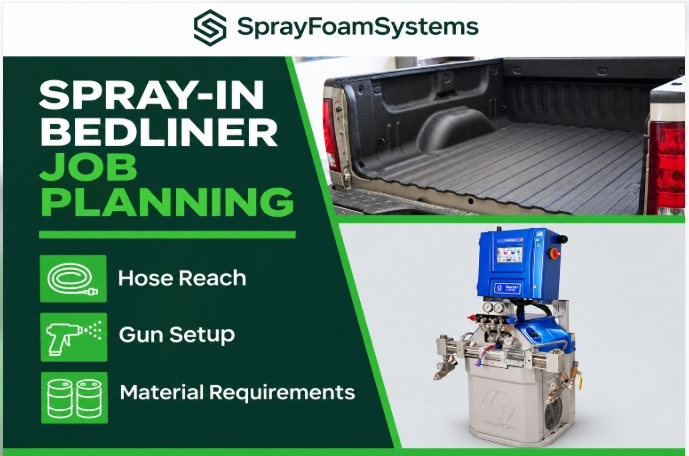
A spray in bedliner job starts with a plan for the whole system. Your coating, hose route, and gun setup all shape what you need. Spray Foam Systems helps contractors match equipment to their materials, work space, and production goals.
Start With the Spray In Bedliner Material
First, choose the coating you plan to spray. Bedliner products can use different application methods, so they do not all need the same equipment. For plural-component coatings, review the material supplier’s technical data sheet before you build your list.
Then, confirm the required mix ratio, heat, pressure, and flow range. Also, check storage, mixing, and surface prep instructions. These details help you select a system that can process the coating as specified.
- Mix ratio: Match the proportioner to the coating’s required ratio.
- Heat: Confirm the required material temperatures and heating capacity.
- Pressure: Check the coating’s spray requirements and each component’s working pressure rating.
- Flow: Match the machine and gun setup to the required application rate.
- Material supply: Confirm whether the system uses onboard tanks or needs transfer pumps.
Measure the Full Hose Route
Next, measure from the machine to the farthest point you need to spray. Include turns, the whip hose, and room to move around the truck. A straight-line measurement can leave you short once the vehicle is in place.
For example, a shop layout may need hose reach around both sides of the bed. A mobile job may add distance from the rig to the work area. Plan the route to keep hoses clear of tires, sharp edges, and traffic.
However, added reach must stay within the system’s approved limits. Confirm hose length, diameter, pressure rating, and heating or circulation requirements for the exact machine. A spray in bedliner setup needs both enough reach and a hose configuration suited to the coating.
Match the Gun Setup to the Work
Then, choose a compatible gun and mix chamber or tip. The gun model alone does not define the spray pattern or flow. Graco’s selection charts show how chamber and tip choices change those characteristics.
Truck beds include broad floors, sidewalls, corners, and wheel wells. Therefore, review how the selected pattern and flow fit each area. A higher flow rate may require faster gun movement to control film build.
- Compatibility: Confirm the gun suits the material and equipment.
- Pattern: Review the chamber or tip options for the work.
- Flow: Keep gun demand within the system’s operating capability.
- Air supply: Check the gun’s air requirements, including purge air when applicable.
- Service supplies: Include the correct cleaning tools, seals, and approved maintenance products.
Before coating a customer’s truck, verify the setup with a test spray under the supplier’s instructions. Check the pattern and coating results before moving into production. Follow the gun manual for adjustments and maintenance.
Plan Material Use and Daily Workload
Also, estimate how much surface you will coat. Include the floor, walls, wheel wells, and any other approved areas. Then, use the coating supplier’s coverage data at the specified thickness to estimate material needs.
Allow for test sprays and application waste when you place the order. Meanwhile, plan time for prep, masking, spraying, cleanup, and cure. Your daily spray in bedliner workload depends on the full process, as well as machine output.
Build the Complete Equipment List
With those details in hand, review the support equipment. Confirm available voltage, phase, and total electrical demand. Likewise, size the air supply for all equipment that will run at the same time.
- A proportioner suited to the coating and workload.
- Approved hose sections, connections, and whip hose.
- A compatible gun with the selected chamber or tip.
- Transfer pumps or an approved onboard material supply.
- Air equipment and a suitable power source.
- Surface prep tools, masking supplies, and thickness-checking tools.
- Ventilation and protective equipment required by the material safety data sheet and application conditions.
- Approved cleanup products and routine service parts.
Review Your Setup With Spray Foam Systems
Finally, bring your coating data, hose measurements, gun needs, and daily job goals to SFS. This gives the team a clear basis for reviewing your spray in bedliner equipment list. Before ordering, confirm which items come with the package and which require a separate purchase.
Explore bed liner spray equipment from Spray Foam Systems and request help matching a complete setup to your work.
FAQs
1. How much hose do I need for a spray in bedliner setup?
Measure the full route from the machine to the farthest spray point. Include turns, the whip hose, and room to move. Then, confirm that configuration stays within the equipment manufacturer’s limits.
2. Can I use the same gun setup for every bedliner coating?
Do not assume one setup fits every coating. Confirm the gun, chamber or tip, flow, and operating settings with the coating supplier and equipment manufacturer.
3. What should I give SFS when requesting an equipment quote?
Provide the coating’s technical data sheet, planned hose reach, available power and air, and expected daily workload. Also, explain whether you will work in a shop or from a mobile rig.
About Spray Foam Systems
Spray Foam Systems is the #1 spray foam rig builder and spray foam equipment supplier in the United States. Family-owned and proudly serving the industry since 2007, we operate from a 7-acre campus with over 80,000 square feet of dedicated working space in Greensboro, GA. With over 10,000 customers served over the last 18 years, we specialize in delivering high-quality turnkey spray foam systems, distributing top-tier equipment and supplies, and providing nationwide service and training to help contractors grow and succeed in the spray foam insulation and roofing markets.