


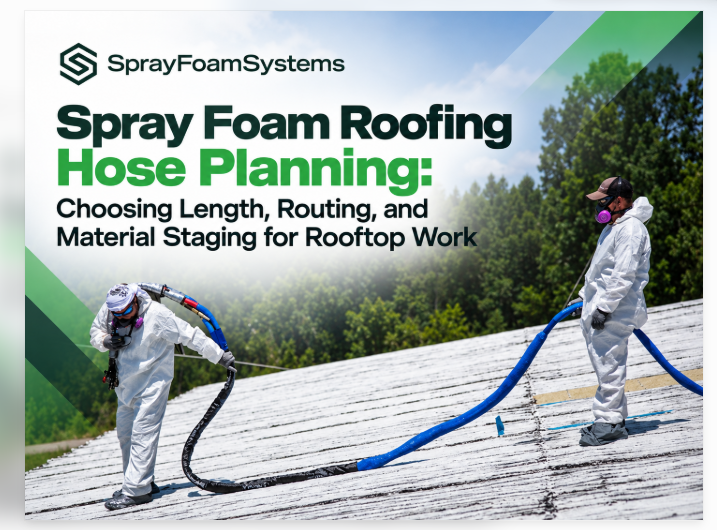
Proper spray foam roofing hose planning helps crews work faster and avoid delays. Hose length, routing, and material staging all play a key role in daily production. With a clear plan, contractors can reduce downtime and keep materials moving across the roof.
Why Spray Foam Roofing Hose Planning Matters
Roofing jobs often involve large work areas, tall buildings, and limited access points. As a result, crews need a plan for moving hoses and materials safely.
Poor hose planning can lead to several problems:
- Long hose runs that slow down work.
- Kinks, sharp bends, and hose wear.
- Material heat and pressure issues.
- Trip hazards and blocked access points.
- Extra downtime when moving hoses or equipment.
A good setup helps crews stay on task. It also helps protect equipment and reduce delays during spray foam roofing projects.
Choosing the Right Hose Length for Rooftop Work
Hose length should match the roof layout and the spray equipment. However, contractors must measure the full hose route, not just the size of the roof.
Measure the Full Hose Route
Start at the spray foam rig and follow the path the hose will take to the farthest work area. Be sure to include:
- Distance from the rig to the building.
- Height from the ground to the roof.
- Distance across the rooftop.
- Extra length needed around roof obstacles.
- Enough hose for safe movement during spraying.
For example, a roof may be 150 feet wide. Yet the total hose route may be much longer due to building height and access points.
Match Hose Length to Equipment Capacity
Each proportioner has limits for hose length, heat, and pressure. Therefore, crews should check the manufacturer’s specifications before adding more hose.
Important factors include:
- Maximum approved hose length.
- Heated hose compatibility.
- Material temperature requirements.
- Pressure loss over long hose runs.
- Proportioner heating and output capacity.
Long hose runs can affect material flow and heat. So, the right equipment setup is vital for steady spray foam roofing production.
Planning Safe and Efficient Hose Routing
Once the hose length is set, crews should plan the best route to the roof. A direct, protected path can reduce wear and help crews move more freely.
Protect Hoses from Rooftop Hazards
Roofs often have sharp edges, vents, drains, and HVAC units. These obstacles can damage hoses if crews do not plan ahead.
Good routing practices include:
- Avoid sharp edges and tight bends.
- Use proper hose protection at roof edges.
- Keep hoses clear of busy walkways.
- Prevent hoses from rubbing against rough surfaces.
- Support vertical hose runs as needed.
- Keep access points and emergency exits clear.
Crews should also inspect hoses and fittings before each job. This helps spot wear before it leads to a breakdown.
Plan for Building Height
Tall buildings can add stress to hose runs. As the hose travels upward, the equipment must overcome elevation-related pressure demands.
Crews should also secure vertical hose sections to prevent excess weight from pulling on connections. Never rely on fittings alone to support the weight of a vertical hose run.
These steps help maintain a safer setup for spray foam roofing work on multi-story buildings.
Material Staging for Better Rooftop Production
Material staging is just as important as hose routing. Crews need a plan for where drums, tools, and supplies will be placed throughout the job.
Ground-Level Material Staging
Keeping materials on the ground can make deliveries and drum changes easier. It also avoids placing heavy loads on the roof.
However, ground-level staging may require longer hose runs. Therefore, contractors must confirm that the equipment can support the full hose distance.
Rooftop Material Staging
Some projects may benefit from staging approved materials closer to the work area. This can reduce travel time across large roofs.
Before moving materials onto a roof, contractors must verify:
- Roof load limits and structural capacity.
- Safe lifting and access methods.
- Approved material storage areas.
- Proper material temperature and storage conditions.
- Clear walkways and emergency access.
Heavy drums and equipment can create concentrated loads. As a result, rooftop staging should only occur when the structure and site plan allow it.
Matching Spray Foam Roofing Equipment to the Job
A good hose plan must work with the full spray system. The proportioner, generator, compressor, and heated hose must all meet the job’s needs.
Before starting, review these key factors:
- Proportioner output: Make sure the system can meet the planned production rate.
- Pressure capacity: Confirm the equipment can support the approved hose route.
- Generator power: Check that the generator can handle the full electrical load.
- Heated hose capacity: Verify the hose and heating system are compatible.
- Air supply: Match the compressor to the spray gun and other air-powered tools.
- Material conditions: Follow the foam manufacturer’s storage and temperature requirements.
Matching each part of the system helps maintain steady production. It also helps crews avoid equipment limits during large spray foam roofing applications.
Pre-Job Spray Foam Roofing Hose Planning Checklist
Before arriving at the jobsite, crews should review the equipment and roof layout.
- Measure the full hose route, including building height.
- Confirm the proportioner’s approved hose length.
- Locate rooftop obstacles and access points.
- Plan hose protection at edges and corners.
- Choose safe ground-level or approved rooftop staging areas.
- Verify generator, compressor, and heating capacity.
- Inspect hoses, fittings, and connections.
- Plan how hoses will move as spraying progresses.
With these steps complete, crews can start the job with a clear plan. This helps reduce delays and supports a more organized workday.
Get Roofing Equipment and Support from Spray Foam Systems
Every spray foam roofing project has its own needs. Roof size, building height, hose reach, and production goals all affect equipment selection.
Spray Foam Systems helps contractors choose spray foam rigs, heated hose packages, proportioners, and supporting equipment. We also provide training, replacement parts, and technical service to help keep crews productive.
Explore spray foam roofing equipment and hose solutions at Spray Foam Systems. Our team can help you plan the right setup for your next rooftop project.
FAQs
1. How do I choose the right hose length for a spray foam roofing project?
Measure the full route from the proportioner to the farthest spray area. Include building height, roof obstacles, and access points. Then check the equipment manufacturer’s approved hose length.
2. Can I add more heated hose for a large roofing job?
You may be able to add hose if the proportioner and heating system support it. Always check the manufacturer’s specifications before extending the hose. Extra length can affect material heat and pressure.
3. Should spray foam roofing materials be staged on the ground or roof?
It depends on the building, roof load limits, and equipment setup. Ground staging often makes deliveries easier. Rooftop staging may reduce material movement, but it requires approved loading and safe access.
About Spray Foam Systems
Spray Foam Systems is the #1 spray foam rig builder and spray foam equipment supplier in the United States. Family-owned and proudly serving the industry since 2007, we operate from a 7-acre campus with over 80,000 square feet of dedicated working space in Greensboro, GA. With over 10,000 customers served over the last 18 years, we specialize in delivering high-quality turnkey spray foam systems, distributing top-tier equipment and supplies, and providing nationwide service and training to help contractors grow and succeed in the spray foam insulation and roofing markets.