


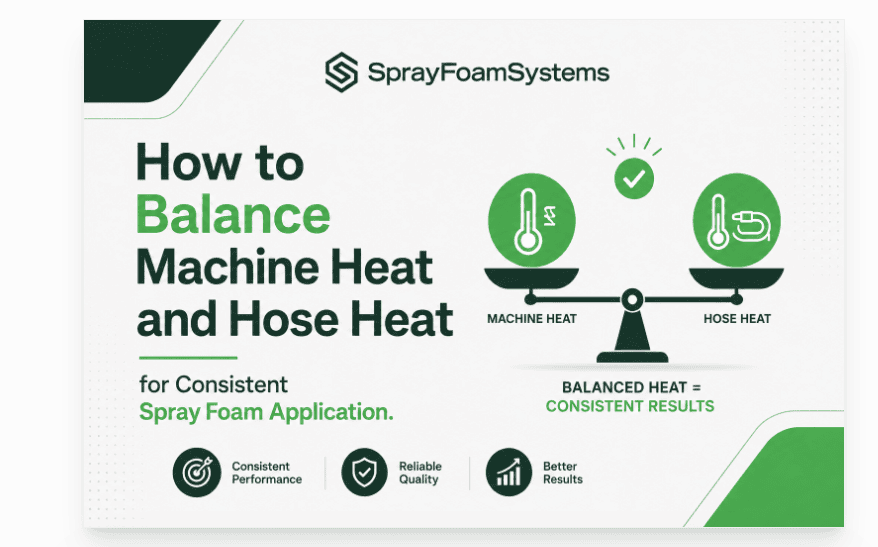
Consistent spray foam application depends on more than pressure and material ratio. Temperature also plays a major role in how foam moves through the system, reaches the spray gun, and reacts on the substrate.
A professional spray foam machine uses primary heaters and heated hose to help maintain proper material temperatures. Understanding how these heat systems work together can help contractors improve spray consistency and reduce application problems.
Understanding Heat in a Spray Foam Machine
A spray foam machine heats the A-side and B-side materials before they enter the heated hose. The primary heaters bring the chemicals toward the temperature needed for proper processing.
The heated hose then helps maintain that temperature as the material travels from the proportioner to the spray gun. Both systems must work together to deliver material at the correct temperature at the gun.
The basic process includes:
- Material enters the proportioner from the supply system.
- Primary heaters raise the A-side and B-side material temperatures.
- Heated hose helps maintain temperature during material delivery.
- The spray gun mixes the two components at the point of application.
When these stages remain balanced, contractors can achieve a more stable spray pattern and consistent foam quality.
Why Machine Heat and Hose Heat Serve Different Purposes
Machine heat and hose heat work together, but they do not perform the same job.
The primary heaters on a spray foam machine provide the main temperature increase. Hose heat primarily helps prevent the material from losing too much heat while traveling to the gun.
For example, cold material entering the proportioner may require more energy from the primary heaters. Meanwhile, long hose runs or cold outdoor conditions can increase heat loss between the proportioner and spray gun.
Contractors should avoid relying on hose heat to compensate for material that enters the system at an unsuitable temperature. Proper material storage and conditioning remain important parts of temperature management.
How Temperature Affects Spray Foam Application
Material temperature affects viscosity, flow, mixing, and overall application performance. If the chemicals are too cold, they become more difficult to move and process correctly.
Improper temperatures may contribute to:
- Poor or inconsistent spray patterns
- Reduced material flow
- Difficult gun operation
- Uneven foam appearance
- Processing problems at the substrate
- Reduced application consistency
However, excessive heat can also create problems. Contractors should always follow the chemical manufacturer’s recommended processing temperatures rather than simply increasing heat settings to improve flow.
Start with Proper Material Temperature
Good temperature control begins before the chemicals reach the spray foam machine. Drum and material temperatures can affect how hard the system must work to reach the required processing range.
Cold drums can make it harder for primary heaters to maintain stable temperatures during spraying. This becomes especially important during winter or when chemicals are stored in an unconditioned environment.
Contractors should:
- Store chemicals within the manufacturer’s recommended temperature range.
- Allow cold material to reach the proper starting temperature before spraying.
- Keep drums protected from extreme temperature changes.
- Monitor material conditions throughout the workday.
Starting with properly conditioned material helps the entire heating system operate more consistently.
Adjust Heat for Jobsite Conditions
Jobsite conditions can change throughout the day. Outdoor temperature, hose exposure, wind, material temperature, and spray demand can all affect system performance.
A spray foam machine that performs well during a warm afternoon may require different operating conditions on a cold morning. Likewise, hose routed across cold ground can lose heat differently than hose protected inside a conditioned space.
Instead of making large adjustments at once, operators should monitor system performance and make controlled changes based on the chemical manufacturer’s specifications.
Consider Heated Hose Length
Heated hose length plays an important role in temperature management. The farther material travels, the more opportunity it has to lose heat.
Long hose runs can become more challenging during cold-weather applications. Hose insulation, protective coverings, and proper hose condition can all help the system maintain temperature.
Contractors should inspect heated hose for:
- Damaged insulation
- Worn protective coverings
- Heating problems
- Loose or damaged electrical connections
- Sections exposed to extreme cold
A properly maintained heated hose helps the spray foam machine deliver more stable material temperatures to the gun.
Monitor Temperature During Spraying
Setting temperatures before a job starts is only part of the process. Operators should continue monitoring equipment performance as conditions change.
Watch the machine’s temperature readings and pay attention to changes in spray pattern, material flow, and foam appearance. A sudden change may indicate a temperature issue, but it can also point to pressure, material supply, or equipment problems.
Regular monitoring helps operators identify changes before they lead to larger application issues.
Avoid Using Heat to Correct Other Problems
Increasing temperature should not become the default solution for every spray problem. A poor pattern or inconsistent output can have several causes.
Before making major temperature adjustments, inspect other parts of the system, including:
- Material supply
- Transfer pumps
- Pressure balance
- Filters and screens
- Heated hose
- Spray gun components
- Chemical condition
Finding the actual cause helps prevent unnecessary adjustments that could create additional processing problems.
Maintain the Complete Heating System
Routine maintenance supports consistent temperature control. Dirty components, damaged hose, faulty sensors, or worn electrical connections can affect heating performance.
Operators should inspect and maintain the spray foam machine according to the equipment manufacturer’s recommended service schedule. Heated hose and temperature-control components should also receive regular attention.
Preventive maintenance can help contractors catch small issues before they lead to downtime or inconsistent application.
Build a More Consistent Spray Process
Balancing primary heat and hose heat starts with understanding the role of each system. Primary heaters bring material toward the required processing temperature, while heated hose helps maintain that temperature on the way to the gun.
Properly conditioned chemicals, maintained equipment, suitable hose protection, and regular monitoring all contribute to consistent spraying. Operators should always base final temperature settings on the chemical manufacturer’s processing specifications and current jobsite conditions.
For contractors looking to upgrade or maintain a professional spray foam machine, Spray Foam Systems offers spray foam equipment, heated hoses, spray guns, replacement parts, service, training, and technical support.
FAQs
Does hose heat replace the primary heaters on a spray foam machine?
No. Primary heaters provide the main temperature increase, while heated hose primarily helps maintain material temperature as chemicals travel toward the spray gun.
Should spray foam temperatures stay the same on every job?
Not necessarily. Chemical requirements and jobsite conditions can vary. Contractors should follow the chemical manufacturer’s recommended processing specifications and monitor conditions during application.
Why can cold material cause spray foam application problems?
Cold material has higher viscosity and can be harder to heat and move through the system. Proper material conditioning helps the equipment maintain stable processing temperatures.
About Spray Foam Systems
Spray Foam Systems is the #1 spray foam rig builder and spray foam equipment supplier in the United States. Family-owned and proudly serving the industry since 2007, we operate from a 7-acre campus with over 80,000 square feet of dedicated working space in Greensboro, GA. With over 10,000 customers served over the last 18 years, we specialize in delivering high-quality spray foam equipment, spray rigs, replacement parts, service, training, and technical support. Our experienced team is committed to helping contractors succeed in the spray foam insulation and roofing industries.