


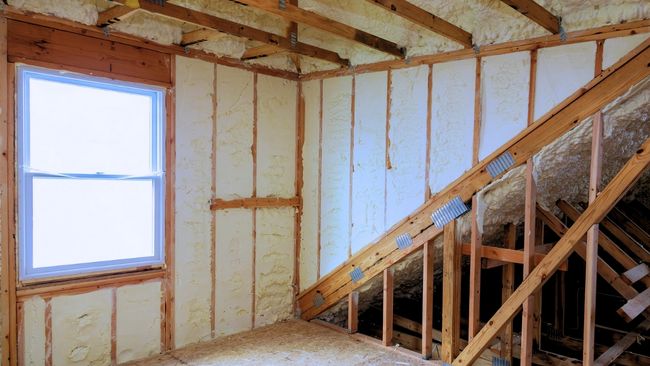
A spray foam insulation system can improve energy efficiency, reduce air leakage, and increase indoor comfort. However, proper installation remains essential. Knowing where to avoid spray foam helps contractors prevent costly repairs, improve performance, and maintain safer building assemblies.
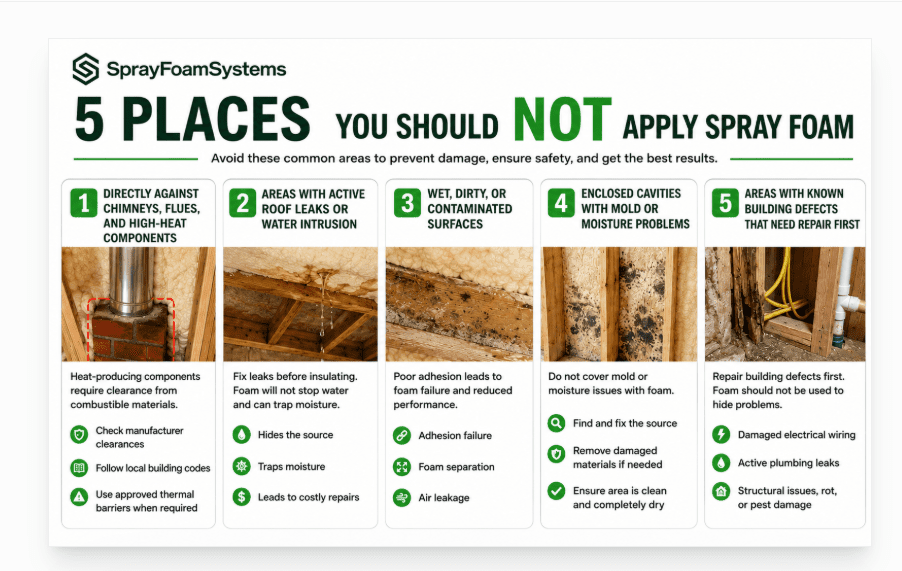
1. Directly Against Chimneys, Flues, and High-Heat Components
Contractors should never install a spray foam insulation system directly against chimneys, flue pipes, exhaust vents, or other components that require clearance from combustible materials.
Because these components operate at high temperatures, contractors should always follow manufacturer recommendations and local building codes. Therefore, they should verify required clearances before installing insulation nearby.
2. Areas with Active Roof Leaks or Water Intrusion
A spray foam insulation system does not repair leaks. Instead, contractors should correct roof leaks, plumbing leaks, and other sources of water intrusion before installation.
Otherwise, insulation can hide the source of the problem while moisture continues to damage building materials. As a result, repair costs can increase over time.
3. Wet, Dirty, or Contaminated Surfaces
Proper adhesion plays a critical role in insulation performance. However, wet, oily, dusty, or contaminated surfaces can prevent foam from bonding correctly.
Consequently, poor surface conditions can lead to:
- Adhesion failure
- Foam separation
- Reduced insulation performance
- Air leakage
Therefore, contractors should inspect and prepare all surfaces before spraying.
4. Enclosed Cavities with Existing Mold or Moisture Problems
Contractors should never use a spray foam insulation system to cover mold growth or unresolved moisture issues.
For example, if mold exists inside a wall cavity, contractors should first locate and repair the source of moisture. Then, they can address mold concerns before moving forward with insulation installation.
By solving these issues first, contractors help support long-term building performance.
5. Areas with Unresolved Building Defects
Contractors should not use insulation to hide building problems that require repair.
Instead, they should inspect the structure for:
- Rotting wood
- Structural damage
- Pest infestations
- Water-damaged materials
- Mold-contaminated building components
After completing repairs, contractors can proceed with installation more confidently. As a result, the building remains safer, more durable, and more energy efficient.
Why Spray Foam Safety Matters for Every Insulation Project
Proper spray foam safety practices help maximize the performance of a spray foam insulation system while protecting building components. Additionally, careful preparation and moisture control help contractors achieve better long-term results.
Whether the project involves a home, commercial building, or industrial facility, following spray foam safety best practices helps improve insulation performance and reduce preventable problems.
FAQs
Can a spray foam insulation system be applied around windows and doors?
Yes. Contractors commonly use a spray foam insulation system around windows and doors to reduce air leakage. However, they typically choose products designed specifically for these applications to avoid excessive expansion.
Can a spray foam insulation system stop an active roof leak?
No. A spray foam insulation system does not repair active leaks. Instead, contractors should identify and repair the source of water intrusion before installing insulation.
Why is spray foam safety important when installing foam insulation equipment?
Proper spray foam safety practices help contractors achieve better results, protect building components, and maximize long-term insulation performance.
About Spray Foam Systems
Spray Foam Systems is the #1 spray foam rig builder and spray foam equipment supplier in the United States. Family-owned and proudly serving the industry since 2007, we operate from a 7-acre campus with over 80,000 square feet of dedicated working space in Greensboro, GA. With over 10,000 customers served over the last 18 years, we specialize in delivering high-quality turnkey spray foam systems, distributing top-tier equipment and supplies, and providing nationwide service and training to help contractors grow and succeed in the spray foam insulation and roofing markets.