


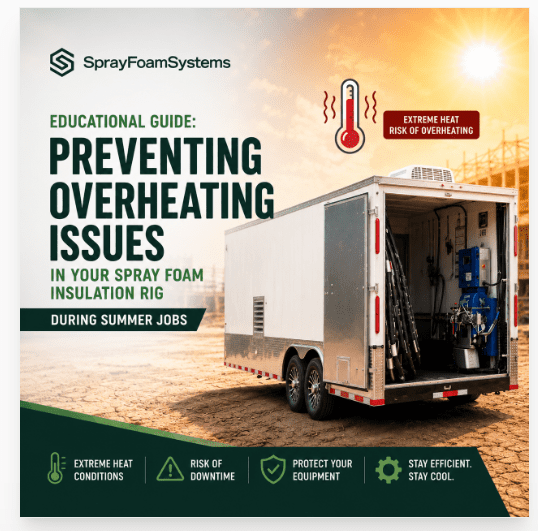
Summer temperatures can create major challenges for contractors operating a spray foam insulation rig. High heat affects material temperatures, equipment performance, hose pressure, and overall spray consistency. Without proper preparation, overheating can lead to downtime, foam quality issues, and unnecessary equipment wear.
Learning how to manage heat during summer projects helps keep your spray foam insulation rig operating efficiently throughout the season.
Why Summer Heat Causes Problems
Hot weather impacts several parts of a spray foam insulation rig at once. Direct sunlight, enclosed trailers, and long production hours can quickly raise equipment temperatures beyond recommended levels.
Common overheating issues include:
- Overheated proportioners
- Excessive hose temperatures
- Chemical pressure buildup
- Compressor strain
- Generator shutdowns
- Inconsistent foam performance
These problems can reduce productivity and increase maintenance costs during busy summer jobs.
Monitor Chemical and Hose Temperatures
Material temperature control is critical during hot weather. Foam chemicals stored in direct sunlight may become too warm before entering the system.
To help prevent problems:
- Keep drums shaded whenever possible
- Monitor chemical temperatures throughout the day
- Reduce hose heat settings when conditions allow
- Avoid leaving hoses exposed to direct sunlight
- Watch for sudden pressure fluctuations
Proper temperature management helps your spray foam insulation rig maintain consistent spray performance.
Improve Ventilation Inside the Rig
Poor airflow is one of the biggest causes of overheating. Enclosed spray rigs can trap large amounts of heat, especially when generators and compressors run continuously.
Helpful ventilation practices include:
- Open trailer doors when safe
- Install additional ventilation fans
- Keep cooling areas free of dust and debris
- Position the rig out of direct afternoon sunlight
- Inspect cooling components regularly
Better airflow helps protect your spray foam insulation rig from unnecessary heat buildup.
Check Generator and Compressor Performance
Generators and compressors work harder during summer conditions. High temperatures can reduce cooling efficiency and increase the risk of shutdowns.
Signs of overheating may include:
- Reduced power output
- Rising engine temperatures
- Irregular compressor cycling
- Equipment warning alarms
- Excessive operating noise
Routine inspections of filters, oil levels, and cooling systems can help prevent costly breakdowns.
Train Crews to Spot Warning Signs
Operators should understand how to recognize overheating issues early. Quick action can prevent equipment damage and reduce downtime.
Common warning signs include:
- Pressure changes
- Foam quality inconsistencies
- High hose temperatures
- Equipment alarm codes
- Reduced spray performance
Well-trained crews help keep the spray foam insulation rig operating safely and efficiently during extreme heat.
FAQs
Can summer heat affect spray foam quality?
Yes. Excessive heat can impact material consistency, pressure balance, and foam structure during application.
How can contractors reduce overheating inside a spray foam insulation rig?
Improving ventilation, shading equipment, monitoring temperatures, and performing regular maintenance can help reduce overheating risks.
Why is preventive maintenance important during summer spraying?
Hot weather places additional stress on generators, compressors, hoses, and cooling systems. Regular maintenance helps reduce downtime and equipment wear.
About Spray Foam Systems
Spray Foam Systems is the #1 spray foam rig builder and spray foam equipment supplier in the United States. Family-owned and proudly serving the industry since 2007, we operate from a 7-acre campus with over 80,000 square feet of dedicated working space in Greensboro, GA. With over 10,000 customers served over the last 18 years, we specialize in delivering high-quality turnkey spray foam systems, distributing top-tier equipment and supplies, and providing nationwide service and training to help contractors grow and succeed in the spray foam insulation and roofing markets.