


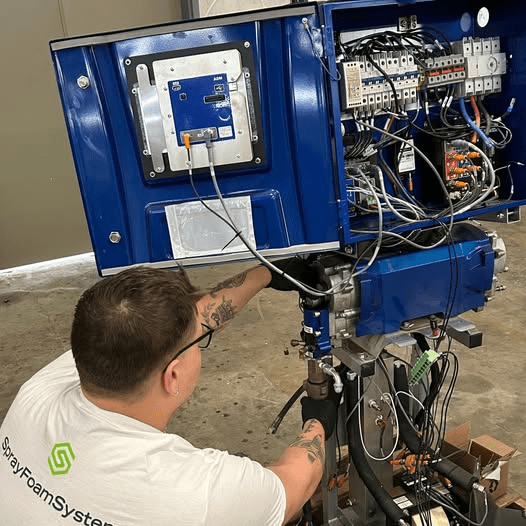
When your spray foam rig’s Core E1 pump starts acting up, it’s not just an inconvenience—it’s a threat to uptime, profits, and the long-term health of your system. A specialized spray foam equipment service center has the diagnostic tools, experience, and methodical approach to pinpoint issues fast and restore performance. In this article, we walk through how a service center diagnoses Core E1 pump problems and how that process helps you maximize equipment life.
Why Diagnosing Core E1 Pump Issues Matters
The Core E1 pump is a critical component in many spray foam rigs. It handles fluid transfer with precision, pressure control, and repeated cycling. If problems go undetected, they escalate:
- Leaks that damage other components
- Pressure fluctuations that compromise spray quality
- Premature wear on seals, valves, and motor
- Forced downtime and costly repairs
By turning to a spray foam equipment service center, you get systematic, experienced diagnostics rather than guesswork. That saves you money and extends system longevity.
Step-by-Step: How the Service Center Diagnoses Core E1 Pump Problems
Here’s the typical flow a qualified spray foam equipment service center follows:
1. Intake Inspection & Documentation
- The service center documents any visible defects: external leaks, damaged fittings, unusual noises, or overheating.
- They record your usage history and any recent symptoms (e.g. erratic pressure, slower output, spikes) to guide diagnosis.
2. Pressure & Flow Baseline Testing
- They hook up calibrated pressure and flow gauges to measure actual versus expected output curves.
- This helps detect whether the pump’s performance is degrading across the pressure band.
3. Electrical & Motor Checks
- The motor driving the Core E1 pump is checked for proper voltage, current draw, insulation resistance, and winding integrity.
- Fluctuations or under/over current can indicate motor stress or wiring issues.
4. Internal Inspection: Seals, Pistons, and Valve Blocks
- The pump is partially or fully disassembled to examine internal components:
• Seals and O-rings (checking for wear, scoring, or distortion)
• Pistons/plungers (looking for scoring, erosion, or imbalance)
• Valve plates and valves (checking for sticking, wear, or debris) - Any sign of abrasion, erosion, or distortion is flagged.
5. Leak & Pressure Compensation Checks
- The center tests for internal leakage paths (e.g. bypass, cross-port leaks) that reduce efficiency.
- They verify compensation valves or regulators are reacting properly over the full operational range.
6. Dynamic Testing under Load
- The pump is run under simulated load (with actual foam chemicals) to see how it behaves under real conditions.
- This reveals issues that don’t show under light or dry testing—vapor locking, cavitation, delayed response, or pulsation.
7. Root Cause Determination & Report
- Based on test data and inspection, the service center identifies the root causes—whether worn seals, contaminated fluid, misalignment, or control issues.
- They generate a detailed diagnostic report with recommended repairs or parts replacement.
8. Remediation & Reassembly
- Using genuine OEM parts, the service center replaces worn components.
- Reassembly is done carefully, with torque specs, alignment, and clearances checked.
- A final test run (bench + load) ensures the repaired pump meets spec before return.
Benefits of This Diagnostic Approach
- Downtime reduction — pinpointing issues avoids trial-and-error fixes.
- Cost control — you only replace what’s necessary.
- Extended lifespan — proactive remediation protects related components.
- Confidence in reliability — you know your Core E1 pump is verified before reinstallation.
FAQs
Q: How long does the diagnostic process for a Core E1 pump take?
A: In many spray foam equipment service center operations, full diagnostics (inspection, testing, reporting) can be completed within 1–2 business days, depending on queue and complexity. If parts ordering or deeper teardown is required, it may take longer.
Q: Do I need to ship my pump to the service center to get diagnostics?
A: Yes, most spray foam equipment service center models operate via equipment drop-off or shipping. You ship the pump (or entire module) to their facility, they perform the diagnosis and then return it after repair. Some centers also accept local drop-off.
Q: Will the service center only repair what’s broken, or suggest preventive replacements?
A: A reputable spray foam equipment service center will highlight both immediate repairs and recommended preventive replacements (e.g. seals, O-rings) based on wear margins. They’ll document what’s critical now and what you should watch for in future maintenance.
About Spray Foam Systems
Spray Foam Systems is the #1 spray foam rig builder and spray foam equipment supplier in the United States. Family-owned and proudly serving the industry since 2007, we operate from a 7-acre campus with over 80,000 square feet of dedicated working space in Greensboro, GA. With over 10,000 customers served over the last 18 years, we specialize in delivering high-quality turnkey spray foam systems, distributing top-tier equipment and supplies, and providing nationwide service and training to help contractors grow and succeed in the spray foam insulation and roofing markets.