


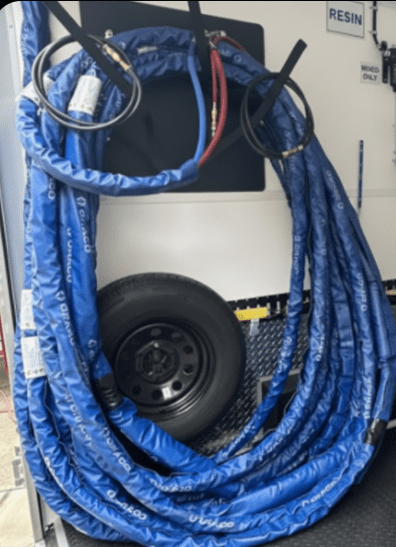
Spray hose problems are one of the leading causes of downtime on the jobsite. When spray foam equipment stops performing correctly, hose-related faults are often the root issue. Knowing how to identify specific problems, error codes, and corrective actions helps contractors restore production quickly and protect their equipment.
Why Spray Hoses Are Critical to Spray Foam Equipment Performance
Spray hoses regulate heat, pressure, and material flow between the proportioner and spray gun. Because spray foam equipment depends on precise balance and temperature, even small hose failures can trigger alarms, poor foam quality, or complete shutdowns.
Uneven Hose Temperature
Uneven hose temperature can lead to poor spray patterns, off-ratio foam, and inconsistent cell structure.
Common error codes associated with this issue include E04, E05, or hose temperature deviation alarms. These codes indicate that the hose is not reaching or maintaining the programmed temperature.
This issue is often caused by damaged heat wire, incorrect hose length settings, loose electrical connections, or power supply problems. To troubleshoot, confirm the hose length is correctly set at the machine, inspect electrical connections at hose junctions, and test hose resistance to verify heating circuit integrity.
Low Hose Temperature Shutdowns
Low hose temperature faults will prevent spraying and are designed to protect material quality.
Error codes such as E30 or low-temperature hose alarms appear when the hose temperature falls below the minimum operating range. These faults often occur during cold starts or when heating circuits fail.
Corrective steps include allowing adequate warm-up time, checking fuses and breakers, verifying incoming voltage, and confirming hose temperature sensors are functioning correctly.
Pressure Imbalance Between A and B Hoses
Pressure imbalance is a common spray foam equipment issue that directly affects foam quality.
Error codes like E02 or E03 indicate unequal pressure between the A and B sides. These alarms often appear when one hose has a restriction or temperature difference.
Typical causes include partial hose blockages, crystallized material, kinked hose sections, or clogged gun filters. To resolve the issue, flush both sides independently, inspect hoses for damage, and ensure both materials are fully heated before spraying.
High Hose Pressure or Flow Restriction
High pressure alarms are often linked to hose restrictions and should never be ignored.
Error codes such as E07 or high-pressure shutdown alerts occur when material flow is restricted. This condition can damage spray foam equipment if left unresolved.
Common causes include internal hose crystallization, frozen material, or collapsed hose linings. Reduce pressure, warm the system fully, and inspect hoses immediately. Severely restricted hoses should be replaced.
Hose Electrical Continuity Faults
Electrical continuity issues prevent hose heating and frequently result in system shutdowns.
Error codes including E15 or hose power fault alarms point to electrical failures within the hose assembly.
Common causes include damaged connectors, pinched cables, repeated bending at connection points, or moisture intrusion. Troubleshooting involves disconnecting the hose, checking continuity with a meter, and replacing damaged electrical components.
Hose Thermocouple or Sensor Errors
Temperature sensor failures can cause false readings and unnecessary shutdowns.
Error codes such as E20 or hose sensor fault alarms indicate the system is receiving incorrect temperature data. These faults may cause overheating or prevent heating entirely.
Inspect thermocouple connections, verify sensor placement, and replace faulty sensors. Confirm setpoints match the hose type installed on the spray foam equipment.
Preventing Hose-Related Error Codes
Routine inspections reduce the likelihood of hose-related shutdowns. Checking hose condition, electrical connections, and temperature readings before each job helps catch issues early.
Proper hose storage, avoiding sharp bends, and maintaining correct operating temperatures extend hose life and reduce error codes across spray foam equipment systems.
When Hose Replacement Is the Best Solution
Recurring error codes, persistent pressure imbalance, or repeated heating faults usually indicate internal hose damage. Continuing to operate with compromised hoses increases risk to both operators and spray foam equipment.
Replacing worn hoses early often prevents larger failures and costly downtime.
Get expert help troubleshooting spray foam equipment and keep your jobs moving without delays.
FAQs
What error code indicates low hose temperature on spray foam equipment?
Low hose temperature is commonly indicated by E30 or hose temperature deviation alarms, depending on the system.
Which error codes point to pressure imbalance in spray hoses?
Pressure imbalance is most often associated with E02 or E03, indicating unequal A and B side pressures.
Can hose-related error codes damage spray foam equipment if ignored?
Yes. Ignoring hose error codes can lead to material crystallization, pressure spikes, and damage to pumps, proportioners, and spray guns.
About Spray Foam Systems
Spray Foam Systems is the #1 spray foam rig builder and spray foam equipment supplier in the United States. Family-owned and proudly serving the industry since 2007, we operate from a 7-acre campus with over 80,000 square feet of dedicated working space in Greensboro, GA. With over 10,000 customers served over the last 18 years, we specialize in delivering high-quality turnkey spray foam systems, distributing top-tier equipment and supplies, and providing nationwide service and training to help contractors grow and succeed in the spray foam insulation and roofing markets.