


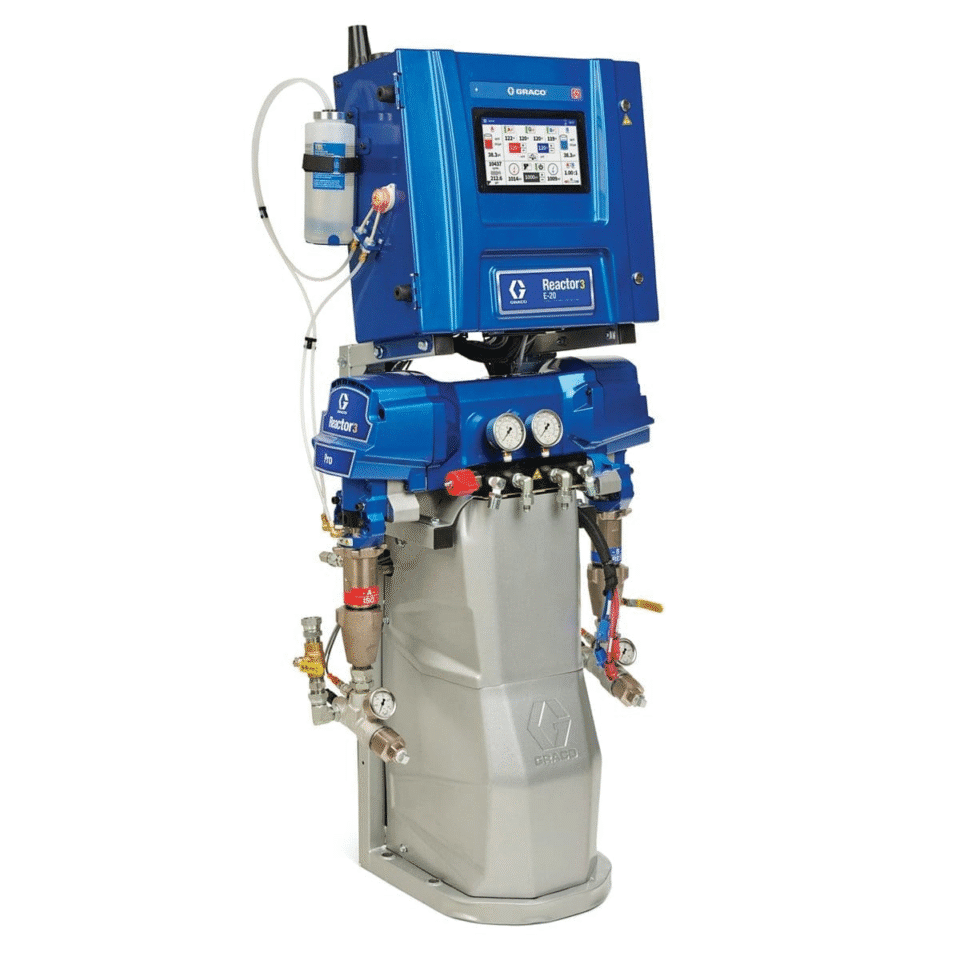
Contractors rely on durable spray foam equipment to keep projects moving, and the type of proportioner you choose plays a major role in how you maintain your system. Electric and hydraulic proportioners both power consistent material flow, yet they differ in how they operate, how they handle stress, and what technicians must watch for over time. Understanding these differences helps contractors reduce downtime, improve reliability, and extend the life of their spray foam equipment.
How Electric Proportioners Operate
Electric proportioners use an electric motor to drive the system’s pumps. This design creates a simpler and more compact setup, making them a strong fit for many residential and light commercial jobs.
Key Maintenance Considerations for Electric Units
- Inspect electrical connections for corrosion or loose wiring.
- Monitor motor performance under load, especially during long spray sessions.
- Keep internal components clean to prevent overheating.
- Replace worn seals and check for early pump wear.
Electric models are generally easier to maintain, but they must be kept clean and properly ventilated to protect internal electrical components. Because these units are quieter and simple to operate, they remain a popular choice for contractors who want reliable spray foam equipment with low daily upkeep.
How Hydraulic Proportioners Operate
Hydraulic proportioners use a hydraulic pump and oil-driven power system to move material. This design delivers more force and smoother pressure, making hydraulic setups ideal for larger commercial or industrial jobs.
Key Maintenance Considerations for Hydraulic Units
- Regularly check hydraulic fluid levels and replace fluid at recommended intervals.
- Inspect hoses and fittings for small leaks that could reduce performance.
- Maintain ideal operating temperature to protect the pump system.
- Watch for pressure inconsistencies that may indicate pump or valve issues.
Hydraulic systems deliver higher output, but they also require more routine checks. Contractors who rely on high-volume spray foam equipment often choose hydraulic models because they offer consistent power, even in demanding conditions.
Differences in Durability and Longevity
Electric proportioners have fewer moving parts, which gives them a reputation for steady performance and predictable maintenance schedules. Hydraulic proportioners, on the other hand, are built for tougher environments, and many contractors prefer them when spraying thick materials or working long shifts.
Both types of spray foam equipment last longer when serviced regularly, but hydraulic units usually outperform electric models under heavy workloads.
Differences in Repair Costs and Parts
Electric proportioners usually cost less to repair because electrical components are easier to replace and diagnose. Hydraulic proportioners require specialized parts and more involved service, which can increase repair expenses. However, hydraulic systems also tend to show fewer performance drops over time, which helps offset long-term maintenance costs.
Choosing the Right Type for Your Workload
Contractors who run smaller insulation jobs often prefer electric proportioners for their ease of maintenance and simple design. High-volume crews lean toward hydraulic versions for their power, pressure control, and long-term durability. Both systems support professional-grade spray foam equipment performance when maintained correctly.
Explore the full line of electric and hydraulic proportioners available through Spray Foam Systems to choose the best spray foam equipment for your business needs.
FAQs
What makes hydraulic proportioners better for high-volume jobs?
Hydraulic proportioners deliver stronger, steadier pressure, which helps maintain consistent flow during long spray sessions or when handling dense materials.
Are electric proportioners easier to maintain?
Yes. Electric units have fewer moving parts, making them simpler to service and inspect. This often leads to lower routine maintenance costs.
How often should proportioners be serviced?
Most proportioners require regular checks of pumps, seals, connections, and material paths. Heavy-use rigs may need more frequent service to keep spray foam equipment running at peak performance.
About Spray Foam Systems
Spray Foam Systems is the #1 spray foam rig builder and spray foam equipment supplier in the United States. Family-owned and proudly serving the industry since 2007, we operate from a 7-acre campus with over 80,000 square feet of dedicated working space in Greensboro, GA. With over 10,000 customers served over the last 18 years, we specialize in delivering high-quality turnkey spray foam systems, distributing top-tier equipment and supplies, and providing nationwide service and training to help contractors grow and succeed in the spray foam insulation and roofing markets.