


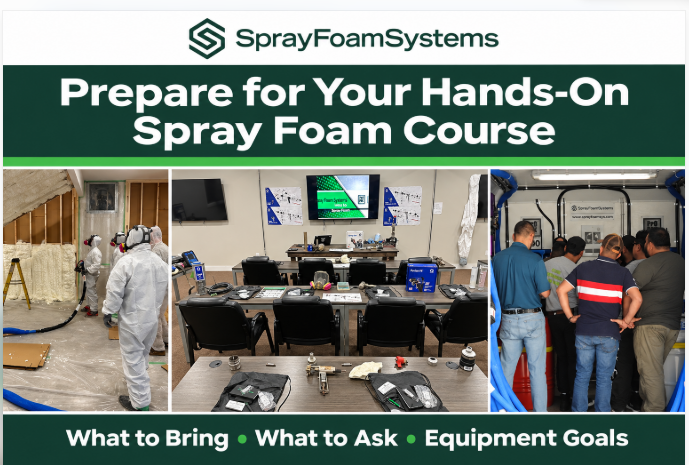
A hands-on spray foam course is a chance to work through the questions that matter to your crew. However, a little prep helps you make better use of that time. Bring clear goals, details about your work, and a short list of skills you want to build.
Confirm the Details Before You Pack
First, contact the training team to confirm the dates, location, arrival time, and course scope. Explain your experience level and the work you plan to take on. That way, the team can help you check whether the session fits your needs.
Also, ask what you must complete before arrival. Confirm any required forms, reading, or safety prerequisites. If several crew members will attend, share their roles so the team knows who sprays, runs the rig, or handles estimates.
What to Bring to Your Spray Foam Course
Ask SFS for its current clothing and packing guidance before you travel. As a planning checklist, consider the items below:
- Work clothes you can get dirty, subject to the instructor’s guidance.
- Sturdy, closed-toe work shoes or boots that meet course requirements.
- A notebook and pen for setup notes, questions, and follow-up tasks.
- Equipment model numbers, gun and chamber details, and hose length.
- Photos of your rig layout, equipment labels, or past spray concerns.
- Product names and current technical data sheets and safety data sheets for materials you use.
- A short list of planned jobs, crew needs, and equipment goals.
If you want to bring a gun, part, material sample, or rig, get approval first. Photos and model details may give instructors the context they need without moving equipment.
Ask About PPE Before Arrival
Next, confirm which personal protective equipment (PPE) SFS supplies and which items you must bring. Ask about gloves, protective clothing, eye protection, and respiratory protection for each hands-on task. Also, confirm any prerequisites for using the required respiratory equipment.
Do not assume that the respirator you use for another task will suit the training activity. Instead, follow the course team’s requirements and the applicable material and equipment guidance. Resolve these questions before the session so they do not delay your participation.
Define the Jobs and Equipment Goals You Have in Mind
Your spray foam course questions should start with the work you want to do. For example, tell the team whether you plan to spray residential insulation, larger commercial spaces, or roofing foam. If you want to add coatings or concrete lifting, ask which training option covers that work.
Then, write down the conditions your equipment must handle. Include typical job size, daily production goals, hose reach, crew size, available power, and material storage needs. Even rough estimates give the discussion a useful starting point.
Set Three Clear Learning Goals
- Operation: Identify a task you want to understand, such as pre-start checks or the shutdown sequence for your machine.
- Equipment selection: List the machine, gun, hose, power, or air supply questions you need help answering.
- Daily care: Choose a maintenance or troubleshooting skill you want to review with an instructor.
For instance, “I want to plan hose reach for larger jobs” gives the instructor a clear need to discuss. Likewise, “I need a daily gun care routine” helps focus your questions on a task you can use at work.
Bring Specific Questions and Operating Problems
Before your spray foam course, note any recurring issues. Record when each problem starts, the equipment and material in use, displayed settings, and any error codes. Also, describe what changed before the issue appeared.
- Which checks should our crew complete before startup?
- How should we choose a gun and chamber for our planned work?
- What should we check when the spray pattern changes?
- Which maintenance tasks belong on our daily and weekly lists?
- What details should we collect before calling technical support?
- How do material requirements affect our equipment choices?
- Which job costs and downtime allowances should we discuss when quoting?
Ask before taking photos or recording demonstrations. Then, use your notes to flag points that need more explanation. A clear question is more useful than trying to memorize every detail at once.
Leave With a Plan for Your Crew
At the end of your spray foam course, review your three goals with the instructor. Confirm what you learned, what needs more practice, and which equipment questions remain open. Finally, turn those notes into a short follow-up list for your crew.
Contact Spray Foam Systems to discuss your training needs and prepare for a spray foam course that fits your applications and equipment goals.
FAQs
1. Do I need to own equipment before attending?
SFS welcomes training inquiries from people who own equipment and those who need help choosing it. Share your experience and goals with the team to confirm the right training option.
2. Should I bring my own PPE?
Confirm this with SFS before arrival. Ask what the course provides, what you must bring, and which requirements apply to hands-on participation.
3. What if I do not know which equipment I need?
Bring details about your planned applications, job sizes, crew, and production goals. These give instructors a starting point for discussing equipment needs and questions to resolve before you buy.
About Spray Foam Systems
Spray Foam Systems is the #1 spray foam rig builder and spray foam equipment supplier in the United States. Family-owned and proudly serving the industry since 2007, we operate from a 7-acre campus with over 80,000 square feet of dedicated working space in Greensboro, GA. With over 10,000 customers served over the last 18 years, we specialize in delivering high-quality turnkey spray foam systems, distributing top-tier equipment and supplies, and providing nationwide service and training to help contractors grow and succeed in the spray foam insulation and roofing markets.