


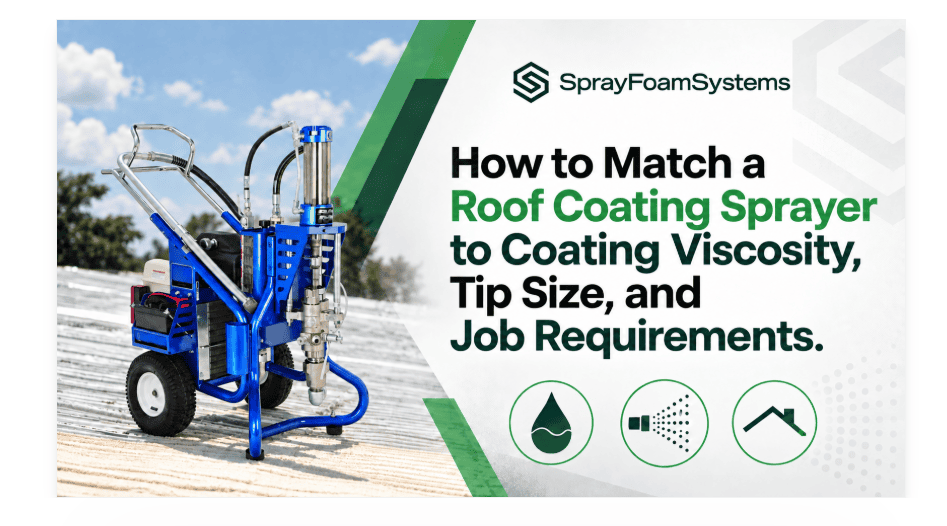
Choosing the right roof coating sprayer starts with understanding the material you plan to spray and the demands of the project. Coating viscosity, recommended tip size, required pressure, hose length, and production needs all affect which equipment will provide dependable material delivery.
Start With Coating Viscosity
Roof coatings can vary significantly in thickness. Lower-viscosity materials generally move through a spray system more easily, while thicker elastomeric and protective coatings may require equipment capable of maintaining higher flow and pressure.
Before selecting a roof coating sprayer, review the coating manufacturer’s application requirements. The sprayer must be capable of moving the material consistently without placing unnecessary strain on the pump.
Temperature can also affect viscosity. Some coatings become noticeably thicker in cooler conditions, which can influence material flow and spray performance.
Match Your Roof Coating Sprayer to the Recommended Tip Size
Spray tip size controls how much material passes through the gun and helps determine the spray pattern. Thicker coatings often require larger tip openings than conventional paints or thinner materials.
Always compare the coating manufacturer’s recommended tip range with the maximum tip size supported by the sprayer. A machine that cannot properly support the required tip may struggle to maintain consistent pressure and material delivery.
Tip wear should also be monitored because an oversized or worn tip can affect the spray pattern and increase material usage.
Consider Pressure and Material Output
Pressure is important, but it should not be the only specification used when comparing equipment. A professional roof coating sprayer must also provide enough material output for the coating, tip configuration, and production demands of the project.
Higher-volume jobs may require greater flow capacity to maintain a consistent application rate. Smaller projects may not require the same level of output, making it important to match equipment capacity to the work being performed.
Account for Hose Length and Jobsite Conditions
Roofing projects often require crews to work a significant distance from the sprayer. Longer hose runs can create additional resistance and affect material delivery, especially with thicker coatings.
When selecting a roof coating sprayer, consider:
- Coating type and viscosity
- Manufacturer-recommended tip size
- Required operating pressure
- Material flow rate
- Hose diameter and total hose length
- Available electrical, gas, or pneumatic power
- Expected project size and production requirements
Evaluating the complete system helps ensure the pump, hose, gun, and tip work together properly.
Match Equipment Capacity to Your Workload
A contractor completing occasional coating applications may have different equipment requirements than a crew handling large commercial roofing projects every week.
Choosing a roof coating sprayer with enough capacity for your typical workload can help crews maintain consistent application while reducing unnecessary equipment strain and interruptions.
It can also be beneficial to consider future growth. Equipment with additional production capacity may provide more flexibility as project size or coating requirements change.
Find the Right Coating Sprayer for Your Application
Once you understand your coating and production needs, comparing equipment becomes much easier. The goal is to choose a system that can handle your material reliably while supporting the pace and conditions of your typical roofing projects.
Spray Foam Systems offers professional coating and paint sprayers for roofing and protective coating applications.
Shop Spray Foam Systems for a roof coating sprayer built to support your application and workload.
FAQs
How do I know what tip size my roof coating sprayer needs?
Start with the coating manufacturer’s recommended tip size. Then confirm that your sprayer can support that tip while maintaining the required material flow and pressure.
Can thick roof coatings be sprayed with a standard paint sprayer?
Not always. High-viscosity coatings may require greater flow capacity, larger tips, and equipment specifically designed to handle heavier materials.
What should I consider before buying coating equipment?
Consider coating viscosity, tip requirements, flow rate, pressure, hose length, power availability, project size, and expected production demands.
About Spray Foam Systems
Spray Foam Systems is the #1 spray foam rig builder and spray foam equipment supplier in the United States. Family-owned and proudly serving the industry since 2007, we operate from a 7-acre campus with over 80,000 square feet of dedicated working space in Greensboro, GA. With over 10,000 customers served over the last 18 years, we specialize in delivering high-quality turnkey spray foam systems, distributing top-tier equipment and supplies, and providing nationwide service and training to help contractors grow and succeed in the spray foam insulation and roofing markets.