


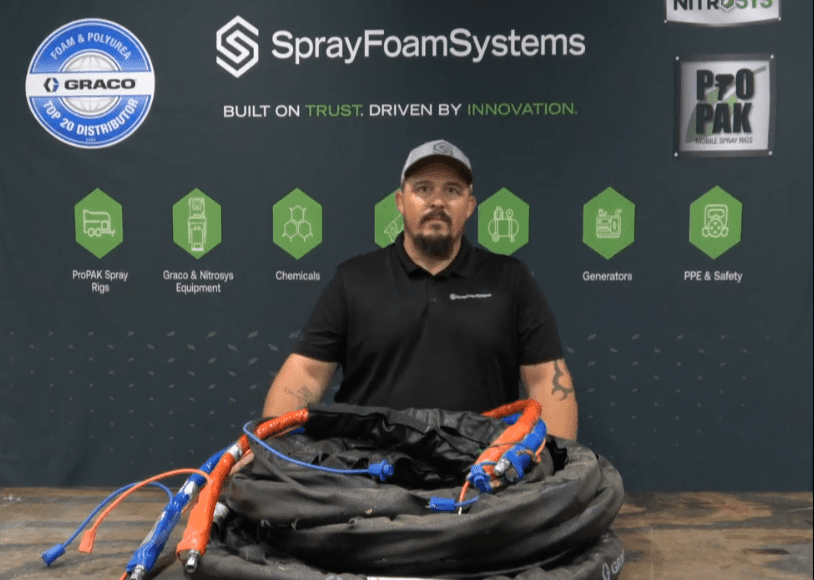
When your equipment starts acting up, the R3 internally heated hose is often one of the first places to check. This component plays a major role in maintaining heat and material flow on any spray foam insulation rig. If it fails, your entire system performance can drop fast. Understanding how to troubleshoot the R3 internally heated hose helps you reduce downtime and keep your spray foam insulation rig running efficiently.
Why the R3 Internally Heated Hose Matters
The R3 internally heated hose keeps material at the correct temperature from the proportioner to the spray gun. Because of this, it directly affects foam quality and consistency.
If the R3 internally heated hose is not working properly, your spray foam insulation rig may experience:
- Poor foam structure
- Inconsistent spray patterns
- Temperature loss during spraying
- Off-ratio material output
As a result, even a small issue can quickly turn into a larger jobsite problem.
Start with a Visual Inspection
First, perform a basic inspection of the R3 internally heated hose. This step often reveals simple issues that can be fixed quickly.
Look for:
- Cuts or damage along the hose jacket
- Kinks or tight bends restricting flow
- Loose fittings or connections
- Wear near connection points
If the R3 internally heated hose shows visible damage, it can impact the entire spray foam insulation rig.
Check Electrical Connections
Next, inspect all electrical connections tied to the R3 internally heated hose. Since the hose relies on consistent power, even a loose connection can stop it from heating.
Be sure to:
- Confirm all connections are tight at the proportioner
- Inspect pins for corrosion or debris
- Check for damaged wiring
- Verify power is reaching the hose
Without proper electrical flow, the R3 internally heated hose cannot maintain temperature on your spray foam insulation rig.
Monitor Temperature Performance
After that, review your system’s temperature readings. The Reactor 3 display provides valuable data for troubleshooting.
Focus on:
- Set temperature vs. actual temperature
- Sudden drops during spraying
- Uneven heating across the hose
If the R3 internally heated hose cannot hold temperature, your spray foam insulation rig will struggle to produce consistent foam.
Inspect Hose Zones and Sensors
The R3 internally heated hose uses multiple heating zones and sensors. If one zone fails, it can affect overall performance.
Check for:
- Faulty temperature sensors
- Error codes related to hose zones
- Cold spots along the hose
By identifying the faulty zone, you can isolate the issue within the R3 internally heated hose and restore your spray foam insulation rig faster.
Test Resistance and Continuity
If the issue continues, electrical testing is the next step. This helps confirm whether the heating elements inside the R3 internally heated hose are functioning correctly.
Testing includes:
- Checking continuity across heating circuits
- Measuring resistance with a meter
- Comparing readings to expected values
If readings are off, the R3 internally heated hose may have an internal break affecting your spray foam insulation rig.
Evaluate Material Flow
In some cases, the issue may not be heat alone. Material flow problems can also impact hose performance.
Make sure to:
- Check for blockages in the hose
- Confirm transfer pumps are working correctly
- Verify balanced A and B material flow
A smooth flow ensures the R3 internally heated hose performs properly across your spray foam insulation rig.
Preventative Maintenance Tips
Routine maintenance helps prevent common issues with the R3 internally heated hose. By staying proactive, you can extend the life of your equipment.
Best practices include:
- Inspect the R3 internally heated hose before each job
- Keep all electrical connections clean
- Avoid sharp bends during setup
- Store the hose properly after use
Consistent maintenance keeps your spray foam insulation rig operating at peak performance.
FAQs
What causes an R3 internally heated hose to stop heating?
Common causes include loose electrical connections, damaged heating elements, or faulty sensors within the R3 internally heated hose on a spray foam insulation rig.
How do I test an R3 internally heated hose?
You can test the R3 internally heated hose by checking continuity and resistance with a meter to confirm the internal heating elements are working correctly.
Can a faulty hose affect foam quality on a spray foam insulation rig?
Yes, if the R3 internally heated hose is not maintaining proper temperature, it can lead to poor foam quality, off-ratio mixing, and inconsistent spray performance.
About Spray Foam Systems
Spray Foam Systems is the #1 spray foam rig builder and spray foam equipment supplier in the United States. Family-owned and proudly serving the industry since 2007, we operate from a 7-acre campus with over 80,000 square feet of dedicated working space in Greensboro, GA. With over 10,000 customers served over the last 18 years, we specialize in delivering high-quality turnkey spray foam systems, distributing top-tier equipment and supplies, and providing nationwide service and training to help contractors grow and succeed in the spray foam insulation and roofing markets.