


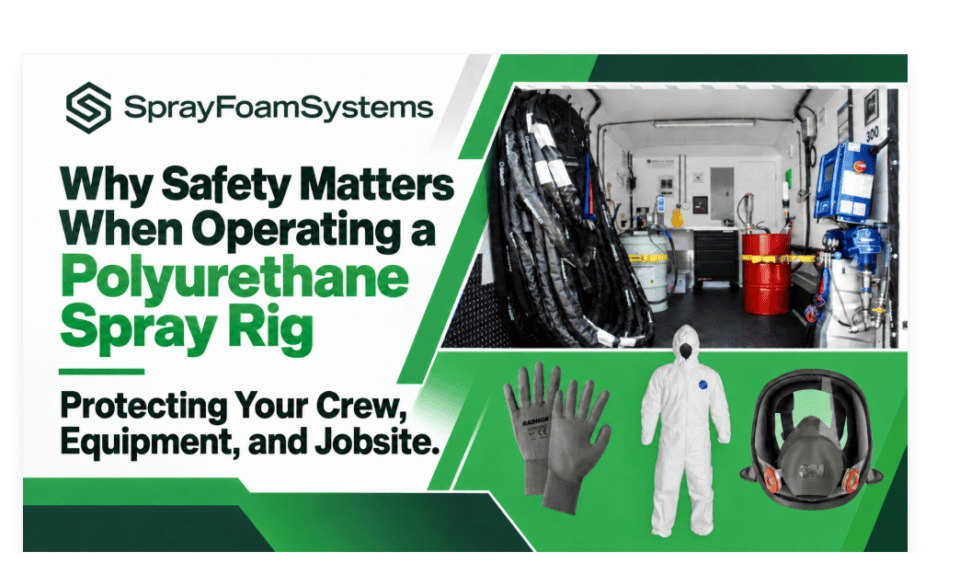
Operating a polyurethane spray rig involves high-pressure equipment, heated materials, compressed air, electrical systems, and chemicals that require proper handling. A strong safety routine helps protect your crew while also reducing equipment damage, jobsite hazards, and unnecessary downtime.
Personal Protective Equipment (PPE)
Crew members working around spray polyurethane foam should use PPE appropriate for their responsibilities and the materials being applied. This may include protective clothing, chemical-resistant gloves, eye protection, and proper respiratory protection.
PPE should be inspected before each job and replaced when damaged or contaminated. Contractors should also follow the chemical manufacturer’s safety information and applicable workplace requirements when selecting protective equipment.
Inspect Your Polyurethane Spray Rig Before Operation
A pre-job inspection can identify problems before equipment is pressurized or material begins moving through the system. Check hoses, fittings, transfer pumps, electrical connections, fluid lines, and other components for visible damage, leaks, or excessive wear.
Confirm that materials are properly connected and equipment settings are appropriate before starting the system. Addressing a loose connection or damaged component before spraying can help prevent larger problems during application.
Maintain Proper Ventilation and Jobsite Control
Spray areas should have appropriate ventilation and restricted access while polyurethane materials are being applied. Keeping unnecessary personnel away from the application area helps reduce exposure and prevents interference with the spray process.
Crews should also keep walkways clear of hoses, cords, tools, and other obstacles. Good jobsite organization reduces trip hazards and makes it easier to access the polyurethane spray rig if equipment needs immediate attention.
Handle Heated and Pressurized Equipment Carefully
Proportioners, heated hoses, spray guns, and other components may operate at elevated temperatures and pressures. Crew members should understand how to safely operate, depressurize, shut down, and service the equipment they use.
Never disconnect pressurized components or begin maintenance without following the manufacturer’s shutdown procedures. Proper operating habits help protect technicians while reducing unnecessary wear on the polyurethane spray rig.
Prevent Cross-Contamination and Material Handling Problems
A-side and B-side materials must remain separated throughout storage, transfer, and application. Using the correct pumps, hoses, fittings, and containers for each material helps prevent contamination that can damage equipment or affect foam quality.
Drums should remain properly labeled, secured, and stored according to manufacturer recommendations. Clean material-handling practices help keep the spray system dependable from the drums to the spray gun.
Train Your Crew for Safe Spray Foam Operation
Proper training helps operators understand equipment startup and shutdown, material handling, PPE requirements, pressure settings, maintenance procedures, and emergency response. Crews should understand how the equipment works before operating a polyurethane spray rig on the jobsite.
Spray Foam Systems offers hands-on spray foam training designed to help contractors and crews build practical knowledge for safer, more confident equipment operation. SFS training can also help operators better understand application techniques, equipment care, troubleshooting, and proper jobsite procedures.
Be Prepared for Equipment or Jobsite Emergencies
Every crew should know how to shut down the system quickly if a hose fails, a leak develops, pressure becomes abnormal, or another unsafe condition occurs. Emergency procedures, safety information, spill-response materials, and appropriate fire extinguishers should remain accessible at the jobsite.
Clear procedures can help crews respond quickly and safely when an unexpected situation develops.
Routine Maintenance Supports Safer Operation
Preventive maintenance is an important part of operating a polyurethane spray rig safely. Worn seals, damaged hoses, loose fittings, clogged components, or failing electrical connections can create safety concerns as well as performance problems.
Regular inspections and timely replacement of worn components help crews identify developing issues before they cause equipment failure or unexpected downtime.
Build Safety Into Every Spray Foam Job
Consistent safety practices help protect your crew, reduce equipment problems, and keep jobsites operating more efficiently.
Spray Foam Systems offers professional spray rig packages, replacement parts, supplies, service, and training to help contractors keep their polyurethane spray rig ready for insulation and roofing applications.
Protect your crew and keep your equipment ready for the job with professional spray rig solutions, service, and training from Spray Foam Systems.
FAQs
What safety equipment should operators use with a polyurethane spray rig?
Operators should use PPE appropriate for the chemicals and tasks involved, including protective clothing, gloves, eye protection, and proper respiratory protection as required by the material manufacturer and applicable safety requirements.
Does Spray Foam Systems offer spray foam training?
Yes. Spray Foam Systems offers hands-on spray foam training to help contractors and crews better understand equipment operation, application techniques, maintenance, troubleshooting, and jobsite safety practices.
How often should polyurethane spray rig equipment be inspected?
Crews should perform basic inspections before each use and follow the equipment manufacturer’s recommended preventive maintenance schedule for hoses, pumps, fittings, electrical components, and other system parts.
About Spray Foam Systems
Spray Foam Systems is the #1 spray foam rig builder and spray foam equipment supplier in the United States. Family-owned and proudly serving the industry since 2007, we operate from a 7-acre campus with over 80,000 square feet of dedicated working space in Greensboro, GA. With over 10,000 customers served over the last 18 years, we specialize in delivering high-quality turnkey spray foam systems, distributing top-tier equipment and supplies, and providing nationwide service and training to help contractors grow and succeed in the spray foam insulation and roofing markets.