


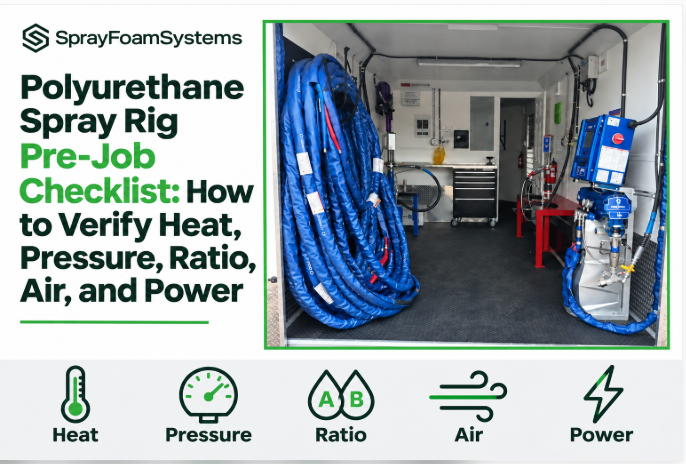
A polyurethane spray rig needs more than a full set of drums to start the day. Heat, pressure, ratio, air, and power must work together. A clear pre-job check helps crews catch faults before they spray the job.
Start With the Polyurethane Spray Rig and Material Requirements
First, review the manual for your rig, proportioner, gun, and support equipment. Then check the foam supplier’s current technical data sheet and safety data sheets. Use their approved settings and startup steps, since one set of numbers will not suit every system.
Also, confirm that the work zone, ventilation, PPE, and required respiratory protection are ready. Check substrate conditions against the foam supplier’s limits. This equipment checklist supports your trained startup routine; it does not replace it.
1. Verify Heat Before You Spray
Start with the material in the drums. Confirm that both components meet the supplier’s temperature range. If the resin needs mixing, follow the supplier’s instructions before use.
Next, check actual A-side, B-side, and hose temperatures against their approved setpoints. A setpoint shows the goal; it does not prove the material has reached it. Follow the machine’s heating sequence and allow time for heat to stabilize.
- Inspect the heated hose, insulation, and sensor connections for damage.
- Confirm the hose contains fluid before you turn on hose heat.
- Follow the manual’s precautions for pressure buildup during heating.
- Check that temperatures stay within the approved range during the test spray.
2. Check Pressure While Material Flows
Once the system is ready, compare A-side and B-side pressure using the equipment maker’s limits. Then watch both readings during a controlled test spray. Static readings alone do not show how the rig performs under flow.
If pressure drops, surges, or moves outside the allowed balance, stop and find the cause. Check material levels, feed supply, and alarms first. Before opening filters or servicing fluid parts, follow the pressure relief and shutdown procedures in the manual.
- Confirm the pressure setting suits the material, gun, and chamber.
- Check for leaks and signs of a restricted material path.
- Keep pressure within the rating of every system component.
- Resolve faults before spraying the job.
3. Verify Ratio Beyond the Pressure Gauges
Balanced pressure is a useful check, but it does not prove the mix ratio is correct. Air in a feed line, a supply problem, or a pump fault can affect delivery. Also, foam can look acceptable even when the ratio is wrong.
Confirm the ratio required by the foam supplier and the method approved for your equipment. Where fitted, review flow-based ratio monitoring and related alarms. If a separate ratio check is required, trained staff should follow the maker’s procedure and the supplier’s acceptance limits.
- Confirm the correct A-side and B-side materials are connected.
- Check drum levels before either side runs empty.
- Clear trapped air using the approved procedure.
- Never bypass a ratio alarm to keep spraying.
4. Confirm Air Supply Under Demand
Next, check the air supply for the gun and any air-driven feed pumps. Use each component’s pressure and flow requirements. A full air tank at rest does not prove the compressor can meet demand while the system runs.
Inspect air hoses, filters, drains, and the dryer as the equipment manuals direct. Then confirm stable air delivery during the test. Verify any supplied-air respirator system separately, using its approved breathing-air source and operating checks.
5. Verify Power for the Full Rig Load
Before startup, confirm that the power source matches the rig’s voltage, phase, and current requirements. Include the heater, compressor, dryer, and other connected loads. Have qualified personnel handle electrical checks that require access to live parts.
For a generator, check fuel and follow the specified warmup and load sequence. For shore power, confirm the approved connection, circuit capacity, and grounding. Then watch for power faults as heat and air equipment come under load.
Record Your Polyurethane Spray Rig Checks
Finally, make a controlled test spray in the designated area using the required protection. Check the pattern and the foam supplier’s required quality checks. Stop if results fall outside the approved limits, even when the display shows no alarm.
- Record material names, lot numbers, and drum levels.
- Log temperature settings, actual readings, and spray pressures.
- Record ratio checks, air checks, and any power faults.
- Note test results, corrective work, and the operator’s name.
Use this record each time you prepare your polyurethane spray rig for a job. Repeat the relevant checks after a drum change, a fault, or a change in conditions.
Need help matching a polyurethane spray rig to your workload? Talk with Spray Foam Systems about ProPAK rigs, equipment support, and operator training.
FAQs
1. What temperature should a polyurethane spray rig use?
Use the foam supplier’s approved processing range and your equipment manual. Drum temperature, heater settings, and hose settings may differ. Check actual readings before spraying.
2. Do equal A-side and B-side pressures confirm the correct ratio?
No. Balanced pressure helps assess system operation, but it does not directly measure mix ratio. Follow the approved ratio verification method for your material and equipment.
3. When should crews repeat pre-job checks?
Check the system before each job. Also, repeat the relevant checks after drum changes, service, alarms, or changes in power, weather, or material conditions.
About Spray Foam Systems
Spray Foam Systems is the #1 spray foam rig builder and spray foam equipment supplier in the United States. Family-owned and proudly serving the industry since 2007, we operate from a 7-acre campus with over 80,000 square feet of dedicated working space in Greensboro, GA. With over 10,000 customers served over the last 18 years, we specialize in delivering high-quality turnkey spray foam systems, distributing top-tier equipment and supplies, and providing nationwide service and training to help contractors grow and succeed in the spray foam insulation and roofing markets.