


Polyurethane foam insulation is widely used in residential, commercial, and industrial construction because it delivers strong thermal performance, air sealing, and long-term durability. Understanding polyurethane foam insulation and types helps contractors choose the right material, equipment, and installation approach for each job.
Contractors rely on professional spray foam rigs, proportioners, chemicals, and accessories to apply polyurethane foam insulation and types properly. Spray Foam Systems supplies the equipment, materials, and solutions needed to help contractors install spray foam efficiently and consistently across many applications.
Understanding Polyurethane Foam Insulation and Types
Polyurethane foam insulation is created when two liquid components react and expand into foam. This process forms insulation that fills gaps, seals air leaks, and improves energy efficiency.
There are several polyurethane foam insulation and types used across construction projects. Each type offers unique benefits depending on the environment and performance requirements.
Common uses for polyurethane foam insulation include:
- Residential wall and attic insulation
- Commercial building insulation
- Crawlspaces and basements
- Roofing systems
- Metal building insulation
Because different projects require different performance characteristics, understanding polyurethane foam insulation and types helps contractors deliver the best results for each installation.
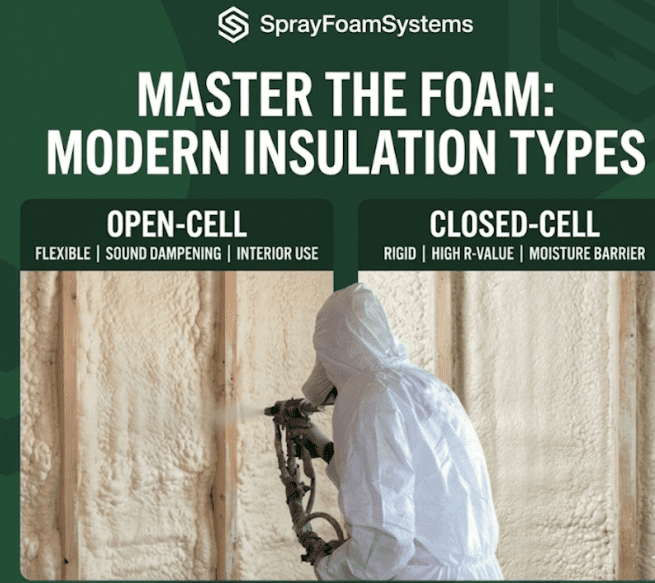
Open Cell Foam
Open cell foam is a lighter and more flexible option among polyurethane foam insulation and types. It expands significantly during installation, which helps it fill small cracks and cavities.
Open cell foam is commonly used in interior spaces where sound control and air sealing are important.
Key characteristics include:
- Lower density foam structure
- Strong air sealing properties
- Effective sound dampening
- Ideal for interior wall and attic applications
Because it expands quickly, open cell foam is useful for filling framing cavities and hard-to-reach areas.
Closed Cell Foam
Closed cell foam is one of the most durable polyurethane foam insulation and types available. Its dense structure provides both insulation and structural strength.
Closed cell foam is commonly used where higher R-value, moisture resistance, or structural reinforcement is required.
Typical advantages include:
- High R-value per inch
- Moisture and vapor resistance
- Increased structural rigidity
- Suitable for exterior and commercial applications
Many contractors choose closed cell foam for metal buildings, roofing systems, and crawlspaces because of its strength and insulation performance.
Spray Foam Equipment Used for Installation
Proper equipment plays a major role when installing polyurethane foam insulation and types. Contractors depend on reliable spray foam machines to maintain accurate mixing ratios and consistent temperatures.
Spray Foam Systems offers professional equipment designed for spray foam insulation work, including:
- Graco Reactor proportioners
- Heated hose systems
- Spray foam guns
- Transfer pumps
- Complete spray foam rigs
This equipment ensures the A-side and B-side materials mix correctly, allowing polyurethane foam insulation and types to expand and cure properly during application.
Spray Foam Materials and Chemicals
In addition to equipment, contractors must choose the right materials when working with polyurethane foam insulation and types. Material quality directly affects foam expansion, adhesion, and insulation performance.
Spray Foam Systems provides spray foam chemicals designed for professional installation and dependable results across many job types.
Available materials typically include:
- Open cell spray foam systems
- Closed cell spray foam systems
- Roofing foam materials
- Specialty foam formulations
Selecting the right polyurethane foam insulation and types allows contractors to meet energy performance requirements while delivering consistent application results.
Choosing the Right System for the Job
Different jobs require different polyurethane foam insulation and types. Contractors often evaluate project conditions before selecting the correct material and equipment combination.
Important factors include:
- Climate conditions
- Required R-value
- Moisture exposure
- Structural requirements
- Installation environment
By evaluating these conditions, contractors can determine whether open cell or closed cell foam will perform best for the project.
Professional equipment and quality materials also help ensure that polyurethane foam insulation and types are installed correctly and perform as intended for many years.
FAQs
What is polyurethane foam insulation used for?
Polyurethane foam insulation is used for walls, attics, crawlspaces, roofs, and commercial structures. It provides insulation, air sealing, and moisture control in a single material.
What is the difference between open cell spray foam vs closed cell spray foam?
Open cell spray foam vs closed cell spray foam differs mainly in density and performance. Open cell foam is lighter and expands more, which helps with sound control and air sealing. Closed cell foam is denser, offers higher R-value per inch, and provides added structural strength and moisture resistance.
What equipment is required to install polyurethane foam insulation?
Installing polyurethane foam insulation typically requires a spray foam proportioner, heated hose, spray gun, transfer pumps, and spray foam chemicals. Professional spray rigs help maintain proper pressure, temperature, and mixing ratios during installation.
About Spray Foam Systems
Spray Foam Systems is the #1 spray foam rig builder and spray foam equipment supplier in the United States. Family-owned and proudly serving the industry since 2007, we operate from a 7-acre campus with over 80,000 square feet of dedicated working space in Greensboro, GA. With over 10,000 customers served over the last 18 years, we specialize in delivering high-quality turnkey spray foam systems, distributing top-tier equipment and supplies, and providing nationwide service and training to help contractors grow and succeed in the spray foam insulation and roofing markets.