


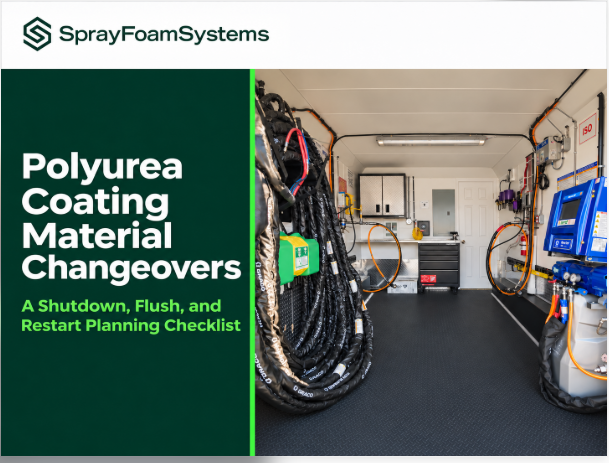
A polyurea coating material changeover starts before you open the next drum. Old material, trapped flush fluid, or moisture can disrupt the next job. A clear plan helps your crew protect the rig and check the new material before work starts.
Use this checklist to plan the change with your coating supplier and equipment service team. Follow the current equipment manuals, material instructions, and safety data sheets for the actual work. The right steps depend on both products and the full fluid path.
Confirm the Polyurea Coating Change Before Shutdown
First, record what is in the rig and what will go in next. Include each product name, A-side and B-side component, lot number, and mix ratio. Even two coatings with the same ratio may need different heat, pressure, or cleaning steps.
Next, ask the coating manufacturer to confirm the changeover method. Also, check the manuals for the proportioner, transfer pumps, heated hose, and spray gun. Have these answers ready before you schedule the work:
- Can the old and new materials share the same fluid path?
- Which flush fluid is compatible with both materials and all wetted parts?
- Does either side need a different cleaning method?
- Will the change require disassembly, new seals, or replacement hoses?
- How will the crew confirm that old material and flush fluid are gone?
A flush alone does not suit every change. For example, Graco guidance for changing between epoxies and urethanes or polyureas calls for disassembling and cleaning all fluid components and changing hoses. Confirm the requirements for your exact equipment and materials before proceeding.
Plan the Shutdown Window and Work Area
Then, allow time for shutdown, cleaning, inspection, and a test run. Keep the next production job out of that window. Stage the approved flush fluid, spare parts, waste containers, and required protective gear first.
- Assign a trained person to lead the changeover.
- Review the coating and flush fluid safety data sheets.
- Set up ventilation and control ignition sources as required.
- Confirm grounding for the equipment, hoses, and collection containers.
- Keep A-side and B-side tools, parts, and waste streams separate.
For shutdown, use the model-specific sequence for heat, pumps, pressure relief, and power. Turning off power does not prove that pressure is gone. Before opening fittings or servicing parts, follow the required pressure relief and energy isolation procedures.
Map the Full Flush Path
Before flushing, trace where the old polyurea coating components can remain. Include pickup tubes, feed pumps, inlet strainers, heaters, hoses, return lines, and the gun. A flush through a short return path may leave material in the heated hose.
Use only the confirmed flush fluid and the flushing method in the equipment manual. Graco calls for the lowest possible flushing pressure and warns against using heaters with flammable solvents. Keep moisture out of the isocyanate side, and never use water as an improvised flush.
- Confirm which valves and outlets serve each part of the fluid path.
- Plan for repeated flush cycles where the instructions require them.
- Clean inlet strainers after flushing, following the required pressure relief procedure.
- Inspect serviceable parts for residue, wear, or hardened material.
- Confirm the approved storage fluid if the rig will sit before restart.
Prepare for Waste Collection
Also, plan waste handling before flow starts. Use compatible, labeled containers and keep incompatible waste apart. Confirm container closure, storage, and disposal requirements with your waste provider and the relevant safety data sheets.
Do not combine A-side and B-side waste or pour flush waste back into fresh material. Instead, collect each stream through the approved method. Allow enough container capacity for the planned flush and any repeat cleaning.
Check the Restart Before Production
Once cleaning is complete, follow the approved method to displace flush or storage fluid with the new polyurea coating components. Keep that discharge out of fresh drums. Then, prime and remove air as the equipment manual directs before bringing the system into service.
- Verify the correct material on each side.
- Confirm the required mix ratio and equipment compatibility.
- Check feed supply, filters, hoses, and fittings.
- Use the new material’s specified heat and pressure settings.
- Check for leaks and abnormal pressure behavior.
- Test spray and assess cure using the coating manufacturer’s acceptance criteria.
Know When to Call Technical Service
If compatibility is unclear, pause before adding flush fluid or new material. Likewise, stop for hardened residue, blocked flow, leaks, pressure faults, or poor test results. Do not try to overcome an unresolved problem by raising heat or pressure.
Have your machine model, spray gun, hose length, material names, and fault codes ready when you call. Also, record the flush fluid and steps already completed. These details help the service team assess the next step.
Contact Spray Foam Systems to discuss your polyurea coating equipment and changeover service needs before the next material switch.
FAQs
1. Can I use the same flush fluid for every polyurea coating?
No. Confirm compatibility with the old material, new material, and equipment wetted parts. Use the fluid and method approved for your specific change.
2. Does changing materials always require new hoses?
No. The requirement depends on the materials and equipment instructions. Some changes, including epoxy-to-polyurea changes covered by Graco guidance, require hose replacement and disassembly to clean fluid components.
3. When can I start the next coating job?
Start after the required cleaning, priming, equipment checks, and material tests pass. Follow the coating manufacturer’s acceptance criteria before spraying the project.
About Spray Foam Systems
Spray Foam Systems is the #1 spray foam rig builder and spray foam equipment supplier in the United States. Family-owned and proudly serving the industry since 2007, we operate from a 7-acre campus with over 80,000 square feet of dedicated working space in Greensboro, GA. With over 10,000 customers served over the last 18 years, we specialize in delivering high-quality turnkey spray foam systems, distributing top-tier equipment and supplies, and providing nationwide service and training to help contractors grow and succeed in the spray foam insulation and roofing markets.