


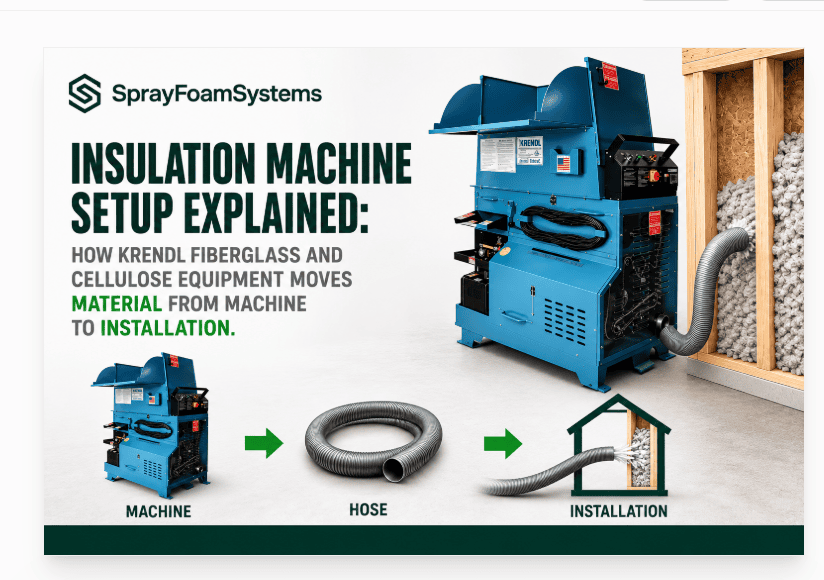
Professional insulation work depends on more than loading material into a hopper and turning on a blower. A properly configured insulation machine controls material feed and airflow so fiberglass or cellulose moves efficiently from the machine to the installation area.
Krendl equipment supports a range of fiber insulation applications. Understanding how material moves through the system can help contractors select the right equipment and maintain consistent production.
Step 1: Insulation Material Enters the Hopper
The process begins at the hopper. Crews load fiberglass or cellulose into this area, where the equipment prepares the material for movement through the system.
Hopper capacity varies by Krendl model. Larger machines can reduce loading stops during high-production jobs, while compact models can provide easier transportation and setup.
When choosing hopper capacity, contractors should consider:
- Type of insulation
- Expected production volume
- Available rig or jobsite space
- Frequency of material loading
The right insulation machine should balance production needs with available space and power.
Step 2: The Machine Conditions the Material
Fiberglass and cellulose may need to be broken apart before they can move smoothly through the system. Depending on the Krendl model, agitation or shredding components help condition the material before it reaches the airlock.
This process creates a more consistent material supply and helps reduce large clumps that could interfere with material flow.
Because fiberglass and cellulose have different densities and textures, operators may need different machine settings for each material.
Step 3: The Slidegate Controls Material Feed
The slidegate controls how much insulation enters the airlock. Opening it increases material feed, while closing it reduces the amount of material moving through the system.
Operators balance the slidegate setting with blower airflow. This adjustment helps the insulation machine maintain consistent material delivery for the application.
Proper settings can help control:
- Production rate
- Installation density
- Material velocity
- Coverage
- Hose performance
Step 4: The Airlock Moves Material into the Air Stream
After conditioning, insulation moves into the airlock. As the airlock rotates, it carries material toward the discharge area.
Airlock seals help maintain proper pressure while separating the material feed area from the blower air. At the discharge point, airflow carries the insulation into the delivery hose.
This process allows material to enter the air stream without passing through the blower fan itself.
Step 5: The Blower Provides Airflow
The blower supplies the airflow needed to move fiberglass or cellulose through the hose. Operators adjust blower output based on the material, application, hose configuration, and delivery distance.
Too little airflow can make material difficult to move. Excessive airflow can make placement harder to control. The correct settings allow the insulation machine to maintain steady material movement from the airlock to the installation area.
Step 6: The Hose Carries Material to the Installation Area
Once insulation enters the air stream, it travels through the hose. Hose configuration can directly affect material delivery.
Important factors include:
- Hose diameter
- Total hose length
- Hose condition
- Connections and reducers
- Vertical elevation
Crews should inspect hoses, clamps, and connections regularly. Restrictions or air leaks can reduce system performance and make material delivery less consistent.
Step 7: Crews Install the Material
At the end of the hose, crews direct the insulation into the intended area. Depending on the machine, accessories, and insulation material, Krendl equipment can support applications such as:
- Open-blow attic insulation
- Dense-pack wall applications
- Retrofit insulation
- New construction
- Residential projects
- Commercial projects
Proper machine settings help crews maintain controlled material delivery throughout the installation.
Fiberglass and Cellulose Require Different Settings
Fiberglass and cellulose behave differently as they move through blowing equipment. Differences in density and texture can affect airflow, material feed, and production rates.
Operators should adjust settings when switching between materials. Proper calibration helps maintain consistent delivery while reducing the risk of hose plugging or uneven material flow.
Choosing the Right Krendl Insulation Machine
Spray Foam Systems offers Krendl equipment for different production requirements, from compact machines to high-output professional systems.
When choosing an insulation machine, contractors should consider:
- Fiberglass, cellulose, or both
- Required production capacity
- Hopper size
- Blower output
- Hose requirements
- Available power source
- Open-blow or dense-pack applications
- Trailer or truck space
Matching the machine to the contractor’s workload can improve productivity while avoiding unnecessary equipment capacity.
Find Krendl Fiberglass and Cellulose Equipment at Spray Foam Systems
Spray Foam Systems offers professional Krendl insulation machine options, complete packages, hoses, and accessories for fiberglass and cellulose applications.
Ready to upgrade your equipment? Explore Krendl fiberglass and cellulose equipment from Spray Foam Systems.
FAQs
Can one Krendl insulation machine handle both fiberglass and cellulose?
Many Krendl all-fiber machines can process both fiberglass and cellulose. Operators should adjust material feed and airflow settings for the material and application.
What does the airlock do in a Krendl blowing machine?
The airlock receives conditioned insulation and moves it toward the discharge area, where blower air carries the material into the hose.
Why do airflow and material feed settings need to work together?
The two settings affect production, density, and material movement. Proper balance helps maintain consistent delivery and reduces the risk of hose plugging.
About Spray Foam Systems
Spray Foam Systems is the #1 spray foam rig builder and spray foam equipment supplier in the United States. Family-owned and proudly serving the industry since 2007, we operate from a 7-acre campus with over 80,000 square feet of dedicated working space in Greensboro, GA. With over 10,000 customers served over the last 18 years, we specialize in delivering high-quality turnkey spray foam systems, distributing top-tier equipment and supplies, and providing nationwide service and training to help contractors grow and succeed in the spray foam insulation and roofing markets.