


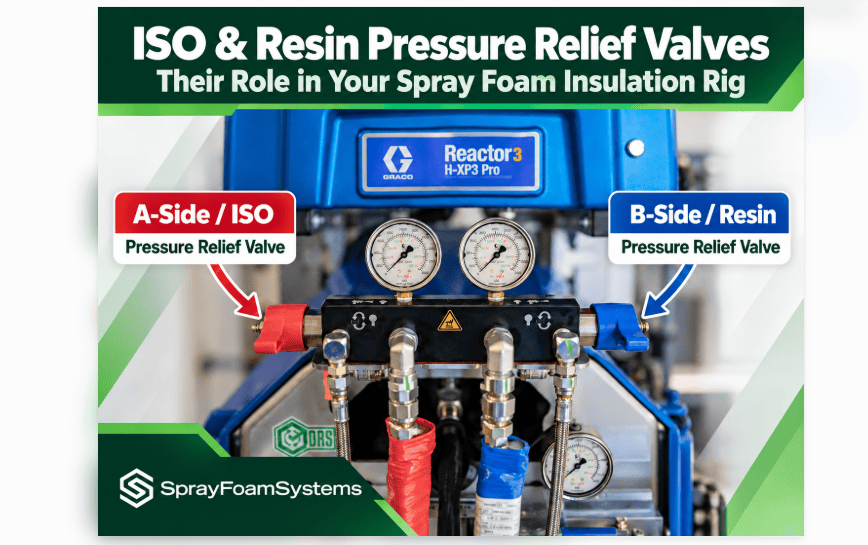
Pressure relief valves are an important part of a spray foam insulation rig because they help manage pressure within the ISO and resin sides of the material system. Although these components may be small, they play a critical role in protecting equipment and supporting consistent operation.
Understanding what these valves do, where they are used, and when they may require attention can help contractors recognize potential problems before they affect spraying performance.
What Are ISO and Resin Pressure Relief Valves?
Spray polyurethane foam systems use two separate chemical components: the ISO side, commonly called the A-side, and the resin side, commonly called the B-side.
Each side of a spray foam insulation rig must maintain controlled material pressure as chemicals move through the proportioner and related components. Pressure relief valves are designed to provide a controlled path for material if pressure reaches a level that requires relief.
These valves help protect components from excessive pressure while allowing the system to operate within its intended pressure range.
Why Pressure Relief Valves Matter in a Spray Foam Insulation Rig
Pressure inside spray foam equipment can change as material temperatures, pump operation, restrictions, and other system conditions change.
Therefore, pressure relief valves provide an additional layer of protection within the material system.
Properly functioning valves can help:
- Protect components from excessive pressure
- Support safe equipment operation
- Reduce stress on hoses, fittings, and other material components
- Help maintain proper pressure management on both chemical sides
- Provide a controlled method for relieving pressure when necessary
Because ISO and resin must remain separated until they reach the spray gun, each chemical side has its own pressure-related components.
Understanding the ISO Pressure Relief Valve
The ISO side carries isocyanate material through the system.
ISO can react with moisture and may crystallize when contamination occurs. As a result, contractors should keep the ISO side of the system clean, sealed, and properly maintained.
The ISO pressure relief valve helps manage excessive pressure on this side of the spray foam insulation rig. If the valve becomes restricted, contaminated, or damaged, it may not perform as intended.
For this reason, unusual pressure readings or recurring pressure issues should never be ignored.
Understanding the Resin Pressure Relief Valve
The resin side carries the B-side chemical blend.
Although resin behaves differently from ISO, the resin side still requires proper pressure management. The resin pressure relief valve serves a similar protective purpose by helping relieve excessive pressure when necessary.
A properly maintained resin system helps the proportioner deliver material consistently and supports balanced chemical flow.
Signs a Pressure Relief Valve May Need Attention
Pressure problems can have several causes, so a relief valve should not automatically be assumed to be the source of every pressure issue.
However, operators should investigate when they notice:
- Unusual or inconsistent pressure readings
- Pressure that continues to rise unexpectedly
- Material leaking near a relief valve
- A valve that appears damaged or contaminated
- Repeated pressure imbalance between the ISO and resin sides
- Equipment behavior that changes during spraying
If these symptoms appear, stop and identify the cause before continuing to operate the equipment.
Pressure Balance and Spray Foam Performance
Balanced pressure is important for maintaining the proper chemical ratio.
If the ISO and resin sides are not delivering material correctly, foam quality can suffer. Problems may appear as poor foam structure, inconsistent curing, unusual color, or other application concerns.
However, pressure imbalance does not always mean a pressure relief valve has failed. Restrictions, worn pump components, clogged filters, temperature differences, hose issues, or spray gun problems can also affect pressure.
Therefore, troubleshooting should consider the entire material delivery system.
Routine Inspection of Your Spray Foam Insulation Rig
Regular inspection can help identify potential issues before they turn into larger equipment problems.
Operators should routinely check the spray foam insulation rig for leaks, damaged fittings, abnormal pressure readings, and signs of chemical buildup.
In addition, follow the equipment manufacturer’s maintenance procedures for inspecting, servicing, and replacing pressure-related components.
Never modify, plug, bypass, or substitute a pressure relief valve with an incorrect component. Pressure-control components should always match the specifications required by the equipment manufacturer.
When to Contact a Spray Foam Equipment Service Center
Some maintenance tasks can be performed during routine equipment inspection. However, pressure-related problems should be handled carefully.
If a relief valve continues leaking, pressure readings remain abnormal, or you are unsure whether a component is operating correctly, professional troubleshooting may be the safest and most efficient next step.
An experienced spray foam equipment technician can inspect the proportioner, pumps, filters, hoses, valves, and other components to determine what is causing the pressure problem.
Keeping the pressure system working correctly helps protect your spray foam insulation rig and supports more reliable spraying in the field.
Need help diagnosing pressure problems or replacing components in your spray foam insulation rig? Spray Foam Systems provides equipment, parts, technical support, and service to help keep your system operating properly.
FAQs
What do ISO and resin pressure relief valves do?
They help relieve excessive pressure within the ISO and resin material systems, protecting components and supporting proper equipment operation.
Does a pressure imbalance mean my pressure relief valve is bad?
Not necessarily. Filters, pumps, temperature settings, restrictions, hoses, spray gun components, and other parts of the system can also cause pressure differences.
When should I have my spray foam insulation rig inspected?
If you notice unusual pressure readings, leaks, repeated pressure imbalance, or other abnormal equipment behavior, the system should be inspected before continued operation.
About Spray Foam Systems
Spray Foam Systems is the #1 spray foam rig builder and spray foam equipment supplier in the United States. Family-owned and proudly serving the industry since 2007, we operate from a 7-acre campus with over 80,000 square feet of dedicated working space in Greensboro, GA. With over 10,000 customers served over the last 18 years, we specialize in delivering high-quality turnkey spray foam systems, distributing top-tier equipment and supplies, and providing nationwide service and training to help contractors grow and succeed in the spray foam insulation and roofing markets.