


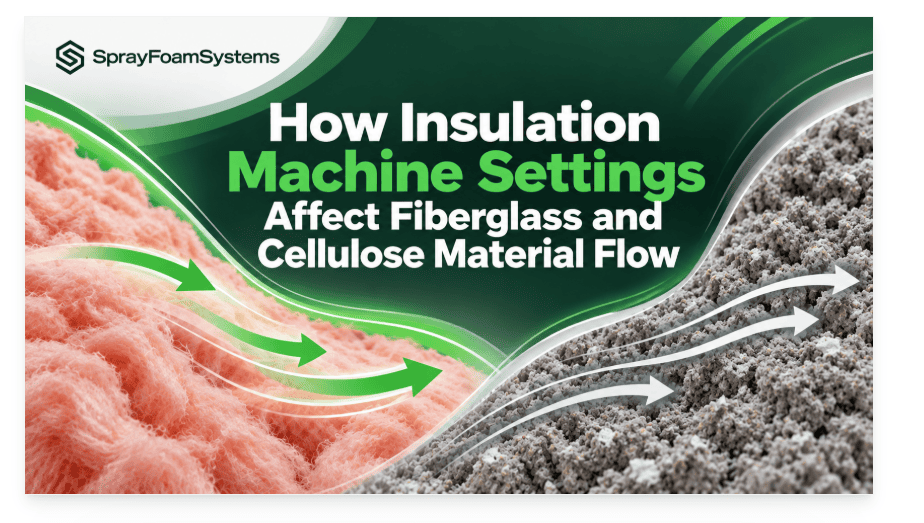
Consistent material flow depends heavily on how an insulation machine is set up. Fiberglass and cellulose move differently through blowing equipment, so operators may need to adjust feed and airflow settings to match the material being installed.
Understanding those differences can help maintain steady production and more consistent application.
Why Material Type Affects Insulation Machine Settings
Fiberglass and cellulose differ in density, texture, and how they move through the system.
Fiberglass is lighter and often requires proper conditioning so compressed fibers can separate before entering the hose. Cellulose is generally denser and may require different feed and airflow settings to keep material moving consistently.
Operators should always follow the equipment and material manufacturer recommendations when setting up an insulation machine.
Balance Material Feed and Airflow
Material feed controls how much insulation enters the air stream, while airflow moves that material through the hose.
If too much material enters the system without enough airflow, flow can become inconsistent or restricted. Too much airflow can also make material harder to control at the application point.
The goal is to find the right balance between material feed and airflow for the insulation being installed.
Fiberglass and Cellulose Require Different Adjustments
Fiberglass typically benefits from proper conditioning and steady airflow to help fibers separate and move smoothly through the system.
Cellulose may require different feed settings because of its greater density. When switching materials, operators should not assume the same insulation machine settings will work equally well.
Instead, make small adjustments and monitor material flow before beginning full production.
Hose Setup Also Affects Material Flow
Machine settings are only one part of the system. Hose length, sharp bends, restrictions, and reductions can also affect airflow and material movement.
Before changing settings on an insulation machine, inspect the hose configuration for anything that could be limiting flow.
A properly arranged hose system helps the machine deliver material more consistently.
Choose the Right Equipment for Your Operation
Reliable insulation installation starts with equipment that matches the materials and production demands of your crew.
Spray Foam Systems offers fiber and cellulose equipment for contractors working with fiberglass and cellulose insulation.
Let Spray Foam Systems help you find the insulation machine and equipment that fits your workflow and production needs.
FAQs
Can the same insulation machine blow fiberglass and cellulose?
Many machines can handle both materials, but compatibility depends on the equipment. Always confirm the machine specifications before switching materials.
Why does material flow change between fiberglass and cellulose?
The materials have different densities and handling characteristics, so feed and airflow settings may need to be adjusted.
What should I check if material flow becomes inconsistent?
Check material feed, airflow, hose connections, restrictions, and material conditioning before making larger setting changes.
About Spray Foam Systems
Spray Foam Systems is the #1 spray foam rig builder and spray foam equipment supplier in the United States. Family-owned and proudly serving the industry since 2007, we operate from a 7-acre campus with over 80,000 square feet of dedicated working space in Greensboro, GA. With over 10,000 customers served over the last 18 years, we specialize in delivering high-quality turnkey spray foam systems, distributing top-tier equipment and supplies, and providing nationwide service and training to help contractors grow and succeed in the spray foam insulation and roofing markets.