


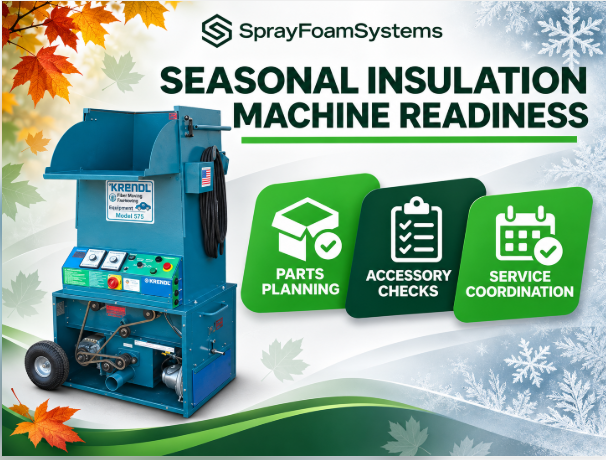
A busy season puts more strain on your insulation machine, hoses, and crew. Yet a missing fitting or worn part can slow work before the first bag goes in. Spray Foam Systems helps contractors plan for fiber and cellulose jobs with equipment, parts, accessories, and service support.
Start Your Insulation Machine Readiness Plan Early
First, review the jobs on your schedule. Note the material, hose reach, power needs, and daily workload for each one. Then compare those needs with your current setup so you have time to address gaps.
Next, review the machine’s service records and owner’s manual. List any open issues from past jobs, such as weak airflow, uneven feed, odd sounds, or remote control faults. A seasonal check should support the maker’s service schedule, rather than replace routine care.
Plan Parts Around Your Exact Equipment
Before you order parts, record your insulation machine model and serial number. Also, take clear photos of its data plate and any worn parts. Similar-looking parts may have different sizes, ratings, or connections, so appearance alone does not confirm a match.
Build a Useful Parts List
Then, review which parts your crew uses most and which items show wear. Ask SFS to help check fit before you buy. Depending on the model, your list may include:
- Hoses, connectors, clamps, and fittings.
- Wired or wireless remote components.
- Belts, chains, pulleys, and bearings.
- Hopper and agitator components.
- Blower components or engine service items.
- Airlock wear parts specified for your machine.
Also, separate parts needed now from spares for future use. Label each spare with its part number and the machine it fits. Before setting a job date around an order, confirm current availability and shipping timing with SFS.
Check Accessories Before Loading the Trailer
Your insulation machine is only one part of the setup. Hoses, controls, and fittings must be ready too. Before hands-on checks, shut down the unit and isolate its energy sources as the manual directs.
Review the Full Material Path
- Hoses: Look for splits, crushed areas, worn ends, and signs of damage.
- Connections: Check that couplers, clamps, and reducers fit and hold securely.
- Controls: Inspect remote cords, plugs, and housings for visible damage.
- Power accessories: Confirm cord size, length, and power supply requirements in the equipment manual.
- Job accessories: Check that the required nozzles, adapters, and approved hose sections are on hand.
In addition, lay out the hose route for the work ahead. Confirm that the planned hose size and total length suit your machine and task. Keep the route clear of sharp edges, tight bends, vehicle traffic, and other sources of damage.
Review Storage and Seasonal Conditions
If the unit has been idle, check for moisture, debris, pest damage, and signs of corrosion before use. Follow the maker’s cleaning and storage guidance. For engine-powered models, also review the engine manual for fuel, oil, filter, and restart requirements.
As weather changes, plan for dry material storage and suitable operating conditions. Keep insulation bags protected from moisture and follow the material maker’s instructions. Also, plan ventilation and exhaust routing for any fuel-powered equipment before crews arrive.
Coordinate Service With Spray Foam Systems Before Work Builds Up
If your insulation machine has a known fault, contact SFS before the next job. The SFS Service Center supports traditional blow-in insulation equipment and insulation vacuums. Share the model, serial number, symptoms, and repair history so the team can review the next step.
Have These Details Ready
- Machine model, serial number, and power configuration.
- A clear description of the issue and when it occurs.
- Photos of labels, affected parts, and the full setup.
- Recent service work or changes to hoses and accessories.
- Your next planned work date and available service window.
Then, confirm the service scope, parts needs, transport plans, and expected timing with SFS. Ask whether the issue calls for further checks or an in-shop evaluation. This helps you plan crew time and customer commitments around the work required.
Make a Final Check Before Dispatch
Finally, complete the pre-use checks and startup steps in the equipment manual with all guards in place. Verify controls and material flow under the approved setup, and resolve any faults before dispatch. Keep the parts list, service notes, and manuals where the crew can find them.
Get your insulation machine ready for the season with Spray Foam Systems. Explore our fiber and cellulose equipment, parts, and accessories, or contact SFS to coordinate service before your schedule fills.
FAQs
1. What should I check before using an insulation machine after storage?
Review the owner’s manual, service records, hoses, connections, controls, and visible equipment condition. Follow the maker’s restart steps and resolve damage or known faults before use.
2. What information does SFS need to help identify replacement parts?
Provide the machine model, serial number, existing part number when available, and clear photos. Also include relevant measurements, power ratings, connection sizes, and a description of the issue.
3. Can SFS help coordinate service for fiber and cellulose equipment?
Yes. The SFS Service Center supports traditional blow-in insulation equipment and insulation vacuums. Contact the team with your equipment details to confirm the service scope, scheduling, and parts needs.
About Spray Foam Systems
Spray Foam Systems is the #1 spray foam rig builder and spray foam equipment supplier in the United States. Family-owned and proudly serving the industry since 2007, we operate from a 7-acre campus with over 80,000 square feet of dedicated working space in Greensboro, GA. With over 10,000 customers served over the last 18 years, we specialize in delivering high-quality turnkey spray foam systems, distributing top-tier equipment and supplies, and providing nationwide service and training to help contractors grow and succeed in the spray foam insulation and roofing markets.