When temperatures plummet below freezing or soar above 100 degrees Fahrenheit, contractors need insulation solutions that deliver unwavering performance. Keeping that in mind, it’s natural to ask: how does spray foam insulation hold up in extreme weather? Ahead, discover how spray foam insulation performs under the most demanding environmental conditions, providing the technical insights you need for your next project.
Spray Foam’s Weather-Resistant Properties
Spray foam insulation has superior weather resistance thanks to its unique cellular structure and chemical composition. Here’s an overview of its top properties.
Continuous Barrier
Unlike traditional insulation materials that rely on trapped air pockets, spray foam creates a continuous barrier that expands and hardens into a seamless protective layer. This expansion process fills gaps, cracks, and irregularities that would otherwise allow air infiltration and moisture penetration.
Closed-Cell Insulation
The closed-cell structure of premium spray foam insulation provides exceptional moisture resistance and a low absorption rate, preventing the material from becoming waterlogged during heavy rainfall or flooding. This trait allows spray foam insulation to maintain its insulating properties, even when exposed to substantial moisture.
High-quality polyurethane formulations also resist degradation from UV exposure, temperature fluctuations, and chemical exposure that can compromise other insulation materials over time. This stability promotes consistent performance across decades of service, reducing maintenance requirements and replacement costs for building owners.
Performance in Extreme Temperature Fluctuations
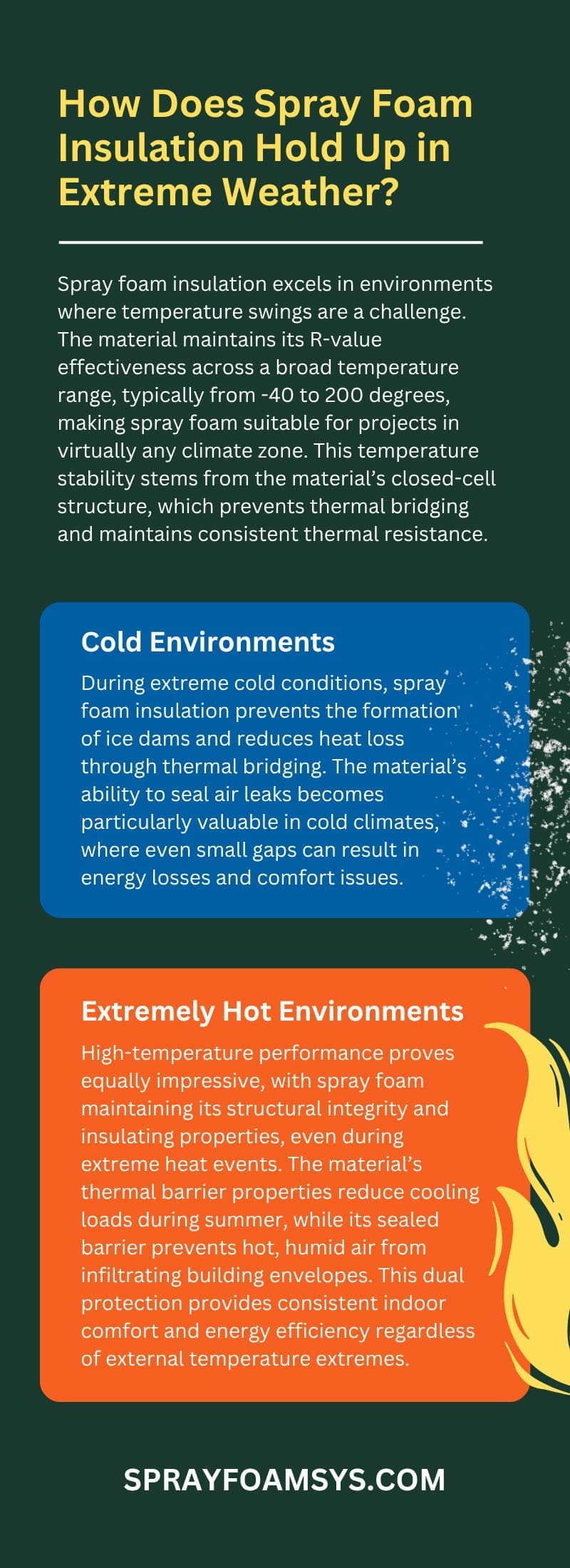
Spray foam insulation excels in environments where temperature swings are a challenge. The material maintains its R-value effectiveness across a broad temperature range, typically from -40 to 200 degrees, making spray foam suitable for projects in virtually any climate zone. This temperature stability stems from the material’s closed-cell structure, which prevents thermal bridging and maintains consistent thermal resistance.
Cold Environments
During extreme cold conditions, spray foam insulation prevents the formation of ice dams and reduces heat loss through thermal bridging. The material’s ability to seal air leaks becomes particularly valuable in cold climates, where even small gaps can result in energy losses and comfort issues.
Extremely Hot Environments
High-temperature performance proves equally impressive, with spray foam maintaining its structural integrity and insulating properties, even during extreme heat events. The material’s thermal barrier properties reduce cooling loads during summer, while its sealed barrier prevents hot, humid air from infiltrating building envelopes. This dual protection provides consistent indoor comfort and energy efficiency regardless of external temperature extremes.
Moisture and Water Resistance Capabilities
Exceptional moisture resistance sets spray foam insulation apart from traditional materials in extreme weather environments. Spray foam’s closed-cell structure creates a vapor barrier that prevents moisture infiltration, reducing the risk of mold growth, wood rot, and structural damage. This moisture control is critical in high-humidity environments and during severe weather events that can drive moisture into buildings.
Flood resistance is a noteworthy advantage for projects in flood-prone areas. Unlike fiberglass or cellulose insulation that must be removed and replaced after flood exposure, spray foam insulation can often be cleaned and disinfected while maintaining its insulating properties. This resilience reduces repair costs and accelerates recovery timelines for flood-damaged buildings.
Wind Resistance and Structural Benefits
Spray foam insulation provides remarkable wind load resistance, making it an excellent choice for projects in hurricane-prone regions and areas subject to severe storms. The material’s adhesive properties create a strong bond with structural framing members, adding racking strength to wall assemblies and reducing the risk of structural failure during high-wind events.
Independent testing demonstrates that spray foam insulation can increase wall assembly strength by up to 300 percent compared to traditional insulation methods. This structural enhancement becomes particularly valuable in commercial applications where building codes require enhanced wind resistance.
The insulation material’s ability to distribute loads across entire wall surfaces, rather than concentrating stress at individual connection points, improves overall structural performance.
Stays in Place
The seamless application process of spray foam insulation eliminates weak points that can compromise performance during extreme weather events. Unlike batt insulation, which can shift or compress under wind pressure, spray foam insulation maintains its position and effectiveness throughout the building’s life. This stability leads to consistent performance, even after repeated exposure to severe weather conditions.
Longevity and Durability Under Harsh Conditions
Studies confirm the exceptional durability of spray foam insulation in extreme weather. Field studies of installations dating back over 30 years show minimal degradation in thermal performance or structural integrity, even in buildings subjected to repeated extreme weather events. This longevity translates to reduced life cycle costs and improved return on investment for building owners.
Contaminant Resistance
Spray foam’s chemical resistance to pollutants and airborne contaminants further enhances its structural durability in harsh environments. Industrial facilities, coastal buildings, and structures exposed to chemical vapors can benefit greatly from spray foam’s inert properties, which prevent degradation that can compromise other insulation materials.
Installation Considerations for Extreme Weather
Professional installation is critical when using spray foam insulation for extreme weather. Proper surface preparation, correct mixing ratios, and appropriate application techniques ensure optimal performance and weather resistance. Contractors must consider ambient temperature and humidity conditions during installation, as these factors can impact the curing characteristics and final performance of your spray foam.
Quality control during installation prevents performance issues that can compromise weather resistance. Carefully measuring proper thickness, density verification, and adhesion testing helps the installed foam meet manufacturer specifications and building code requirements.
While spray foam insulation demonstrates excellent weather resistance, direct UV exposure can cause surface degradation over time. Proper protective coatings or coverings improve durability and performance throughout the building’s service life.
Take your project to the next level with spray foam. At Spray Foam Systems, we deliver durable, reliable urethane insulation spray foam machines you can trust for any job, no matter how complex it is. Enhance the strength and efficiency of your client’s building or home today with our top-quality equipment.
Making the Right Choice for Your Projects
Understanding how spray foam insulation holds up in extreme weather underscores the material’s unmatched durability and performance when buildings face nature’s most challenging conditions. The material’s superior moisture resistance, structural benefits, and stability provide a valuable solution where traditional insulation materials may otherwise fail.
Consider spray foam insulation for your next project requiring exceptional weather resistance. The initial investment in premium insulation pays dividends through reduced energy costs, improved building performance, and enhanced occupant comfort.