


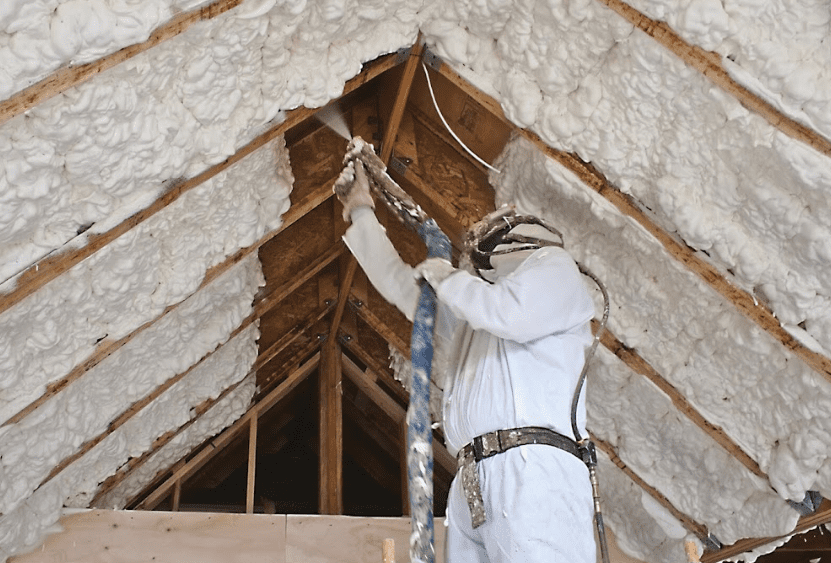
Home and roof insulation plays a critical role in energy efficiency, indoor comfort, and long-term building performance. Contractors and property owners continue to choose spray foam because it delivers strong thermal resistance, air sealing, and moisture control in one system. As a result, understanding how home and roof insulation works can help improve job quality and reduce long-term costs.
Spray foam stands out because it expands to fill gaps, cracks, and hard-to-reach areas. This creates a tight building envelope, which helps control airflow and temperature. In turn, this leads to better performance compared to traditional insulation methods.
Understanding Home and Roof Insulation Performance
Home and roof insulation must do more than slow heat transfer. It also needs to control air movement and moisture. Spray foam insulation handles all three functions at once.
When installed correctly, home and roof insulation with spray foam provides:
- Strong air sealing to reduce drafts
- High R-value per inch for better thermal resistance
- Moisture control to prevent mold and damage
- Structural reinforcement in certain applications
Because of these benefits, contractors often use spray foam in attics, walls, crawl spaces, and roofing systems.
Why Spray Foam Improves Roof Insulation
Roof systems face constant exposure to heat, cold, and moisture. Therefore, choosing the right home and roof insulation is essential for durability and performance.
Spray foam works well in roofing applications because it:
- Expands to seal gaps and penetrations
- Reduces heat transfer through the roof deck
- Helps prevent condensation buildup
- Adds an extra layer of protection against air leaks
In addition, spray foam creates a continuous insulation layer. This eliminates weak points that often exist with traditional materials.
Open Cell vs Closed Cell for Home and Roof Insulation
Choosing between open cell and closed cell foam depends on the project. Both options support effective home and roof insulation, but they serve different purposes.
Open cell foam:
- Lightweight and flexible
- Expands more to fill cavities
- Ideal for interior walls and sound control
Closed cell foam:
- Higher density and R-value
- Adds structural strength
- Better for roofing, exterior walls, and moisture control
As a result, many contractors use a combination of both types depending on the application.
Where Home and Roof Insulation Matters Most
Different areas of a structure require different insulation strategies. Proper planning ensures the best results.
Key areas include:
- Attics: Controls heat gain and loss from above
- Roof decks: Protects against temperature swings and moisture
- Exterior walls: Maintains indoor comfort
- Crawl spaces: Prevents moisture and air infiltration
By focusing on these areas, home and roof insulation can significantly improve overall building performance.
Equipment and Materials for Spray Foam Applications
High-quality results depend on using the right equipment and materials. Spray foam systems require precision and consistency.
Important components include:
- Proportioners for accurate material mixing
- Heated hoses to maintain proper temperature
- Spray guns for controlled application
- Transfer pumps for steady material supply
In addition, using reliable spray foam materials ensures consistent expansion and adhesion. This helps contractors achieve uniform home and roof insulation across every project.
Energy Savings and Long-Term Benefits
One of the biggest advantages of home and roof insulation is energy efficiency. Spray foam reduces heating and cooling demands, which lowers utility costs over time.
Other long-term benefits include:
- Improved indoor air quality
- Reduced strain on HVAC systems
- Increased building durability
- Lower maintenance costs
Because of these advantages, many property owners view spray foam as a long-term investment rather than a short-term expense.
Common Applications in Residential and Commercial Projects
Spray foam works across a wide range of applications. Contractors rely on it for both residential and commercial jobs.
Typical uses include:
- New construction insulation
- Roof retrofits and repairs
- Metal building insulation
- Crawl space encapsulation
- Attic upgrades
Each of these applications benefits from the air sealing and thermal performance that home and roof insulation provides.
FAQs
What is the best type of home and roof insulation?
Closed cell spray foam is often the best choice for roofing and exterior applications due to its high R-value and moisture resistance, while open cell works well for interior spaces.
Can spray foam be used for both home and roof insulation?
Yes, spray foam is highly versatile and works in attics, walls, and roofing systems, making it ideal for complete home and roof insulation solutions.
What about 24 inch wide insulation for 2×6 walls?
For 2×6 walls spaced at 24 inches on center, spray foam is an excellent option because it expands to fully fill the cavity, eliminating gaps that traditional batt insulation may leave behind.
About Spray Foam Systems
Spray Foam Systems is the #1 spray foam rig builder and spray foam equipment supplier in the United States. Family-owned and proudly serving the industry since 2007, we operate from a 7-acre campus with over 80,000 square feet of dedicated working space in Greensboro, GA. With over 10,000 customers served over the last 18 years, we specialize in delivering high-quality turnkey spray foam systems, distributing top-tier equipment and supplies, and providing nationwide service and training to help contractors grow and succeed in the spray foam insulation and roofing markets.