


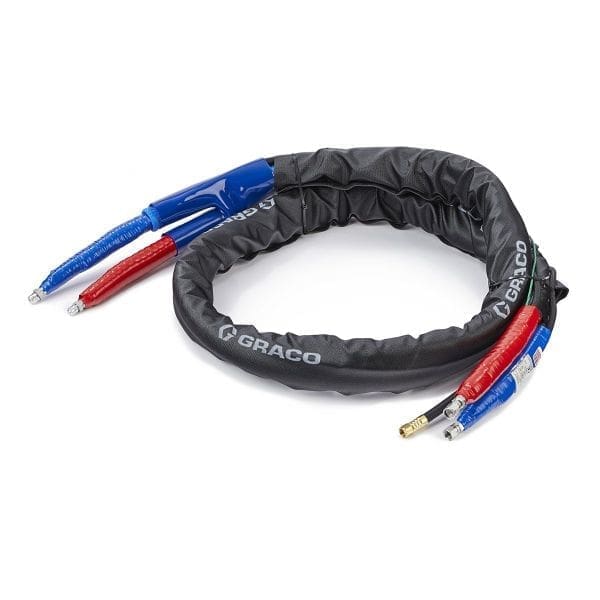
Heated hoses are a critical part of professional spray foam applications. They help maintain proper material temperature from the proportioner to the spray gun, which directly affects foam quality, consistency, and productivity. For contractors relying on dependable spray foam equipment, understanding the role of heated hoses is essential.
Spray foam materials are highly temperature-sensitive. If material cools during transfer, it can lead to poor spray patterns, off-ratio foam, or material buildup. Heated hoses help prevent these issues and support reliable performance across changing jobsite conditions.
What Are Heated Hoses?
Heated hoses are insulated, electrically heated lines that move spray foam chemicals from the spray foam equipment to the spray gun. Their main purpose is to keep both components at a consistent temperature throughout the entire hose length.
By maintaining proper heat, heated hoses support smooth material flow and help ensure the chemicals react correctly once applied.
Why Heated Hoses Matter for Spray Foam Equipment
Heated hoses directly impact how well spray foam equipment performs in real-world conditions. Without consistent temperature control, even high-quality equipment can struggle.
Key benefits of heated hoses include:
- Steady material flow from start to finish
- Improved foam consistency and adhesion
- Reduced clogging and pressure fluctuations
- Better performance during long hose runs and colder weather
For professional crews, heated hoses are not optional accessories. They are essential components of reliable spray foam equipment.
How Heated Hoses Work
Heated hoses contain internal heating elements wrapped around the material lines and protected by insulation. Power supplied from the spray foam equipment heats the hose evenly along its length.
Temperature controls allow operators to adjust heat output based on material requirements and environmental conditions, helping maintain consistent performance throughout the job.
Choosing the Right Heated Hoses
Selecting the right heated hoses helps ensure compatibility with your spray foam equipment and supports long-term durability.
Important factors to consider include hose length, power capacity, insulation quality, and connection compatibility. Matching the hose correctly to your equipment helps avoid heat loss, uneven spraying, and unnecessary wear.
Best Practices for Using Heated Hoses
Proper handling and routine checks help extend hose life and protect your spray foam equipment.
Best practices include preheating hoses before spraying, avoiding sharp bends, monitoring temperature settings during operation, and inspecting hose ends and connections regularly. Consistent maintenance supports dependable performance on every job.
FAQs
Why are heated hoses necessary for spray foam equipment?
Heated hoses maintain proper material temperature, which helps prevent clogging, pressure issues, and inconsistent foam quality.
Can spray foam equipment be used without heated hoses?
In limited situations, yes, but performance often suffers. Heated hoses improve reliability, especially during long hose runs or cooler conditions.
How long do heated hoses typically last?
With proper use and maintenance, heated hoses can provide long service life as part of a professional spray foam equipment setup.
About Spray Foam Systems
Spray Foam Systems is the #1 spray foam rig builder and spray foam equipment supplier in the United States. Family-owned and proudly serving the industry since 2007, we operate from a 7-acre campus with over 80,000 square feet of dedicated working space in Greensboro, GA. With over 10,000 customers served over the last 18 years, we specialize in delivering high-quality turnkey spray foam systems, distributing top-tier equipment and supplies, and providing nationwide service and training to help contractors grow and succeed in the spray foam insulation and roofing markets.