


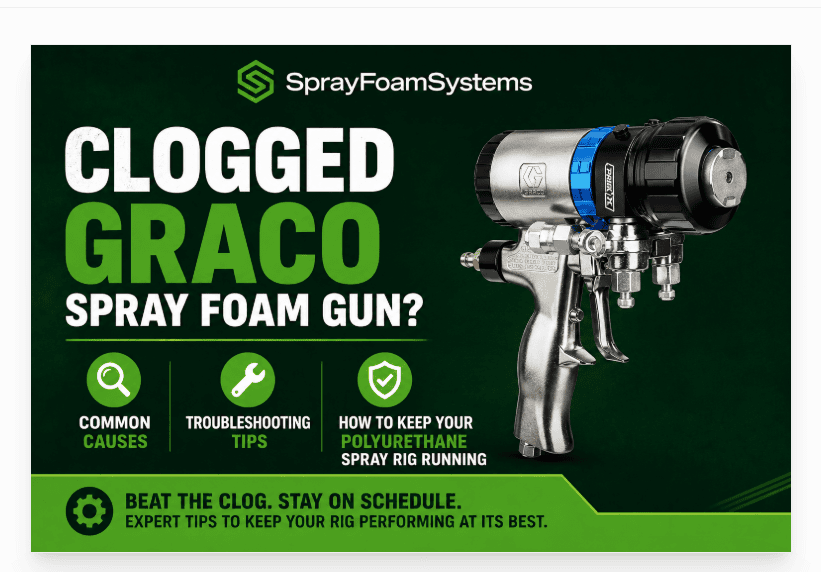
A clogged Graco spray foam gun can quickly slow production and create costly downtime. Because the spray gun is a critical part of a polyurethane spray rig, even a small restriction can affect material flow, spray pattern, and application quality.
Many common gun problems can be prevented through proper cleaning and routine maintenance. When performance changes, knowing what to inspect can also help contractors find the cause faster.
Common Causes of a Clogged Graco Spray Foam Gun
Spray foam guns handle two chemical components that react quickly when mixed. If material cures inside critical areas of the gun, it can restrict flow and interfere with normal operation.
Common causes include:
- Cured material around the mix chamber
- Blocked or partially blocked mix chamber ports
- Dirty or worn side seals
- Material buildup around front-end components
- Worn seals or other service parts
- Contamination within the material system
Routine maintenance can help catch these issues before they cause a complete blockage.
Watch for Changes in Spray Performance
A clogged Graco spray foam gun does not always stop working immediately. Often, operators first notice a change in the spray pattern or material flow.
Warning signs may include:
- Uneven or distorted spray patterns
- Reduced material flow
- Poor atomization
- Inconsistent output
Addressing these symptoms early can help prevent poor application and additional downtime.
Inspect the Mix Chamber
The mix chamber controls material flow and helps create the spray pattern. Small openings allow the chemical components to enter the chamber before they mix and exit the gun.
Cured material can restrict these openings, so the mix chamber is one of the first areas to inspect when troubleshooting a clogged gun.
Always use cleaning tools designed for the specific mix chamber. Incorrect or oversized tools can damage precision openings and create additional performance problems.
Check Side Seals and Wear Components
Side seals help control material as it enters the mix chamber. Dirt, cured material, or excessive wear can affect their performance.
Inspect the side seals, O-rings, mix chamber, and other manufacturer-designated wear components. Replace damaged parts with components designed for the specific Graco spray foam gun model.
Keeping common replacement parts and the correct cleaning tools in your polyurethane spray rig can help crews complete routine service without unnecessary delays.
Troubleshoot the Entire Polyurethane Spray Rig
Not every spray problem originates at the gun. If cleaning and inspecting the gun does not correct the issue, contractors should evaluate the rest of the polyurethane spray rig.
Check key areas such as:
- Material supply
- Transfer pump operation
- Proportioner pressure
- Material temperature
- Heated hose performance
- A- and B-side pressure balance
Poor transfer pump performance can affect material delivery. Incorrect temperature or pressure can also change how material sprays at the gun.
Checking these components before repeatedly servicing the gun can save time and help identify the actual source of the problem.
Maintain Proper Material Temperature
The proportioner and heated hose work together to maintain the material temperatures needed for proper application. If material becomes too cold, viscosity can increase and spray performance may suffer.
Operators should follow the chemical manufacturer’s processing specifications and use the correct proportioner settings. Proper temperature throughout the polyurethane spray rig helps support consistent material flow and atomization.
Keep the Material System Clean
Contamination can cause restrictions and damage components throughout the equipment. Contractors should keep material handling areas clean and use proper procedures when changing drums or servicing the system.
Filters, screens, and other service points should also receive regular inspection according to equipment manufacturer recommendations.
Keeping contaminants out of the system helps protect the spray gun, proportioner, pumps, and other critical components.
Build Preventive Maintenance Into Daily Operations
Preventive maintenance can reduce the chance of equipment problems interrupting a job. Instead of waiting for a clogged gun or poor spray pattern, crews should monitor equipment condition throughout the workday.
A practical routine includes:
- Inspecting the gun and mix chamber
- Checking wear components
- Monitoring pressure and temperature
- Checking heated hose performance
- Confirming proper material supply
- Following correct shutdown procedures
These checks can help contractors catch developing issues before they cause unnecessary downtime.
When Does a Spray Gun Problem Need Professional Support?
If a Graco spray foam gun repeatedly clogs after proper maintenance, the gun may not be the source of the problem.
A technician can evaluate the complete polyurethane spray rig and determine whether the issue involves material delivery, pressure, temperature, the heated hose, transfer pumps, the proportioner, or the gun itself.
This approach can help contractors avoid replacing parts that are still operating correctly.
Keep Your Polyurethane Spray Rig Running
Reliable spray foam production depends on the gun and material delivery system working together. Regular maintenance and systematic troubleshooting can help contractors reduce downtime while maintaining consistent application.
Spray Foam Systems offers ProPAK spray rigs, Graco spray foam guns, replacement parts, service, training, and technical support. Whether you need replacement gun components or equipment for a polyurethane spray rig, Spray Foam Systems can help you find the right solution for your operation.
FAQs
What commonly causes a Graco spray foam gun to clog?
Cured material, restricted mix chamber ports, dirty side seals, worn components, and contamination can restrict material flow and affect gun performance.
Can a spray problem originate somewhere other than the gun?
Yes. Material supply, transfer pumps, pressure, temperature, heated hoses, and the proportioner can affect spray performance. If servicing the gun does not correct the issue, inspect the rest of the system.
How can contractors help prevent Graco spray foam gun clogs?
Follow the manufacturer’s cleaning and lubrication procedures, inspect wear parts regularly, keep contaminants out of the material system, and address changes in spray performance early.
About Spray Foam Systems
Spray Foam Systems is the #1 spray foam rig builder and spray foam equipment supplier in the United States. Family-owned and proudly serving the industry since 2007, we operate from a 7-acre campus with over 80,000 square feet of dedicated working space in Greensboro, GA. With over 10,000 customers served over the last 18 years, we specialize in delivering high-quality spray foam equipment, spray rigs, replacement parts, service, training, and technical support. Our experienced team is committed to helping contractors succeed in the spray foam insulation and roofing industries.