


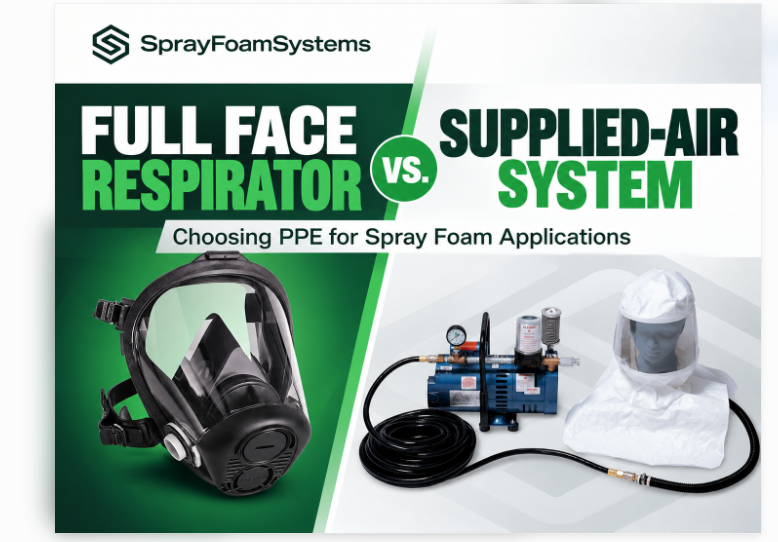
Choosing the right personal protective equipment (PPE) is essential for contractors working with spray foam chemicals. A full face respirator and a supplied-air system offer different levels of respiratory protection. Understanding these differences helps contractors select appropriate equipment, manage exposure risks, and maintain safer working conditions.
Full Face Respirator vs. Supplied-Air System: What’s the Difference?
Both systems help protect workers from airborne hazards, but they operate differently.
- Full face respirator: An air-purifying respirator (APR) that uses appropriate filters or cartridges to remove certain contaminants from surrounding air. It also provides eye and face coverage.
- Supplied-air system: Delivers breathing air from a separate, approved source through a hose to a compatible facepiece, hood, or helmet.
The right choice depends on the chemicals being applied, airborne exposure levels, ventilation, and the manufacturer’s safety requirements.
When Is a Full Face Respirator Appropriate?
A full face respirator may be suitable for certain preparation, maintenance, or other tasks when a documented exposure assessment confirms that an air-purifying respirator provides adequate protection.
Before selecting this equipment, contractors should consider:
- The chemicals and airborne contaminants present
- Cartridge and filter suitability for identified hazards
- Proper fit testing and a reliable face seal
- Cartridge replacement schedules and exposure limitations
A full face respirator does not supply fresh breathing air. Therefore, it cannot protect workers in oxygen-deficient environments or atmospheres immediately dangerous to life or health (IDLH).
Importantly, an air-purifying respirator should not be assumed suitable for active spray polyurethane foam application.
Why Supplied-Air Systems Are Common in Spray Foam Applications
Spray polyurethane foam applications can generate airborne isocyanates, aerosols, and other potentially hazardous contaminants.
For many high-pressure spray foam applications, a properly selected supplied-air system is the appropriate respiratory protection solution, particularly when exposure levels cannot be adequately controlled or characterized.
Benefits include:
- Breathing air supplied independently of the surrounding atmosphere
- Respiratory protection options designed for demanding spray applications
- Compatible configurations offering additional face and head coverage
- Reduced reliance on air-purifying cartridges for contaminant removal
However, supplied-air systems require approved breathing-air sources, proper maintenance, compatible components, and trained operators. They also do not automatically make an IDLH atmosphere safe.
What Contractors Should Evaluate Before Choosing PPE
Selecting respiratory protection involves more than comparing equipment features. Contractors should evaluate the entire application and working environment.
Key considerations include:
- Chemical safety information: Review the product Safety Data Sheets (SDS) and manufacturer recommendations.
- Exposure assessment: Identify airborne hazards and determine the required protection level.
- Ventilation: Evaluate airflow, containment, and potential exposure to nearby workers.
- Respirator requirements: Confirm the equipment’s NIOSH approval, assigned protection factor, and application limitations.
- Training and maintenance: Establish procedures for inspection, cleaning, fit testing when applicable, and breathing-air quality.
OSHA requires employers to implement a respiratory protection program when respirators are necessary. This includes medical evaluations, training, and other applicable requirements.
Finding the Right Respiratory Protection Equipment at SFS
Spray Foam Systems helps contractors source spray foam equipment, accessories, and PPE for their applications.
Whether contractors need a full face respirator for an appropriately assessed task or a supplied-air solution for spray foam installation, understanding the equipment requirements is an important first step.
Contractors should always follow applicable OSHA requirements, product manufacturer guidance, and a qualified respiratory protection assessment before selecting or using respiratory equipment.
Explore respiratory protection equipment and PPE at Spray Foam Systems, or contact our team for help identifying equipment options for your application.
FAQs
1. Can I use a full face respirator when spraying polyurethane foam?
Do not assume a full face air-purifying respirator is suitable for active spray foam application. Respirator selection must follow the chemical manufacturer’s requirements, exposure assessment, and applicable OSHA standards. Supplied-air protection is commonly recommended for spray polyurethane foam installation.
2. Does a supplied-air system require a separate air source?
Yes. A supplied-air respirator requires a compatible breathing-air source that meets applicable air-quality requirements. Ordinary compressed shop air is not automatically suitable for breathing.
3. Does Spray Foam Systems offer respiratory protection equipment?
Spray Foam Systems supplies spray foam equipment and accessories, including PPE options. Contractors can contact SFS to discuss available respiratory protection products and equipment compatibility.
About Spray Foam Systems
Spray Foam Systems is the #1 spray foam rig builder and spray foam equipment supplier in the United States. Family-owned and proudly serving the industry since 2007, we operate from a 7-acre campus with over 80,000 square feet of dedicated working space in Greensboro, GA. With over 10,000 customers served over the last 18 years, we specialize in delivering high-quality turnkey spray foam systems, distributing top-tier equipment and supplies, and providing nationwide service and training to help contractors grow and succeed in the spray foam insulation and roofing markets.