


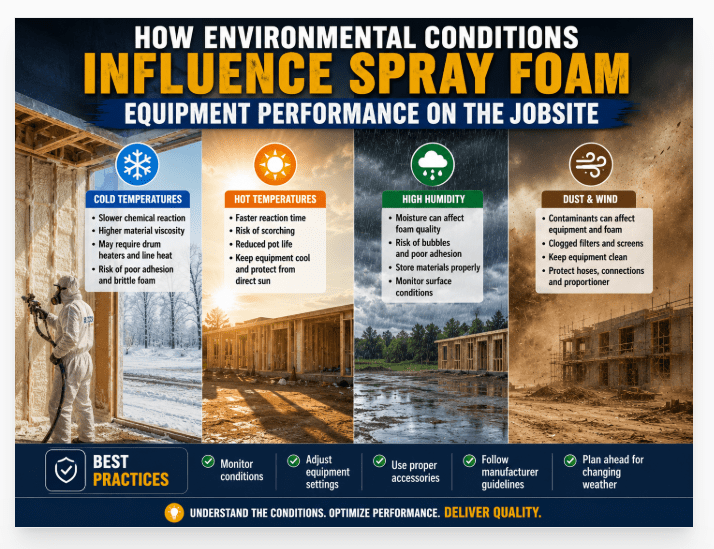
Environmental conditions can directly affect foam quality, material yield, and overall equipment reliability. Temperature, humidity, wind, and moisture all influence how spray foam equipment performs during application. Because of this, contractors who monitor jobsite conditions closely can improve foam consistency and reduce costly downtime.
Why Spray Foam Equipment Performance Changes in Different Conditions
Changing jobsite conditions can impact foam expansion, adhesion, and curing speed. When spray foam equipment operates outside recommended environmental ranges, contractors may experience poor spray patterns, uneven foam, and reduced yield. Additionally, sudden weather changes can place extra strain on hoses, proportioners, and spray guns.
Common issues include:
- Poor adhesion
- Foam shrinkage
- Uneven spray patterns
- Reduced material yield
- Slow curing times
As a result, understanding environmental conditions helps contractors maintain consistent foam quality throughout the project.
Temperature Effects on Spray Foam Equipment
Temperature is one of the biggest factors affecting foam application quality. Both cold and hot weather can create performance challenges for spray systems. Therefore, contractors should always monitor material and surface temperatures before spraying begins.
Cold Weather Challenges for Spray Foam Equipment
During colder conditions, spray materials often become thicker and harder to process. Consequently, proportioners and heated hoses may struggle to maintain proper flow rates.
Cold weather may lead to:
- Poor mixing
- Reduced yield
- Slow curing
- Pressure imbalance
In many cases, contractors use heated hoses and insulated rigs to improve application consistency during winter projects.
Hot Weather and Spray Foam Equipment Performance
Excessive heat can also create spray foam application problems. For instance, high temperatures may cause foam to react too quickly before proper expansion occurs.
Hot weather may cause:
- Burnt foam
- Uneven spray patterns
- Reduced adhesion
- Equipment overheating
To improve performance, crews should monitor hose heat settings and material temperatures throughout the workday.
Humidity and Moisture Problems for Spray Foam Equipment
Humidity introduces moisture into the spray environment, which can negatively affect foam quality and curing. Since spray foam reacts with moisture, excess humidity may create serious application issues.
Common moisture-related issues include:
- Foam blistering
- Surface defects
- Poor adhesion
- Irregular curing
Before spraying begins, contractors should inspect all substrates carefully. Meanwhile, moisture meters and infrared thermometers help verify acceptable conditions.
Wind Conditions and Spray Foam Equipment Overspray
Wind can create overspray issues during exterior insulation and roofing projects. In addition, strong wind conditions often reduce spray accuracy and increase material waste.
Wind-related problems include:
- Increased overspray
- Uneven coverage
- Material waste
- Reduced transfer efficiency
To maintain better control, many contractors adjust spray techniques and pressure settings during windy conditions.
Proper Spray Foam Equipment Setup for Jobsite Conditions
Modern spray systems include advanced controls that help contractors manage changing environmental conditions more effectively. In many situations, proper setup can prevent expensive spray foam defects before they occur.
Important setup considerations include:
- Proper hose insulation
- Balanced pressure settings
- Routine maintenance
- Dry compressed air systems
- Correct material temperatures
Furthermore, reliable equipment setup improves spray consistency and helps reduce downtime on the jobsite.
Monitoring Environmental Conditions During Spray Foam Application
Environmental conditions can change quickly throughout the day. Because of this, contractors should regularly monitor:
- Ambient temperature
- Surface temperature
- Relative humidity
- Wind speed
- Material temperature
By staying proactive, crews can maintain better foam quality and avoid costly application problems.
FAQs
How does cold weather affect spray foam equipment?
Cold weather can reduce foam expansion, thicken materials, and create pressure imbalances that affect spray quality.
Why is humidity important during spray foam application?
Humidity introduces moisture into the spray area, which can cause poor adhesion, foam defects, and inconsistent curing.
What tools help monitor environmental conditions on spray foam jobsites?
Common tools include moisture meters, infrared thermometers, hygrometers, and temperature sensors.
About Spray Foam Systems
Spray Foam Systems is the #1 spray foam rig builder and spray foam equipment supplier in the United States. Family-owned and proudly serving the industry since 2007, we operate from a 7-acre campus with over 80,000 square feet of dedicated working space in Greensboro, GA. With over 10,000 customers served over the last 18 years, we specialize in delivering high-quality turnkey spray foam systems, distributing top-tier equipment and supplies, and providing nationwide service and training to help contractors grow and succeed in the spray foam insulation and roofing markets.