


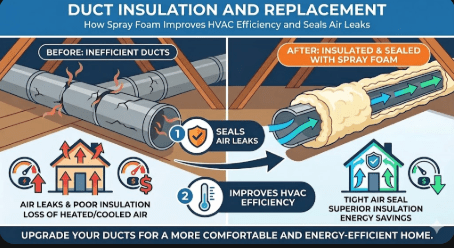
Duct insulation and replacement plays a major role in HVAC system performance, energy savings, and indoor comfort. When ducts leak or lack proper insulation, conditioned air escapes before reaching its destination. As a result, your system works harder, energy costs increase, and comfort levels drop.
Spray foam offers a modern solution for duct insulation and replacement by sealing gaps, improving thermal performance, and increasing overall system efficiency. Because of its expanding properties, it fills cracks and joints that traditional insulation often misses.
Why Duct Insulation and Replacement Matters
Duct systems move heated and cooled air throughout a building. However, poorly insulated or damaged ducts can lead to major energy losses.
Common issues include:
- Air leaks at joints and seams
- Poor thermal resistance in unconditioned spaces
- Moisture buildup and condensation
- Uneven airflow and temperature inconsistencies
Because of these problems, duct insulation and replacement becomes essential for maintaining HVAC efficiency and reducing long-term costs.
How Spray Foam Improves Duct Performance
Spray foam stands out as a high-performance option for duct insulation and replacement. Unlike fiberglass or wrap insulation, it creates an airtight seal while also providing strong insulation value.
Key benefits include:
- Expands to fill gaps and cracks
- Creates an air barrier and thermal barrier in one step
- Reduces energy loss through duct leakage
- Improves airflow consistency throughout the system
In addition, spray foam helps prevent outside air from entering the duct system, which improves indoor air quality and system reliability.
Sealing Air Leaks for Maximum Efficiency
Air leaks are one of the biggest reasons homeowners and contractors invest in duct insulation and replacement. Even small gaps can lead to significant energy loss over time.
Spray foam helps solve this problem by:
- Sealing duct joints and connections tightly
- Preventing conditioned air from escaping
- Reducing strain on HVAC equipment
- Lowering monthly energy bills
As a result, HVAC systems can operate more efficiently, which extends equipment life and reduces maintenance needs.
Where Spray Foam Works Best in Duct Systems
Spray foam is especially effective in areas where traditional insulation struggles to perform.
Typical applications include:
- Attics where ducts are exposed to extreme temperatures
- Crawl spaces with high humidity levels
- Basements with unsealed duct runs
- Mechanical rooms with complex duct layouts
Because of its versatility, spray foam supports both new duct insulation and replacement projects as well as upgrades to existing systems.
Energy Savings and Long-Term Value
Investing in duct insulation and replacement with spray foam delivers long-term benefits. Although the upfront cost may be higher than traditional materials, the energy savings and performance gains often outweigh the initial investment.
Over time, users benefit from:
- Lower heating and cooling costs
- Improved indoor comfort
- Reduced HVAC wear and tear
- Better moisture control and mold prevention
Therefore, spray foam continues to be a preferred solution for contractors looking to deliver high-performance HVAC upgrades.
When to Consider Duct Replacement
While insulation helps improve efficiency, some systems require full duct insulation and replacement due to damage or age.
Signs replacement may be needed include:
- Crushed or disconnected ducts
- Excessive dust or poor airflow
- Visible corrosion or wear
- Consistently uneven temperatures
In these cases, combining new ductwork with spray foam insulation provides the best results.
FAQs
How to insulate heating ducts?
To insulate heating ducts, first seal any leaks using spray foam or appropriate sealants. Then apply insulation such as spray foam directly to duct surfaces or around joints to create an airtight and thermal barrier.
Is spray foam better than traditional duct insulation?
Yes, spray foam provides both air sealing and insulation in one step, which makes it more effective than traditional materials that only insulate without sealing leaks.
How often should duct insulation and replacement be done?
Duct insulation and replacement typically depends on system condition, but many systems benefit from inspection every few years and upgrades when efficiency drops or damage appears.
About Spray Foam Systems
Spray Foam Systems is the #1 spray foam rig builder and spray foam equipment supplier in the United States. Family-owned and proudly serving the industry since 2007, we operate from a 7-acre campus with over 80,000 square feet of dedicated working space in Greensboro, GA. With over 10,000 customers served over the last 18 years, we specialize in delivering high-quality turnkey spray foam systems, distributing top-tier equipment and supplies, and providing nationwide service and training to help contractors grow and succeed in the spray foam insulation and roofing markets.