


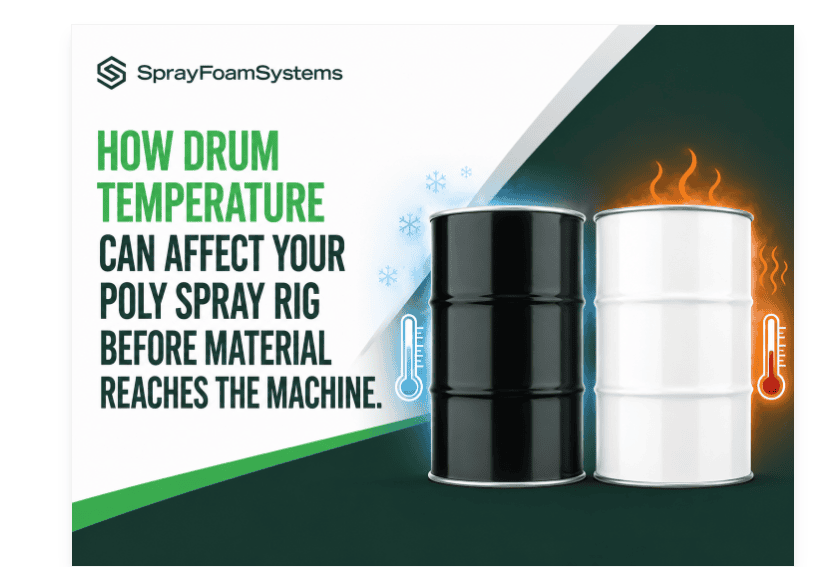
Material temperature can influence spray performance before chemicals ever reach your poly spray rig. When drums are too cold or too warm, changes in viscosity can affect transfer, pressure balance, and how efficiently the system conditions material.
Keeping drums within the chemical manufacturer’s recommended range helps reduce feeding problems before startup.
Why Drum Temperature Matters
Cold spray foam chemicals become thicker, which makes them harder for transfer pumps to move. If material reaches the poly spray rig too cold, the system may experience:
- Slower material transfer
- Increased transfer pump strain
- Longer warm-up times
- Pressure fluctuations
- Difficulty maintaining processing temperatures
Excessive heat can also change viscosity and make material behavior less predictable.
How Cold Material Affects Feeding
When chemicals are too cold, transfer pumps must work harder to move material from the drums to the proportioner.
Restricted flow can reduce the supply reaching the poly spray rig and make it harder to maintain balanced A-side and B-side pressure. That imbalance can affect mixing, spray pattern, and application quality.
Keep A-Side and B-Side Drum Temperatures Consistent
A significant temperature difference between the two drums can create uneven viscosity and material delivery.
Because a poly spray rig depends on consistent A-side and B-side feeding, both components should be stored under similar conditions whenever possible. Proper drum preparation can reduce the amount of temperature correction required after startup.
Protect Drums From Temperature Extremes
Drums stored in trailers, trucks, warehouses, or exposed jobsite areas can quickly be affected by outdoor conditions.
During cold weather, controlled storage or heated trailer space can help keep chemicals ready for use. In hot weather, protect drums from excessive heat and direct sunlight that could push material beyond the recommended range.
Check Drum Conditions Before Starting Your Poly Spray Rig
Before spraying, confirm that the material is ready to feed properly into the system.
Check:
- Drum temperatures
- Manufacturer storage recommendations
- A-side and B-side conditions
- Transfer pumps and supply hoses
- Startup pressures
These checks can help identify temperature-related feeding issues before they affect production.
Better Drum Preparation Supports Consistent Performance
Proper drum temperature gives your poly spray rig a better starting point for steady material delivery and balanced operation.
Spray Foam Systems supplies professional spray foam rigs, transfer pumps, heating equipment, replacement parts, and accessories for contractors who need dependable equipment in the field.
Explore Spray Foam Systems for the equipment and components needed to keep your poly spray rig operating efficiently.
FAQs
Why does drum temperature matter before material enters a poly spray rig?
Temperature affects material viscosity, which can influence transfer pump performance, material flow, pressure balance, and heating efficiency.
Can proportioner heaters compensate for very cold spray foam chemicals?
They can heat material as it moves through the system, but extremely cold chemicals may still cause feeding and warm-up problems before reaching the proportioner.
Should A-side and B-side drums be stored at similar temperatures?
Yes. Similar storage conditions help support more consistent viscosity, material delivery, and pressure balance.
About Spray Foam Systems
Spray Foam Systems is the #1 spray foam rig builder and spray foam equipment supplier in the United States. Family-owned and proudly serving the industry since 2007, we operate from a 7-acre campus with over 80,000 square feet of dedicated working space in Greensboro, GA. With over 10,000 customers served over the last 18 years, we specialize in delivering high-quality turnkey spray foam systems, distributing top-tier equipment and supplies, and providing nationwide service and training to help contractors grow and succeed in the spray foam insulation and roofing markets.