


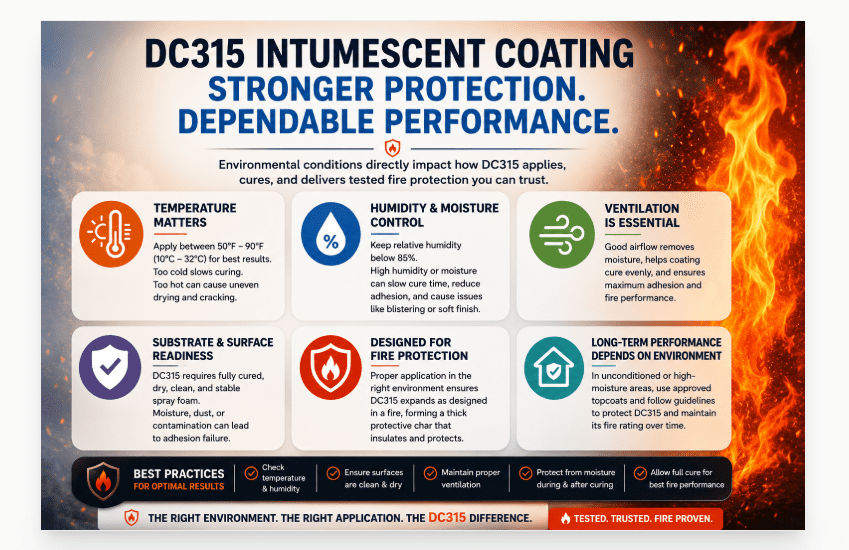
Environmental conditions have a direct impact on how DC315 performs during application. Temperature, humidity, airflow, and surface conditions can all affect adhesion, curing time, and overall coating consistency. Contractors who pay attention to these factors often achieve better spray performance and more reliable long-term results.
Understanding how environmental changes affect DC315 can also help reduce material waste, avoid uneven finishes, and minimize costly rework on the jobsite.
Temperature Affects DC315 Performance
Temperature plays a major role in how DC315 sprays and cures. Cold conditions may cause the material to spray thicker and dry more slowly, while excessive heat can make the coating dry too quickly before it levels properly.
For the best results, contractors should monitor both ambient air temperature and surface temperature before applying DC315. Stable temperatures help improve spray consistency and coating adhesion.
Humidity Can Impact Drying and Cure Time
Humidity levels also influence DC315 performance. High humidity can slow curing times and increase the chance of moisture-related adhesion problems. On the other hand, very dry conditions may cause the coating to dry too fast, which can affect finish quality.
Monitoring humidity throughout the project helps contractors maintain more consistent application results.
Surface Preparation Is Important
Proper surface preparation is essential before spraying DC315 over spray foam insulation. Dirty or damp surfaces can interfere with bonding and reduce coating performance.
Before application, contractors should inspect surfaces for:
- Moisture buildup
- Dust or debris
- Damaged foam
- Uneven spray foam surfaces
Clean and dry substrates help DC315 perform more consistently across residential and commercial applications.
Airflow and Ventilation Affect Spray Quality
Airflow inside the work area can also affect DC315 application quality. Excessive airflow may create overspray or uneven coating thickness, especially during larger projects.
However, proper ventilation remains important for:
- Worker safety
- Moisture control
- Cure consistency
- Better air circulation during application
Balancing ventilation and airflow helps contractors maintain better control throughout the spraying process.
Proper Planning Helps Improve Results
Environmental conditions can change throughout the day, especially on outdoor projects or large commercial jobsites. Contractors often improve DC315 performance by monitoring weather conditions, preparing surfaces carefully, and maintaining stable application environments whenever possible.
Taking the time to manage these factors can lead to smoother applications and more reliable coating performance.
FAQs
What is DC315 used for?
DC315 is a fire protective coating commonly applied over spray foam insulation to help meet thermal and ignition barrier requirements.
Can humidity affect DC315 drying time?
Yes. High humidity can slow curing, while very dry conditions may cause DC315 to dry too quickly.
Why is temperature important when applying DC315?
Temperature affects spray quality, adhesion, curing time, and overall DC315 performance during application.
About Spray Foam Systems
Spray Foam Systems is the #1 spray foam rig builder and spray foam equipment supplier in the United States. Family-owned and proudly serving the industry since 2007, we operate from a 7-acre campus with over 80,000 square feet of dedicated working space in Greensboro, GA. With over 10,000 customers served over the last 18 years, we specialize in delivering high-quality turnkey spray foam systems, distributing top-tier equipment and supplies, and providing nationwide service and training to help contractors grow and succeed in the spray foam insulation and roofing markets.