


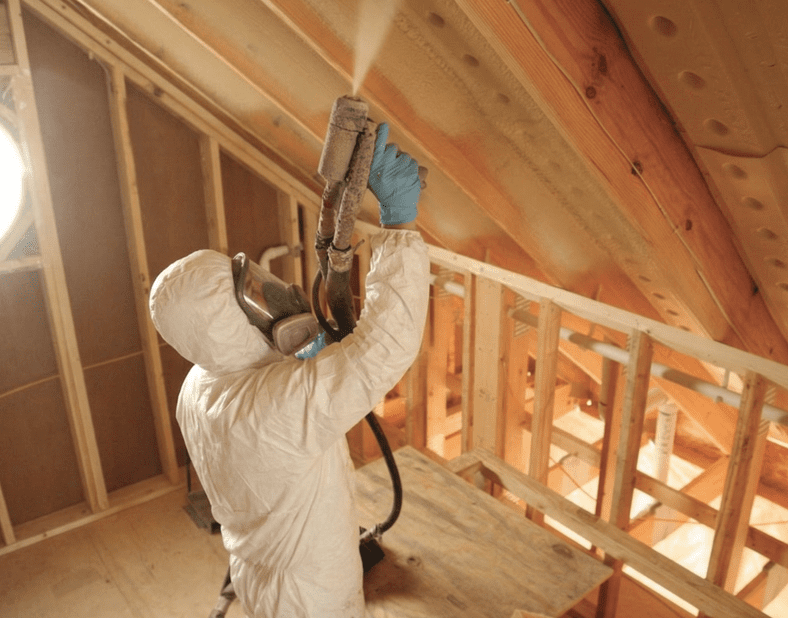
Attic insulation in humid climates requires more than just thermal performance. Moisture control, air sealing, and long-term durability all play a critical role. Because of these factors, closed cell insulation continues to be one of the most effective solutions for protecting attic spaces in high-humidity environments.
Why Humid Climates Require Specialized Insulation
High humidity introduces constant moisture into attic spaces. As warm air rises and meets cooler surfaces, condensation forms. Over time, this leads to serious issues.
Common problems include:
- Mold and mildew growth
- Wood rot and structural damage
- Reduced insulation performance
- Higher energy costs
Because of this, insulation must do more than regulate temperature. It must also control moisture and air movement.
Benefits of Closed Cell Insulation for Attics in Humid Climates
Closed cell insulation offers a dense structure that resists both air and moisture. This makes it ideal for attic applications where humidity is a concern.
Key benefits include:
- High R-value per inch
- Built-in vapor resistance
- Strong air sealing capabilities
- Added structural support
In humid environments, this type of spray foam helps prevent moisture intrusion while maintaining consistent performance.
How Closed Cell Insulation Controls Moisture and Air Leaks
Moisture control is one of the biggest advantages of closed cell insulation. Its rigid structure creates a continuous barrier that limits both air and vapor movement.
When properly installed, it helps:
- Block humid air from entering the attic
- Reduce condensation on roof surfaces
- Improve indoor air quality
- Lower HVAC workload
As a result, closed cell spray foam supports a more stable and controlled attic environment.
Energy Efficiency with Closed Cell Insulation in Hot Regions
Attics in hot, humid climates often become a major source of energy loss. Without proper insulation, heat and moisture easily enter the home.
This insulation improves efficiency by:
- Reducing heat transfer through the roof
- Sealing gaps and cracks
- Maintaining consistent indoor temperatures
- Lowering monthly energy bills
Because of its performance, high-density spray foam is widely used in energy-efficient building designs.
Long-Term Performance of Closed Cell Insulation
Durability is critical when dealing with humid conditions. Insulation must maintain its structure and performance over time.
Closed cell insulation provides:
- Resistance to mold and moisture damage
- No sagging or settling
- Long service life
- Consistent thermal performance
These qualities make it a dependable option for long-term attic protection.
When Open Cell Foam May Be Used Instead
Open cell foam can still be used in some applications. However, it behaves differently in humid climates.
It typically:
- Allows more vapor permeability
- Has a lower R-value per inch
- Requires additional moisture control measures
In most attic applications where humidity is high, closed cell insulation remains the better choice.
Installation Tips for Closed Cell Insulation
Proper installation ensures the best results. Even the highest-quality material will underperform if applied incorrectly.
Important considerations include:
- Surface preparation before spraying
- Consistent thickness across all areas
- Proper sealing around penetrations
- Use of professional spray equipment
When installed correctly, spray foam insulation delivers maximum efficiency and reliability.
FAQs
What type of spray foam insulation works best in humid attics?
Closed cell insulation is the best option for humid attic environments because it resists moisture, seals air leaks, and provides high thermal performance.
Polyurethan Foam Insulation and types – what should I know?
Polyurethan foam insulation includes different material types designed for various applications. When comparing closed cell vs open cell spray foam, closed cell insulation offers stronger moisture resistance and structural support, while open cell foam is softer and allows more vapor movement. In humid attic conditions, closed cell insulation is typically the preferred solution due to its ability to control both air and moisture.
Does spray foam help reduce attic moisture problems?
Yes, spray foam—especially closed cell spray foam—helps reduce moisture issues by limiting air infiltration and preventing condensation buildup.
About Spray Foam Systems
Spray Foam Systems is the #1 spray foam rig builder and spray foam equipment supplier in the United States. Family-owned and proudly serving the industry since 2007, we operate from a 7-acre campus with over 80,000 square feet of dedicated working space in Greensboro, GA. With over 10,000 customers served over the last 18 years, we specialize in delivering high-quality turnkey spray foam systems, distributing top-tier equipment and supplies, and providing nationwide service and training to help contractors grow and succeed in the spray foam insulation and roofing markets.