


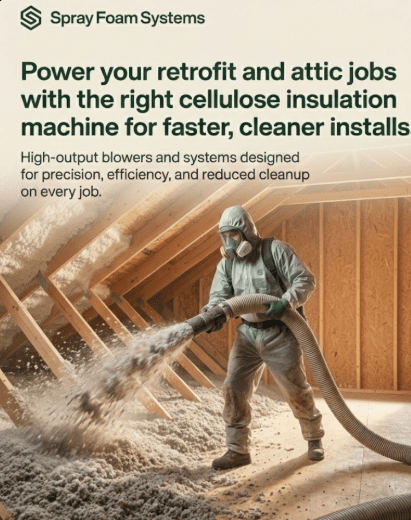
Cellulose insulation is a reliable choice for improving comfort and energy use in both retrofit projects and attic spaces. Because these jobs involve existing structures, contractors need equipment that delivers steady results without damaging finished areas. As a result, a cellulose insulation machine becomes essential for achieving proper fill, even coverage, and smooth installs in tight spaces.
Why Cellulose Insulation Works Well for Retrofits and Attics
Cellulose insulation adapts easily to older homes and uneven framing. For example, it fills gaps and voids that other materials may miss. In retrofit projects, installers can blow material into wall cavities through small access holes. Meanwhile, in attics, cellulose spreads evenly to create a solid insulation layer.
Because of this, a cellulose insulation machine helps control airflow and material flow. Without the right machine, installers may deal with clogs, uneven fill, or wasted material.
Types of Cellulose Insulation Machines and Their Differences
Not every job requires the same equipment. Therefore, cellulose insulation machines are available in different sizes and output levels to match job needs.
Low-Output Cellulose Insulation Machines
Low-output machines work best for smaller projects and light use.
- Designed for short hose runs
- Easy to move and store
- Suitable for small retrofit jobs
- Lower material output
Overall, these machines are a good fit for entry-level contractors or limited residential work.
Mid-Range Cellulose Insulation Machines
Mid-range machines offer more flexibility and steady performance.
- Support both dense-pack and loose-fill installs
- Handle longer hose runs
- Suitable for frequent attic work
- Built for regular jobsite use
Because of their balance, a mid-range cellulose insulation machine works well for contractors handling mixed residential projects.
High-Output Cellulose Insulation Machines
High-output machines are built for large projects and daily use.
- Designed for continuous operation
- Support long hose runs
- Move higher volumes of material
- Built with heavy-duty parts
As a result, contractors who focus on insulation full time often choose high-output cellulose insulation machines to improve speed and reduce labor time.
How a Cellulose Insulation Machine Supports Retrofit Projects
Retrofit work requires control and accuracy. Installers must fill wall cavities completely while avoiding overpacking. Therefore, a quality cellulose insulation machine allows easy adjustment of air and material settings.
In addition, many retrofit jobs involve long hose runs. Because of this, machine strength and steady pressure directly affect job speed and final results.
Attic Applications and Machine Performance
Attic insulation requires smooth material flow and even coverage. Whether installing new insulation or adding more over existing layers, consistency matters. For this reason, the right cellulose insulation machine helps reduce clumping and limits dust.
As a result, installers achieve uniform depth around framing, wiring, and ductwork with less cleanup.
Choosing the Right Cellulose Insulation Machine
Selecting the correct machine depends on workload and project type. Before purchasing, contractors should consider:
- How often they perform attic or retrofit jobs
- Required hose lengths
- Desired production speed
- Ease of cleaning and upkeep
By matching the machine to the job, contractors improve efficiency and extend equipment life.
Long-Term Value for Insulation Contractors
Over time, a dependable cellulose insulation machine helps reduce callbacks and improve job quality. In addition, reliable equipment allows crews to complete projects faster and take on more work.
Power your retrofit and attic jobs with the right cellulose insulation machine for faster, cleaner installs.
Contact Spray Foam Systems to get expert guidance on choosing the right cellulose insulation machine for your attic and retrofit projects.
FAQs
What projects use a cellulose insulation machine?
A cellulose insulation machine is commonly used for attic insulation, wall retrofits, dense-pack work, and sound control in residential and light commercial buildings.
Can one cellulose insulation machine handle both attic and retrofit jobs?
Yes. Many machines are designed to support both loose-fill attic installs and dense-pack wall applications when set correctly.
Why does machine output matter for insulation quality?
Consistent airflow and steady material feed help achieve even coverage and proper density.
About Spray Foam Systems
Spray Foam Systems is the #1 spray foam rig builder and spray foam equipment supplier in the United States. Family-owned and proudly serving the industry since 2007, we operate from a 7-acre campus with over 80,000 square feet of dedicated working space in Greensboro, GA. With over 10,000 customers served over the last 18 years, we specialize in delivering high-quality turnkey spray foam systems, distributing top-tier equipment and supplies, and providing nationwide service and training to help contractors grow and succeed in the spray foam insulation and roofing markets.