


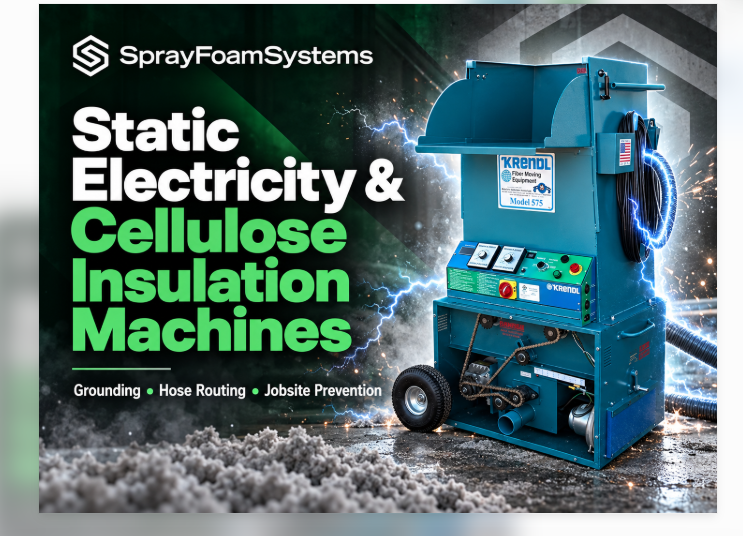
Static electricity can cause problems when using a cellulose insulation machine. Dry air, material flow, and hose friction can lead to static buildup. As a result, crews may feel small shocks during installation. Proper grounding, hose routing, and daily checks can help reduce these issues.
Why Static Electricity Builds Up During Cellulose Installation
Static electricity forms as insulation moves through the hose. The material creates friction against the hose walls. Over time, an electrical charge can build up.
Several jobsite conditions may increase static buildup:
- Low humidity and dry air
- Long insulation hose runs
- Nonconductive or damaged hoses
- Loose or damaged grounding connections
- High material speeds and continuous operation
Static shocks may seem minor. However, repeated shocks can distract workers and point to a setup issue. Therefore, crews should inspect the equipment before work continues.
Proper Grounding for a Cellulose Insulation Machine
Grounding is an important part of safe equipment operation. Yet, grounding methods can vary by machine and hose design. Always follow the manufacturer’s instructions for your specific setup.
Inspect Grounding Connections
Before each job, check the electrical grounding system and any static-control parts required by the manufacturer.
- Inspect grounding wires for wear or damage.
- Check electrical plugs and power cords.
- Look for loose or corroded connections.
- Confirm required grounding parts are installed.
- Check for damaged hose fittings or connectors.
A cellulose insulation machine must have the correct electrical ground. However, that ground may not remove static charges from the full hose length. A separate static-control method may be required if specified by the manufacturer.
Follow Approved Grounding Methods
Never attach a grounding wire to an unknown electrical connection. Do not use gas pipes or other unapproved objects as grounding points. Instead, use the method listed in the equipment manual. Have a qualified electrician inspect suspected electrical faults.
How Hose Routing Affects Static Electricity
Hose routing affects how cellulose moves from the machine to the work area. Poor routing can create material restrictions and uneven flow. While good routing cannot stop all static, it can help keep the system running smoothly.
Avoid Sharp Bends and Tight Coils
A cellulose insulation machine works best with the proper hose size and layout. Sharp bends can restrict airflow and increase the risk of material plugs.
Follow these hose routing tips:
- Keep hose runs as straight as practical.
- Avoid tight bends and unnecessary loops.
- Keep hoses away from sharp edges.
- Protect hoses from vehicles and heavy equipment.
- Use the hose size and length approved for your machine.
Check Hose Materials and Connections
Not all insulation hoses have the same static-control features. Some systems may use conductive or static-dissipative hoses. Therefore, contractors should check compatibility before replacing a hose.
Inspect fittings, clamps, and hose sections for damage. Also, check any required electrical continuity connections. Replace worn parts with approved components.
Jobsite Prevention Tips for Static Electricity
Daily checks can help crews spot problems early. In addition, changes in weather and jobsite conditions may affect static buildup.
Watch for Dry Conditions
Static shocks often occur more often when the air is dry. This is because electrical charges may not dissipate as easily. Crews should watch for recurring shocks during low-humidity conditions.
Do not add water to the machine or insulation hose to control static. Instead, use the manufacturer’s approved prevention methods.
Complete a Daily Equipment Check
Before starting a cellulose insulation machine, take a few minutes to inspect the setup.
- Check electrical cords and grounding connections.
- Inspect hoses for cuts, wear, or flat spots.
- Confirm all hose fittings are secure.
- Remove sharp bends and material restrictions.
- Review machine settings and operating instructions.
These simple steps help reduce avoidable problems and support steady insulation flow.
What to Do When Static Shocks Continue
If workers continue to feel shocks, stop the equipment and inspect the system. First, check the grounding setup and hose condition. Next, review the equipment manual for static-control guidance.
Do not assume each shock is harmless static electricity. An electrical fault may create a more serious hazard. If the cause is unclear, contact the manufacturer or a qualified service professional before restarting work.
Keep Your Cellulose Insulation Machine Running Safely
Static prevention starts with proper equipment setup. Grounding, hose routing, and regular inspections all play an important role. As a result, crews can reduce interruptions and maintain a more consistent workflow.
Spray Foam Systems helps contractors find equipment, parts, and support for their insulation needs.
Explore our Spray Foam Equipment Guide to learn more about equipment options and support available from Spray Foam Systems.
FAQs
1. What causes static electricity in a cellulose insulation machine?
Static electricity forms as cellulose moves through the hose and creates friction. Dry air, hose materials, and operating conditions can increase static buildup.
2. Can proper grounding prevent static shocks during cellulose installation?
Proper grounding helps manage electrical charges, but it may not stop every static shock. Always use the grounding and static-control methods approved by the manufacturer.
3. Does hose routing affect static electricity in a cellulose insulation machine?
Hose routing affects material flow and friction. Avoiding tight bends, damaged hoses, and unnecessary restrictions helps support steady airflow. However, proper routing alone may not eliminate static buildup.
About Spray Foam Systems
Spray Foam Systems is the #1 spray foam rig builder and spray foam equipment supplier in the United States. Family-owned and proudly serving the industry since 2007, we operate from a 7-acre campus with over 80,000 square feet of dedicated working space in Greensboro, GA. With over 10,000 customers served over the last 18 years, we specialize in delivering high-quality turnkey spray foam systems, distributing top-tier equipment and supplies, and providing nationwide service and training to help contractors grow and succeed in the spray foam insulation and roofing markets.