


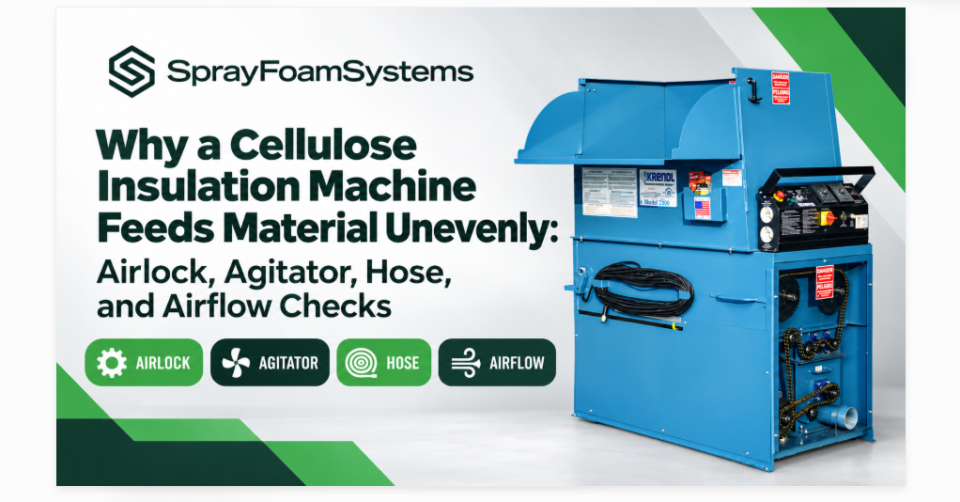
A cellulose insulation machine should deliver a steady, consistent flow of material throughout an installation. However, uneven feeding can interrupt production, create inconsistent material distribution, and slow down a crew. Understanding the common causes helps contractors identify problems and keep their equipment operating efficiently.
Common Causes of Uneven Cellulose Insulation Machine Feeding
When a cellulose insulation machine begins feeding unevenly, several components may be responsible. The airlock, agitator, material hose, and airflow settings all play important roles in moving insulation from the hopper to the installation area.
Checking these components systematically can help contractors identify the source of the problem before it causes additional downtime.
1. Check the Airlock for Wear or Blockages
The airlock controls how cellulose insulation enters the airstream. When its seals wear down or material builds up inside the assembly, the machine may struggle to maintain consistent airflow and material delivery.
Common signs of airlock problems include:
- Inconsistent material output during operation
- Reduced blowing pressure or material flow
- Excessive air escaping into the hopper
- Material buildup around the airlock assembly
Before inspecting the airlock, shut down the equipment and follow the manufacturer’s lockout and maintenance instructions. Check the seals, rotor, and surrounding components for wear or obstructions.
Replacing worn components and maintaining the airlock can help restore consistent feeding.
2. Inspect the Agitator for Material Flow Problems
The agitator helps break apart compressed cellulose insulation and moves material toward the feeding system. If it stops functioning correctly, insulation may bridge inside the hopper or enter the airlock inconsistently.
Contractors should look for:
- Material bridging or clumping inside the hopper
- Uneven movement of insulation toward the airlock
- Worn or damaged agitator components
- Material accumulating instead of feeding continuously
After safely shutting down the machine, inspect the agitator and remove obstructions according to the manufacturer’s instructions.
Additionally, avoid overloading the hopper beyond the machine’s recommended capacity. Proper loading helps maintain consistent material movement.
3. Examine the Hose for Restrictions and Blockages
The delivery hose plays an important role in maintaining steady cellulose insulation output. Kinks, excessive bends, damaged sections, or accumulated material can restrict flow.
Common hose-related problems include:
- Sharp bends or kinks that restrict material movement
- Partial blockages caused by compacted insulation
- Damaged hose sections or leaking connections
- Hose lengths or diameters that exceed equipment recommendations
Inspect the entire hose path before adjusting other machine settings. Straighten unnecessary bends and verify that all connections remain secure.
If a blockage occurs, follow the manufacturer’s approved clearing procedure. Never disconnect a pressurized hose.
4. Verify Airflow and Material Feed Settings
Proper airflow helps carry cellulose insulation through the hose and into the installation area. When airflow and material feed rates are not balanced, the machine may experience surging, inconsistent output, or reduced production.
Several factors can affect airflow performance:
- Airflow settings that do not match the material feed rate
- Incorrect blower settings for the application
- Air leaks within the delivery system
- Excessive hose length or restrictive hose configurations
Start by reviewing the manufacturer’s recommended settings for the machine and application.
Then, make gradual adjustments while monitoring material output. Avoid changing multiple settings simultaneously, since this makes it harder to identify the cause of uneven feeding.
5. Follow a Consistent Troubleshooting Process
When a cellulose insulation machine feeds unevenly, a systematic inspection can save time and prevent unnecessary part replacements.
Use this troubleshooting checklist:
- Check the hopper: Confirm that material moves freely without bridging or excessive clumping.
- Inspect the agitator: Verify proper operation and check for worn components.
- Examine the airlock: Look for damaged seals, wear, or material obstructions.
- Inspect the hose: Check for kinks, blockages, leaks, and loose connections.
- Review airflow settings: Confirm that blower output and material feed settings match the application.
- Test material delivery: Restart the machine according to the manufacturer’s instructions and monitor output consistency.
Always shut down and isolate equipment before inspecting moving components or clearing material obstructions.
Keep Your Cellulose Insulation Machine Operating Efficiently
Regular maintenance helps reduce interruptions and supports consistent insulation installation. Cleaning equipment, checking wear components, and monitoring material flow can prevent many common feeding problems.
Spray Foam Systems offers insulation equipment, replacement parts, and technical support to help contractors maintain their equipment and reduce unnecessary downtime.
Explore cellulose insulation equipment, replacement parts, and technical support available from Spray Foam Systems to keep your crew productive.
FAQs
1. Why does my cellulose insulation machine keep clogging?
Clogging can result from compressed material, hose restrictions, improper airflow settings, or feeding system problems. Inspect the hopper, agitator, airlock, and hose to identify the cause.
2. How do I know if my cellulose insulation machine airlock needs maintenance?
Common warning signs include inconsistent feeding, reduced blowing pressure, excessive air escaping into the hopper, and visible wear on airlock seals or components.
3. Can incorrect airflow cause uneven cellulose insulation feeding?
Yes. Airflow that does not match the material feed rate can cause surging, restrictions, or inconsistent output. Follow the manufacturer’s recommendations when adjusting airflow and feed settings.
About Spray Foam Systems
Spray Foam Systems is the #1 spray foam rig builder and spray foam equipment supplier in the United States. Family-owned and proudly serving the industry since 2007, we operate from a 7-acre campus with over 80,000 square feet of dedicated working space in Greensboro, GA. With over 10,000 customers served over the last 18 years, we specialize in delivering high-quality turnkey spray foam systems, distributing top-tier equipment and supplies, and providing nationwide service and training to help contractors grow and succeed in the spray foam insulation and roofing markets.