


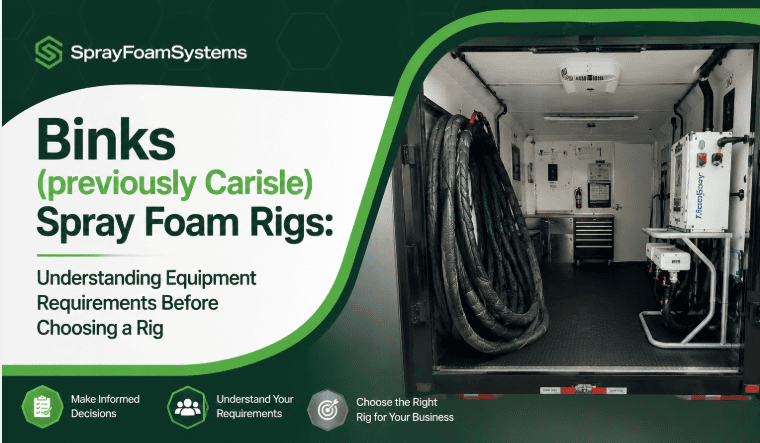
Choosing the right spray foam rig starts with understanding the equipment you plan to operate. Binks spray foam equipment, previously associated with Carlisle, can have different requirements depending on the proportioner, hose setup, power source, and supporting components.
Before selecting a Binks (Carlisle) spray foam rig, contractors should look beyond trailer size or a basic equipment list. The complete system needs to provide the power, air, material handling, and temperature control required for consistent spraying.
Start With the Proportioner
The proportioner is one of the most important factors when configuring a spray foam rig. Different Binks and Carlisle models can have different electrical, heating, pressure, and output requirements.
Before choosing a rig, contractors should identify:
- Specific proportioner model
- Required electrical service
- Maximum operating pressure
- Heating requirements
- Expected material output
- Heated hose requirements
A Binks (Carlisle) spray foam rig should be configured around the proportioner and its supporting equipment. This helps prevent power, capacity, or compatibility problems.
Determine Power Requirements
The proportioner, heated hose, compressor, air dryer, lighting, and other components may all rely on the rig’s power source.
Contractors should calculate the total electrical load before selecting a generator. The generator should provide enough capacity for normal operation while maintaining appropriate reserve power.
Building a Binks (Carlisle) spray foam rig around the correct electrical requirements helps create a dependable system for daily use.
Consider Heated Hose and Temperature Control
Heated hose helps maintain material temperature from the proportioner to the spray gun. Hose length can also affect electrical demand and the overall rig configuration.
Consider:
- Required working distance
- Heated hose length
- Hose heat requirements
- Jobsite conditions
- Material temperature requirements
Contractors working on larger projects may need additional hose length, so the rig must be equipped to support it.
Match the Air System to the Equipment
A professional spray foam rig needs a reliable compressed air system. The compressor may support the spray gun, transfer pumps, and other pneumatic components.
Contractors should confirm the required air volume and pressure before selecting a compressor. An air dryer can also help provide cleaner, drier compressed air.
When planning a Binks (Carlisle) spray foam rig, matching the air system to the equipment helps support reliable operation.
Plan for Material Handling and Rig Space
Transfer pumps move A-side and B-side materials from the drums to the proportioner. They must work with the materials, air supply, and equipment used in the rig.
The rig also needs enough room for:
- Material drums and transfer pumps
- Hoses and supporting equipment
- Tools and replacement parts
- Routine service and maintenance
- Safe access to major components
Contractors should consider both current and future equipment needs when selecting trailer or box truck size.
Make Sure Components Work Together
The spray gun, proportioner, heated hose, transfer pumps, generator, compressor, and other components need to function as one complete system.
Before finalizing a Binks (Carlisle) spray foam rig, contractors should confirm equipment compatibility rather than choosing components based on individual specifications alone.
Important factors include:
- Typical project size
- Required spray output
- Electrical demand
- Hose length
- Compressor requirements
- Material capacity
- Rig size
- Service access
This approach can help prevent compatibility issues and create a more practical setup for daily operation.
Build the Rig Around the Application
Residential insulation, commercial work, and specialty applications can have different production and equipment demands. Contractors should identify their primary applications before choosing a rig.
A Binks (Carlisle) spray foam rig designed around actual job requirements can provide the right balance of output, mobility, equipment capacity, and serviceability.
Spray Foam Systems offers professional ProPAK spray foam rig options that can be configured around different equipment and contractor requirements. Contractors can evaluate the proportioner, power system, air system, hose configuration, and supporting components before making an equipment investment.
FAQs
What should contractors check before choosing a Binks (Carlisle) spray foam rig?
Contractors should confirm the proportioner’s electrical demand, heating requirements, hose configuration, air requirements, material handling needs, and available rig space.
Can different Binks (previously Carlisle) equipment require different rig configurations?
Yes. Requirements can vary by model and system configuration, so contractors should confirm the specifications of the exact equipment they plan to use.
Why should the complete spray foam system be considered before choosing a rig?
The proportioner, generator, compressor, air dryer, heated hose, transfer pumps, and spray gun need to work together. Planning the complete system helps prevent compatibility and capacity issues.
About Spray Foam Systems
Spray Foam Systems is the #1 spray foam rig builder and spray foam equipment supplier in the United States. Family-owned and proudly serving the industry since 2007, we operate from a 7-acre campus with over 80,000 square feet of dedicated working space in Greensboro, GA. With over 10,000 customers served over the last 18 years, we specialize in delivering high-quality turnkey spray foam systems, distributing top-tier equipment and supplies, and providing nationwide service and training to help contractors grow and succeed in the spray foam insulation and roofing markets.