


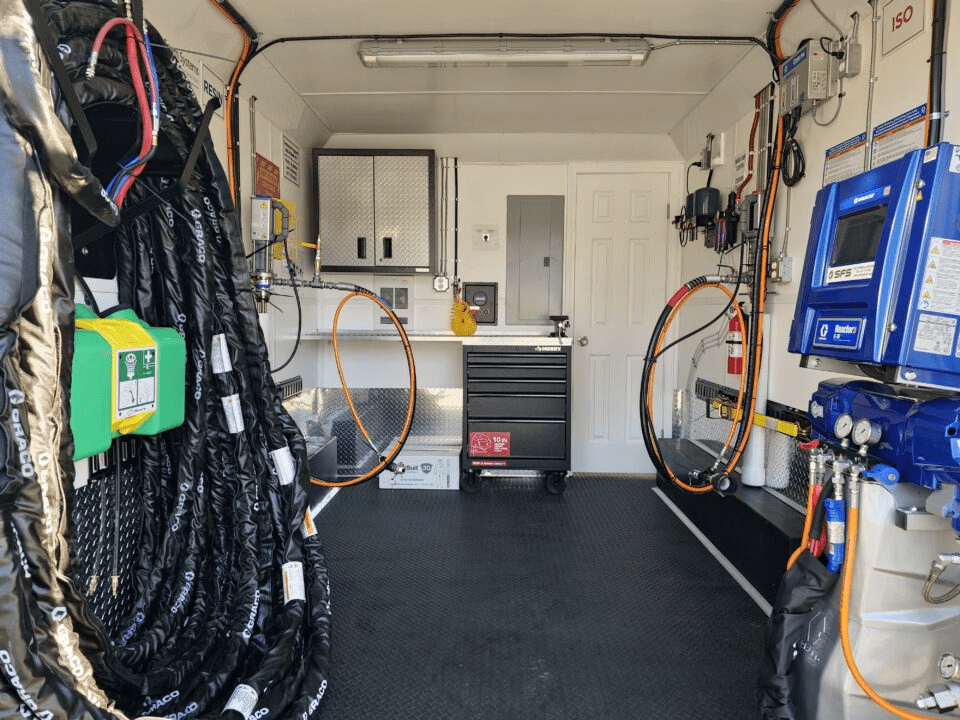
As contractors look ahead to 2025, one piece of equipment remains central to profitability: the insulation machine. The right insulation machine can make the difference between jobs that are profitable and ones that bleed time, waste, or rework. In this post, we compare top choices for spray foam machines and fiberglass insulation machines, and explore what to look for when selecting your next insulation machine.
Why the Right Insulation Machine Matters
- Efficiency: A modern insulation machine reduces downtime and improves material throughput.
- Material versatility: Some machines specialize in spray foam, while others are for fiberglass blow-in or dense-pack.
- Portability & serviceability: For contractors on tight schedules, ease of transport, maintenance access, and reliability of service support are critical.
- Cost of ownership: Upfront cost is only part of the equation — consider wear parts, energy consumption, and lifespan.
By choosing a well-matched insulation machine, contractors can increase yield, reduce waste, and maintain competitiveness in 2025’s tight markets.
Spray Foam Insulation Machines
Spray foam machines are designed to manage two-component (A/B) materials, heat, pressure, and precise metering. Key things to evaluate when selecting a spray foam insulation machine:
Types of Spray Foam Machines
- Heated proportioners – Maintain temperature control and chemical ratios for consistent foam quality.
- High-pressure systems – Better for open-cell and closed-cell applications over longer hose runs.
- Low-pressure or plural component systems – Useful for smaller or precision jobs (e.g. rim joists, tight cavities).
What to Look For in a Spray Foam Insulation Machine
- Accurate metering and ratio control to prevent off-ratio batches
- Heaters with good recovery rate to maintain temperature under load
- Hose length and insulation options that match your job size
- Downtime features such as bypass mode or quick cleanup
- Serviceability and parts availability for reduced downtime
These more advanced spray foam insulation machines help contractors push greater volume per day while maintaining consistent foam density, adhesion, and coverage. When properly calibrated, a good insulation machine ensures fewer callbacks, lower material waste, and better ROI.
Fiberglass Insulation Machines (Blow-In / Dense-Pack)
While spray foam machines dominate in performance insulation, fiberglass remains widely used—especially in retrofit, attic, and cavity fill situations.
Features to Seek in a Fiberglass Insulation Machine
- Strong airflow and blower motor sizing to push loose-fill fiberglass over long runs
- Material feed system (auger or vacuum) that handles fiber without jamming
- Variable speed controls to fine-tune output rate
- Good hose and nozzle systems that deliver even distribution
- Portability for quick loading and setup on job sites
Why Use a Fiberglass Insulation Machine
- Lower material cost compared to spray foam
- Faster in large open cavities such as attics
- Compatibility with cellulose and hybrid insulation systems
- Easier cleanup and lower chemical handling risk
Comparing Spray Foam vs. Fiberglass Insulation Machines
| Feature | Spray Foam Machine | Fiberglass Insulation Machine |
|---|---|---|
| Material Cost | Higher (two-part chemicals) | Lower (fiberglass loose-fill) |
| Insulation Performance (R-value & air-sealing) | Very high | Moderate, depending on density |
| Complexity & Maintenance | Higher (chemistry, metering) | Lower (mechanical blowers) |
| Speed in Open Spaces | Moderate | Very fast |
| Retrofit / Tight Cavities | Excellent | Moderate |
For many contractors, a dual-capability setup—one spray foam insulation machine plus one fiberglass blower—offers maximum flexibility in 2025.
How to Choose the Best Insulation Machine for Your Business in 2025
When deciding which insulation machine to invest in, consider:
- Your typical project types such as new construction, retrofit, or attic fills
- The mix of materials you use most frequently
- Local service and parts availability
- Operator training and ease of use
- Total lifetime cost including maintenance and energy use
FAQs
Q: What maintenance does an insulation machine require?
A: For spray foam machines, regularly purge chemical lines, replace filters, check heaters, and maintain pumps. Fiberglass insulation machines need lubrication, belt checks, and blower cleaning.
Q: Can one insulation machine handle both spray foam and fiberglass?
A: No. The systems differ significantly. Spray foam uses a two-component proportioner, while fiberglass machines rely on air blowers. Most contractors use dedicated equipment for each.
Q: How long will an insulation machine last?
A: With proper maintenance, a high-quality insulation machine can last 7–10 years or longer. Consistent upkeep and part replacement extend lifespan considerably.
About Spray Foam Systems
Spray Foam Systems is the #1 spray foam rig builder and spray foam equipment supplier in the United States. Family-owned and proudly serving the industry since 2007, we operate from a 7-acre campus with over 80,000 square feet of dedicated working space in Greensboro, GA. With over 10,000 customers served over the last 18 years, we specialize in delivering high-quality turnkey spray foam systems, distributing top-tier equipment and supplies, and providing nationwide service and training to help contractors grow and succeed in the spray foam insulation and roofing markets.