


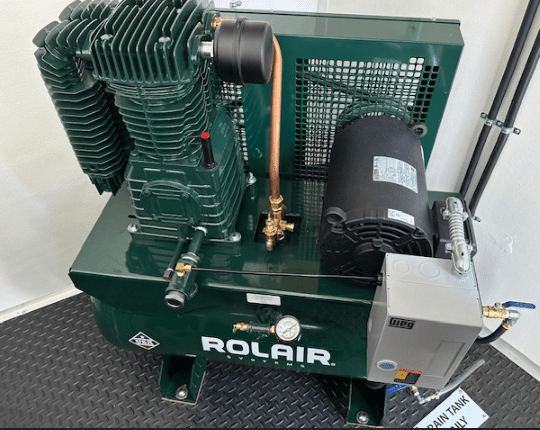
Choosing the right air compressor is essential for getting consistent performance from your spray foam equipment. The compressor supplies clean, steady air to run transfer pumps, spray guns, and other pneumatic components. When airflow is unstable or undersized, spray quality drops and downtime increases. Because of this, selecting the right compressor protects your investment and improves jobsite efficiency.
Understanding compressor technologies, power options, and airflow requirements helps contractors match the correct system to their spray foam equipment and application demands.
Why Compressor Selection Matters for Spray Foam Equipment
Spray foam equipment depends on reliable air pressure to maintain proper material flow and balanced spray patterns. If air supply fluctuates, foam quality suffers and wear increases on seals, pumps, and guns. At the same time, an oversized compressor increases fuel use and operating costs.
Choosing the right compressor ensures your spray foam equipment runs efficiently, stays protected, and performs consistently throughout long spray days.
Airflow Requirements and CFM Considerations
Airflow, measured in cubic feet per minute (CFM), is one of the most important factors when selecting a compressor for spray foam equipment.
Typical requirements include:
- 30–40 CFM for smaller spray foam equipment setups
- 40–60+ CFM for larger rigs with multiple transfer pumps or air tools
Contractors should always calculate total air demand across all components. This prevents pressure drops and ensures steady performance from the spray foam equipment during application.
Compressor Technology Options for Spray Foam Equipment
Before choosing between electric or gas power, it is important to understand compressor technology types and how they differ.
Rotary Screw Air Compressors
Rotary screw compressors are the most common choice for professional spray foam equipment.
They offer:
- Continuous-duty operation without overheating
- Consistent, high-volume airflow
- Long service life for daily use applications
Because of their reliability, rotary screw compressors are ideal for full-scale spray foam rigs and long production schedules.
Rotary Vane Air Compressors
Rotary vane compressors provide an alternative option for certain spray foam equipment setups.
Key differences include:
- Compact size with smooth airflow
- Lower upfront cost compared to rotary screw units
- Best suited for intermittent or lighter-duty use
While dependable, rotary vane compressors typically do not handle extended run times as well as rotary screw models in high-output spray foam equipment.
Electric vs Gas Compressor Options
After selecting the compressor type, contractors must choose the appropriate power source based on jobsite conditions.
Electric Air Compressors
Electric compressors are commonly used in shops or locations with reliable electrical service.
Advantages include:
- Quieter operation
- Lower maintenance requirements
- Reduced fuel-related costs
However, electrical limitations may restrict airflow capacity for larger spray foam equipment configurations.
Gas-Powered Air Compressors
Gas-powered compressors are ideal for mobile spray foam equipment and remote job sites.
Benefits include:
- Independent operation without external power
- Strong, consistent airflow for demanding applications
- Easy integration into trailer-mounted and truck-mounted rigs
These compressors are often preferred when flexibility and portability are required.
Key Features to Look for in a Spray Foam Compressor
Beyond airflow and power source, certain features help protect spray foam equipment and improve reliability.
Important features include:
- High-duty cycle ratings for long spray sessions
- Aftercoolers to reduce heat and moisture
- Compatibility with external air dryers
- Easy access for routine service and filter changes
These features help maintain air quality and extend the life of spray foam equipment components.
Matching the Compressor to Your Spray Foam Rig
Compressor selection should always align with the size and complexity of your spray foam rig. Smaller systems may operate well with mid-range compressors, while larger rigs require higher CFM and continuous-duty performance.
When upgrading spray foam equipment or adding components, reevaluating compressor capacity prevents performance issues and protects long-term reliability.
For help selecting the right compressor based on your spray foam equipment and application needs, contact Spray Foam Systems for expert guidance and configuration support.
FAQs
How much CFM does spray foam equipment need?
Most professional spray foam equipment requires between 30 and 60 CFM, depending on the number of pumps, spray guns, and air-powered accessories in use.
What compressor type is best for daily spray foam use?
Rotary screw compressors are generally the best choice for daily spray foam equipment use due to their continuous-duty capability and consistent airflow.
Why is moisture control important for spray foam equipment?
Moisture can damage components and affect foam quality. Using the right compressor and proper air management helps protect spray foam equipment and maintain consistent results.
About Spray Foam Systems
Spray Foam Systems is the #1 spray foam rig builder and spray foam equipment supplier in the United States. Family-owned and proudly serving the industry since 2007, we operate from a 7-acre campus with over 80,000 square feet of dedicated working space in Greensboro, GA. With over 10,000 customers served over the last 18 years, we specialize in delivering high-quality turnkey spray foam systems, distributing top-tier equipment and supplies, and providing nationwide service and training to help contractors grow and succeed in the spray foam insulation and roofing markets.