


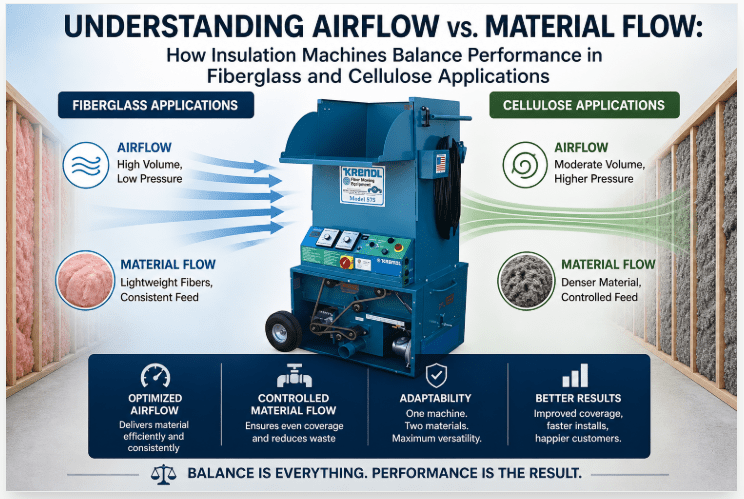
Airflow and material flow define how well an insulation machine performs on the job. When both are properly balanced, contractors achieve better coverage, higher efficiency, and consistent results. However, when these two forces fall out of sync, performance drops quickly and job quality suffers.
What Airflow Does in an Insulation Machine
Airflow is generated by the machine’s blower system. It carries insulation material through the hose and delivers it to the application area.
Strong airflow allows an insulation machine to:
- Move material across longer hose runs
- Maintain steady output during installs
- Reduce the chance of hose clogs
At the same time, too much airflow can create problems. Fiberglass can become airborne and difficult to control if airflow is too high.
What Material Flow Does in an Insulation Machine
Material flow controls how much insulation enters the system. This is managed by the feed system, agitators, and gate settings.
Proper material flow helps an insulation machine:
- Maintain consistent density
- Maximize material efficiency
- Deliver smooth, even coverage
If material flow is too high, the system can clog. If it is too low, the application may look thin or uneven.
Why Balance Matters for Performance
An insulation machine must keep airflow and material flow aligned. This balance determines how well the machine performs in both fiberglass and cellulose applications.
When balanced correctly:
- Material flows smoothly through the hose
- Coverage remains even across surfaces
- Waste is minimized
- Productivity increases
When the balance is off:
- High airflow with low material flow leads to overspray
- High material flow with low airflow causes blockages
Fiberglass Applications and Airflow Control
Fiberglass insulation is light and requires careful airflow control. The machine must provide enough air to move the material without scattering it.
For fiberglass:
- Higher airflow is typically required
- Lower material feed prevents overload
- Consistent pressure ensures even coverage
Proper setup allows the insulation machine to deliver clean installs with minimal dust.
Cellulose Applications and Material Feed Control
Cellulose insulation is heavier and denser than fiberglass. Because of this, the machine must rely more on material flow and agitation.
For cellulose:
- Lower airflow is often sufficient
- Higher material feed is needed for proper density
- Strong agitation keeps material from clumping
A well-adjusted insulation machine ensures tight, dense coverage, especially in wall cavities.
Key Machine Components That Influence Balance
Several components work together to control airflow and material flow in an insulation machine:
- Blower system – Produces airflow and impacts distance, speed, and consistency
- Feed system – Regulates how much material enters the airflow
- Hose configuration – Affects pressure based on length and diameter
- Control settings – Allow operators to fine-tune performance
How to Optimize an Insulation Machine
Proper setup improves efficiency and job quality. Operators should make small adjustments and test performance before full production.
Best practices include:
- Adjust airflow based on hose length and material type
- Increase material flow gradually to reach proper density
- Monitor pressure for consistency
- Test spray patterns before starting the job
These steps help ensure the insulation machine performs at its best.
Common Issues and Adjustments
Understanding airflow and material flow makes troubleshooting easier.
Clogging in the hose
Cause: Too much material or not enough air
Fix: Increase airflow or reduce material feed
Uneven coverage
Cause: Low material flow or unstable airflow
Fix: Adjust feed rate and stabilize blower output
Excess dust or overspray
Cause: Airflow too high, especially with fiberglass
Fix: Reduce airflow and fine-tune material feed
Quick adjustments can restore proper balance and keep the insulation machine running efficiently.
Choosing the Right Insulation Machine
Different machines offer different airflow capacities and feed systems. Choosing the right insulation machine depends on your primary application.
Consider:
- Fiberglass jobs require strong airflow capability
- Cellulose jobs require consistent material feed and agitation
- Versatile setups benefit from adjustable controls
Matching the insulation machine to your work ensures better performance across all job types.
FAQs
How do airflow and material flow affect insulation quality?
They control how evenly material is applied and how dense the final install becomes.
Can one insulation machine handle both fiberglass and cellulose?
Yes, as long as it offers adjustable airflow and material feed settings.
What is the most common mistake when setting up an insulation machine?
Running too much airflow without enough material flow, which leads to poor coverage and wasted material.
About Spray Foam Systems
Spray Foam Systems is the #1 spray foam rig builder and spray foam equipment supplier in the United States. Family-owned and proudly serving the industry since 2007, we operate from a 7-acre campus with over 80,000 square feet of dedicated working space in Greensboro, GA. With over 10,000 customers served over the last 18 years, we specialize in delivering high-quality turnkey spray foam systems, distributing top-tier equipment and supplies, and providing nationwide service and training to help contractors grow and succeed in the spray foam insulation and roofing markets.