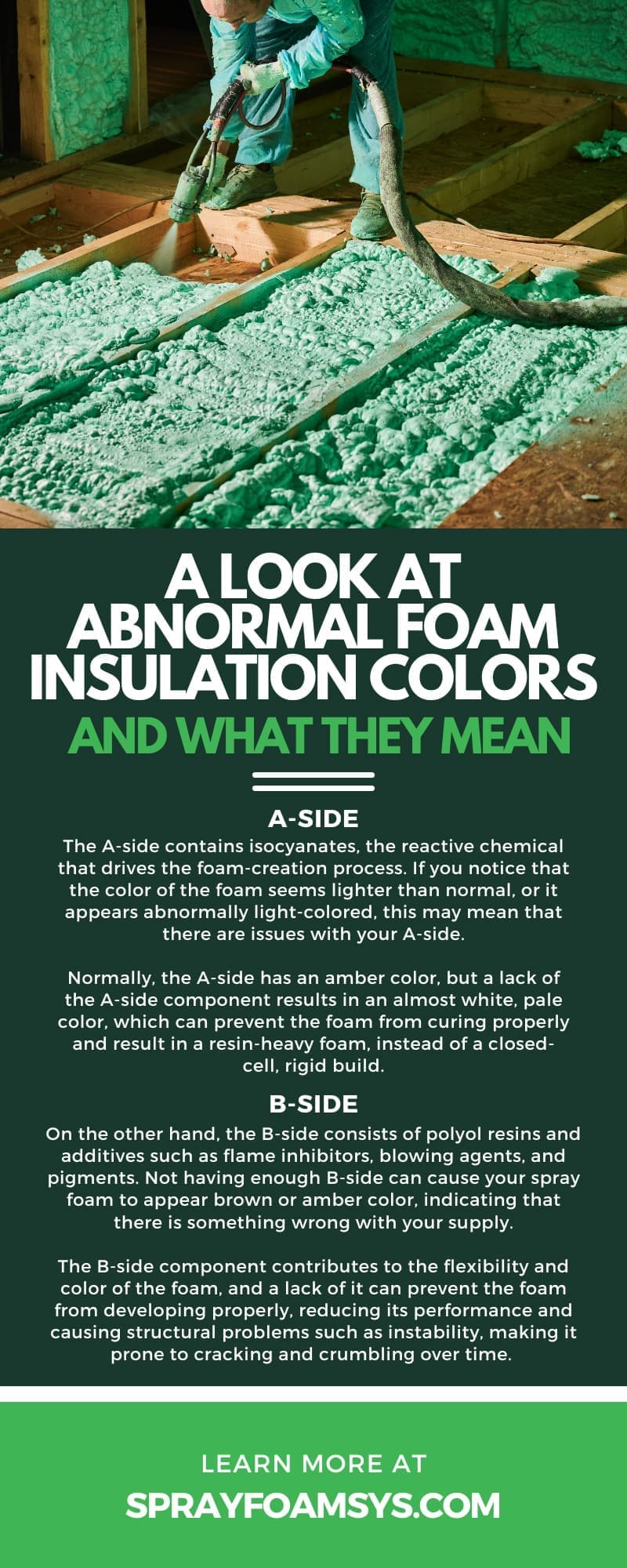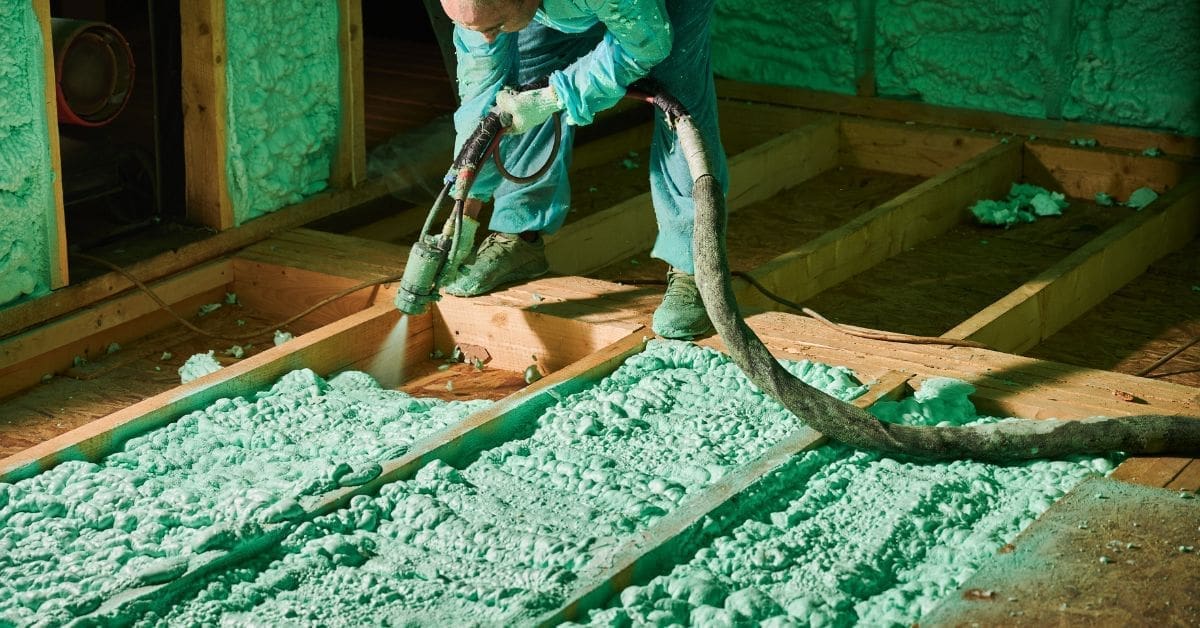
Spray foam insulation is a popular choice for contractors and building professionals, prized for its energy efficiency and sealing capabilities. However, issues can arise during a foam installation. One common red flag that requires immediate attention is abnormal foam colors, which can indicate underlying problems in the application process.
These unusual shades aren’t just aesthetic concerns; they can indicate compromised performance or durability. Understanding spray foam issues starts with taking a look at abnormal foam insulation colors and what they mean, as these unusual hues often signal problems such as improper mixing or application errors.
Possible Causes of Abnormal Foam Colors
When spray foam has an odd color, this is often a sign that something in the application process has gone awry. Spray foam is made of two components, the A-side and B-side, and an improper balance between these two components can cause abnormal foam colors. Understanding the science behind spray foam and its components can shed light on why these issues surface during installation.
Spray Foam and Its 2 Components
Spray foam insulation relies on a two-part chemical system consisting of the A-side and B-side components. Both play a critical role in the reaction that produces foam insulation. When these components function harmoniously, they produce high-quality foam with optimal insulation and structural properties. However, any imbalance or contamination can result in abnormal colors and performance issues.
A-Side
The A-side contains isocyanates, the reactive chemical that drives the foam-creation process. If you notice that the color of the foam seems lighter than normal, or it appears abnormally light-colored, this may mean that there are issues with your A-side.
Normally, the A-side has an amber color, but a lack of the A-side component results in an almost white, pale color, which can prevent the foam from curing properly and result in a resin-heavy foam, instead of a closed-cell, rigid build.
If you’re experiencing issues with the A-side supply, check that the barrel is full and the valve is open. If the problem continues, consider switching to a new barrel or cleaning the gun tip for optimal performance.
B-Side
On the other hand, the B-side consists of polyol resins and additives such as flame inhibitors, blowing agents, and pigments. Not having enough B-side can cause your spray foam to appear brown or amber color, indicating that there is something wrong with your supply.
The B-side component contributes to the flexibility and color of the foam, and a lack of it can prevent the foam from developing properly, reducing its performance and causing structural problems such as instability, making it prone to cracking and crumbling over time.
For issues with the B-side supply, check the pressure and look for any clogs from leftover materials which can cause restrictions in the gun or equipment. Keeping both components in optimal condition is essential for achieving an even and high-performing foam.
Proper Temperatures
Another cause of abnormal foam colors is improper temperatures. If both components are working correctly but look slightly off, you may need to take a look at your temperatures. The B-side component is thicker and requires a higher temperature than the A-side material.
Use Drum Mixers
A spray foam drum mixer is essential to agitating the materials, preventing them from setting before application. It ensures the foam reaches the ideal temperature and pressure, delivering accurate colors and textures during use.
At Spray Foam Systems, we offer a wide range of high-quality spray foam drum mixers, thoughtfully engineered to work with various materials while minimizing downtimes and preserving the integrity of your materials throughout the process.
Indications of a Bad Spray Foam
Abnormal foam colors are often accompanied by other warning signs that indicate poor application or curing. Recognizing these symptoms because it allows contractors to take corrective action before the problem escalates, which can lead to costly downtime and materials.
Oozing Foam
Foam that continues to ooze after application signals improper chemical reactions. An oozing foam usually means that the A-side and B-side ratios are improperly balanced in the spray gun, which can lead to improper curing. If you notice oozing foam in the spray gun, try recalibrating it and checking the ratios of both components before restarting use.
Foul Smell
Spray foam should harden without leaving behind a lingering odor. A foul chemical smell can mean that the foam is not fully cured or there are contaminants in the material itself. Do not ignore this symptom, as it can emit volatile organic compounds or VOCs, which are hazardous to the health of both clients and workers.
Pressure Imbalances
Pressure is essential to blend both the A-side and B-side materials effectively. When the pressure is too low or too high, the foam can appear streaky, patchy, or have uneven coloring. To prevent pressure imbalances, ensure regular maintenance and pressure testing of your rig or system.
Texture Issues
The texture of the finished foam can reveal a lot about its application. High-quality foam should have a consistent, smooth texture. Spray foam should not appear jagged, brittle, or sponge-like, which is a sign of poor curing conditions or contaminated materials. Texture issues and discoloration are often telling signs that there is something wrong with your material or system.
Take Preventive Actions
If you notice color imbalances in your spray foam, act quickly and stop using the equipment to prevent wasting more precious materials. Continuing to operate without addressing the issue can lead to significant material wastage, increased costs, and potential delays in completing your project.
Ensure Proper Temperature
Temperature plays an instrumental role in spray foam applications. Double-check the temperature of both the environment and pre-heating requirements for your materials before resuming use. Even minor deviations from the recommended application temperatures can significantly impact the quality and integrity of your foam insulation.
Check Material Supply
Inspect your material supply for expiration dates, improper storage, or contamination. Test the A-side and B-side components and batches, and make sure to segregate and isolate any compromised materials. Use high-quality, uncontaminated components for a seamless and professional application. If certain issues continue to arise, consult your manufacturer so they can guide you with troubleshooting and replacements for any defective materials.
Take Immediate Action
Now that we have taken a look at abnormal foam insulation colors and what they mean, you can be prepared for any issues that arise during application. Spray foam insulation is a game-changer in the construction and insulation industry, but achieving flawless results demands great attention to detail and regular maintenance.
By understanding the causes of abnormal foam colors, including imbalanced ratios, curing conditions, and contamination issues, you can take proactive steps to ensure high-quality insulation with every project.